Growing instability in the US economy and financial markets could have serious consequences worldwide because of the central role of the US dollar and financial system, argues MICHAEL BURKE


 Latest editorial

United we bargain, divided we’re booted out
Changing visa rules are pushing young migrant workers into precarious work and exploitation, report NUPUR PALIWAL and SOMIHA CHATTERJEE of the Student Federation of India
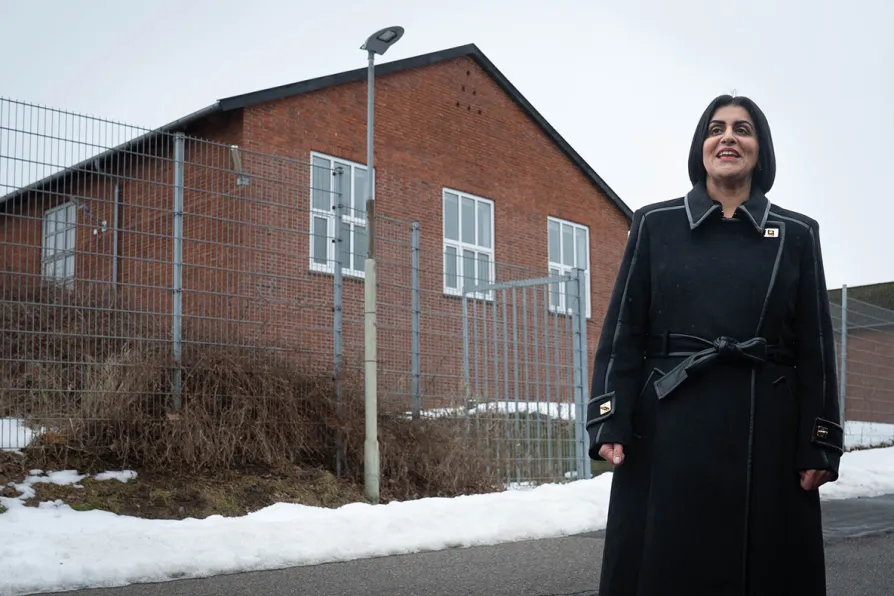 Home Secretary Shabana Mahmood during a visit to the Centre Sandholm migrant dention centre in Sandholmgardsvej on the outskirts of Copenhagen, February 27, 2026

Despite Andy Burnham’s declaration defending the continued partition of the island, all major international and internal trends are converging to make Irish reunification inevitable
The left needs a bold energy vision – because if it fails to provide one, others will shape the future in their own interests, argues ALAN SIMPSON
From Margate to Deal, mining memories are being kept alive. National co-ordinator for General Strike 100, HENRY FOWLER continued his nationwide tour of partner organisations in the Garden of England
Humans are part of the ‘animal kingdom’ – and of nature in general – but also distinct from it and labour (work) is part of what makes us unique, declared Engels. His insights 150 years ago into how our species came to be and how we differ from the rest of nature, are as important today as they were then, says the MARX MEMORIAL LIBRARY
Boxes of books, family photos and heirlooms, labour movement anniversaries, along with nostalgic memories of glorious childhood days on the Ayrshire coast still leave room for a wistful MATT KERR to hope for a better future





CATCHPHRASES against immigration have an unsurprising tendency to resurface when the nation needs a reminder of the good old times.
The retrieval of British jobs from migrant workers has been sold as an antidote to economic stagnancy. It is easy to find facts to rebuke this rhetoric.
However, once operationalised as policy, immigration restrictions cause irreparable harm to generations of migrant workers. The betrayal hits harder for students and fresh graduates, who have only just arrived in the country, intending to make it their new home.
Ahead of this year’s TUC Young Workers conference, we look at the specific impact of protectionist immigration policies on young migrants and push for a collectivisation strategy that recognises our concerns.
The insecurity of the Labour government amidst the rise of the far right pushed it to announce the Immigration White Paper in June last year and begin a clamp down on routes to obtain a visa to study and work in the UK.
The Skilled Worker visa, which remains the most desirable pathway for young graduates looking to remain in the country, has become significantly harder to attain. The visa now requires a higher salary threshold, applies to fewer occupational categories and demands increased English language assessment scores.
As a result, it plays into existing class stratifications amongst migrant groups and makes clear that only highly skilled immigrants with impeccable English may be permitted to reap the benefits of a stable, well-paid British job.
Young workers, especially those who did not graduate from an elite institution, can rarely evidence the skills and experience needed for a sponsored role. Early career development and professional growth become much harder to access, pushing this cohort to choose between precarious, unskilled work in a different immigration category or a disappointing journey back to their home country.
While attaining a Skilled Worker visa confers a better starting position, the precarity continues to loom amidst a febrile political environment. Inevitably, employers are more likely to retain older employees with deeper loyalties. The tight competition amidst young workers for sponsored work compels them to try their hand with a Graduate Route visa first.
The Graduate Route visa is one of the few options for migrant students to have labour flexibility allowing them to gain international work experience and switch employers without the burden of securing sponsorships.
For many migrant students without elite networks, the graduate route visa offered a foothold, an opportunity to build the credibility and experience needed to transition to the Skilled Worker route. However, that foothold is being cut short.
The shortening of the Graduate Route visa for master’s students from two years to 18 months following the 2025 Immigration White Paper falls on students currently mid-degree, who chose to study in the UK under a different set of expectations.
Furthermore, these changes have been introduced at a time when economic uncertainty, rising inflation and the slowest rate of wage growth in five years have dragged down the labour market.
While the six-month reduction may sound modest, the current labour market conditions along with the shorter duration of the graduate route is making it increasingly difficult for international students to find work after graduating. Employers remain reluctant to hire graduates who cannot demonstrate visa stability and the Graduate Route’s fundamental limitation that it cannot be extended implies that every month lost to the job hunt narrows the path to a viable future in the country.
Faced with financial strain and a ticking clock, many migrant students are pushed into the most precarious corners of the labour market: cash-in-hand pay, no guarantee of shifts, no sick pay and no union recognition.
It is often in these conditions that wage theft, workplace harassment and unsafe working conditions go unreported. Far from being a marginal reduction in time, the Graduate Route visa’s new conditions amount to a managed exit that buys time in a system that has made it structurally impossible to gain secure employment.
The instability of work as a young immigrant on a temporary visa in the UK compels many to shy away from collectivising. We confront this hesitation often while organising students under the banner of the Students’ Federation of India – UK.
The thought that joining a union could hurt chances of landing a coveted job is pervasive. For migrant workers from the global South, local unions often become yet another foreign space with unfamiliar relations that must be learned and navigated.
Predictably, migrants report lower levels of trade union membership than UK-born respondents. Our agenda to raise consciousness cannot leave this section untouched.
We need to investigate our union strategies and confront the realities faced by young migrant workers. This applies to both internal and external practices.
Union democracy should contain space for young migrants by recognising their precarious, transitory status.
The TUC Young Workers’ Conference offers an opportunity to develop approaches to recruit migrant youth and amplify their voices within the union.
The possibility of an entire section of workers being forced to leave the country under tighter visa rules should be a rallying issue for unions at large.
Simultaneously, we should look towards a stern, visible outward presence in the fight against the right-wing to garner mass appeal amongst migrant workers and exhibit the shelter that a collective organisation can offer.
We should not shy away from public statements, demonstrations and demands for fairer immigration policies.
We must show that the union makes every one of us stronger; this is not just a moral stance, but a materialist one.
