

 Latest editorial

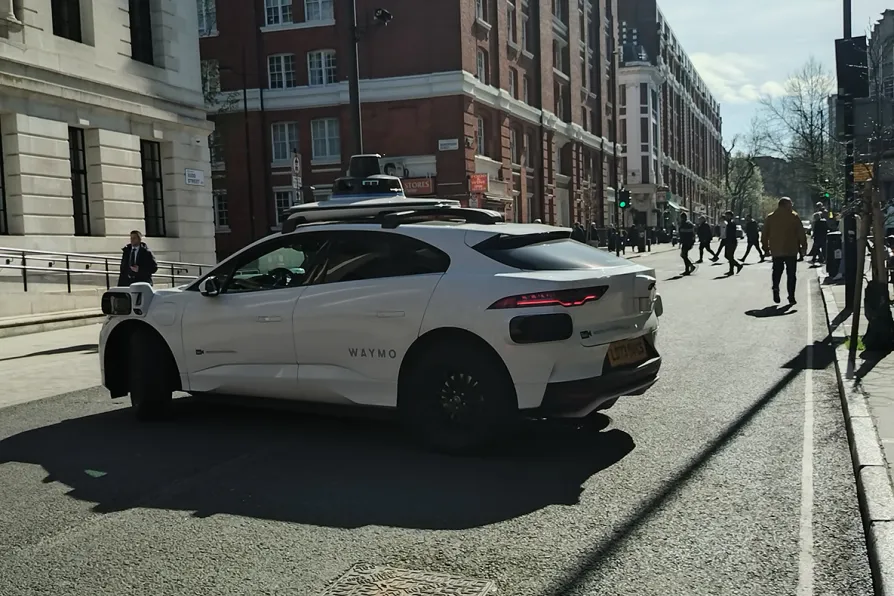 A Waymo Car in London's Kings Cross on 21st March





A STATE of emergency was declared for London’s 100,000 licensed drivers working with private hire apps as driverless Waymo taxis are set to launch next month.
The App Drivers’ & Couriers’ Union (ADCU) warned today the industry would face an unprecedented jobs crisis due to the launch of the US tech firm’s driverless service.
Waymo, which is owned by Google’s parent company, Alphabet, has said its passenger pilot programme would start in London in April before a full-scale rollout of its fleet in September.
In the face of industry automation in the capital, the ADCU has demanded a job protection guarantee and a plan for a “just transition” for private hire vehicle (PHV) drivers.
It has also demanded that licensing rules don’t favour billion-dollar tech companies over workers and for proper consultation with unions before the full deployment of the “robotaxi” fleet.
ADCU general secretary Cristina-Georgiana Ioanitescu said: “For years, PHV drivers have kept this city moving.
“But now, with companies like Waymo preparing to roll out driverless cars across our streets, thousands of livelihoods are being put at risk, and the people in power are not doing enough to protect the workers who will be hit the hardest.
“Let’s be clear: This isn’t just about technology. This is about fairness, dignity, and the future of work. Autonomous vehicles don’t pay rent. They don’t support families. They don’t contribute to local communities. But drivers do, and they always have.”
She also described current legislation on driverless vehicles as being focused on making the roads ready for robots, “while doing almost nothing to make the future safe for workers.”
“There are no retraining programmes, no transition plans, no income protections, and no guarantees for the tens of thousands of drivers who stand to lose everything.
“We refuse to accept a future where workers are treated as disposable. We refuse to accept a system where technology is used to cut costs at the expense of human lives. And we refuse to let corporations rewrite the rules of our city without the voices of workers at the table.
“If autonomous vehicles are coming, then so must stronger rights, stronger protections, and stronger unions.”
