The new Prime Minister must abandon decades of automatic support for US foreign policy, which makes us all less safe, argues DIANE ABBOTT MP


 Latest editorial

The UN blasts Labour for its failures to address income inequality and poverty
DR DYLAN MURPHY asks why Labour is continuing the Tory war on the disabled, when viable alternatives have been spelt out in detail
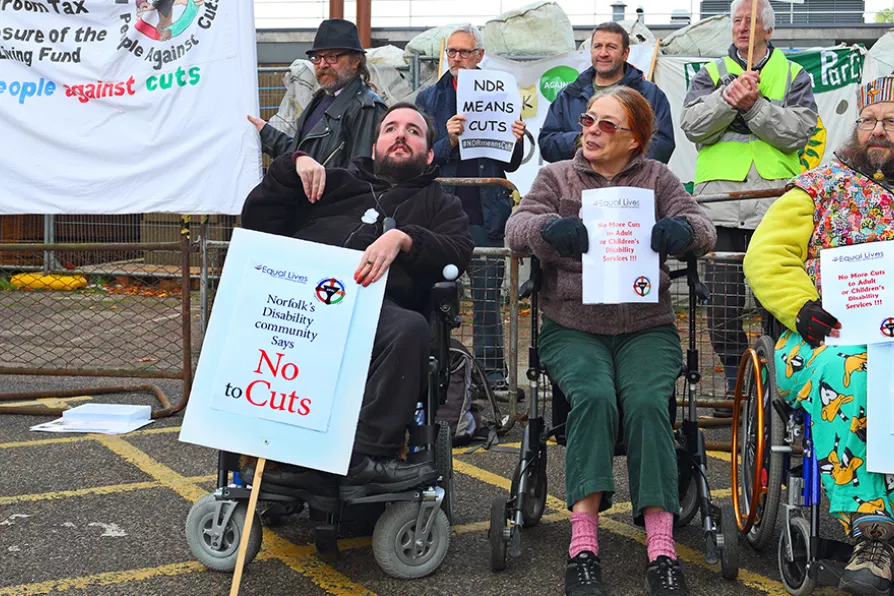 TORY 2015/LABOUR 2025 SPOT THE DIFFERENCE: (Above) Workers and disabled people protesting outside Norfolk County Hall against Norfolk County Council cuts to services on October 2015
[Roger Blackwell/flickr/CC]
TORY 2015/LABOUR 2025 SPOT THE DIFFERENCE: (Above) Workers and disabled people protesting outside Norfolk County Hall against Norfolk County Council cuts to services on October 2015
[Roger Blackwell/flickr/CC]

Media Lens at 25: David Cromwell and David Edwards reflect on a quarter-century of media criticism, explaining why independent journalism is more important than ever
by Weyman Bennett and Maz’s family
The International Court of Justice has delivered its clearest ruling yet that the right to strike is protected under international law, write Professor TONIA NOVITZ, Professor KEITH EWING and Lord JOHN HENDY KC
Emergency phone alerts could help Britain respond to rising wildfire risk, but Australia’s experience suggests they work best as part of a broader strategy, write ELLIOT CONVERY-FISHER and KATE PARKINS
A champion motorcyclist, trade union organiser and communist, Clem Beckett went from Britain’s speedway tracks to the battlefields of Spain, where he gave his life resisting Franco’s forces at Jarama. GEOFF BOTTOMS pays tribute to this remarkable anti-fascist





IN LATE February of 2025 the UN Committee on Economic, Social and Cultural Rights issued a damning report into the failures of Labour to address income inequality and the deepening levels of poverty in the UK.
The UN committee criticised Labour for failing to address “income inequality or reducing poverty,” which hamper “the progressive realisation of economic, social and cultural rights.’’
Ironically enough, the UN called on Labour to increase spending on housing, health, education and social security in order to reverse the huge damage caused by blue Tory austerity from 2010 to 2024. Since this call the red Tories in power have announced their intention to make massive cuts to public spending across all government departments except defence and maybe health.

Similar stories
The government’s Pip review looks like a carefully managed exercise in legitimising future cuts to disability support, argues Dr DYLAN MURPHY

Plans to delay access to the universal credit health element until age 22 have triggered fierce opposition from disabled people’s groups, who warn it would deepen poverty and entrench discrimination against young disabled people under the guise of ‘encouraging work.’ DYLAN MURPHY reports
Labour will find increases in the state pension age are unacceptable, just as cuts to the Winter Fuel Allowance, personal independence payments and universal credit are — it needs to change direction immediately, writes PCS general secretary FRAN HEATHCOTE
A new report from the Citizens Advice destroys the government narrative about disabled people ‘choosing’ not to work, showing the £3,000 annual cuts will create a two-tiered system based on claim dates rather than needs, writes DYLAN MURPHY