TUC president and POA leader STEVE GILLAN speaks to Ben Chacko on the eve of Congress 2026


 Latest editorial
Two centenaries to focus us on building socialism in 2026
BEN CHACKO says in different ways, the centenary of the General Strike and that of Fidel Castro’s birth point to priority tasks for the British left in the coming year
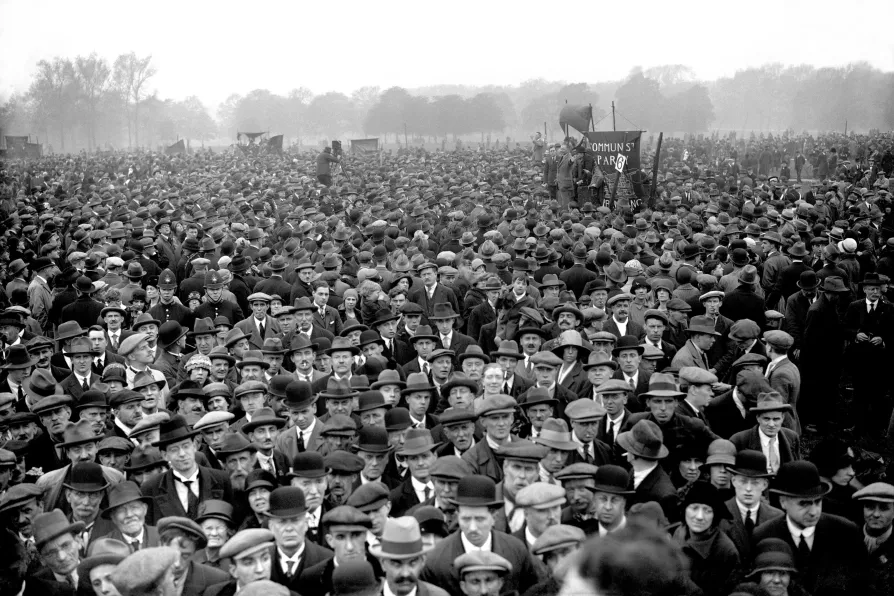 A massive gathers in Hyde Park, London, for a meeting during the General Strike, May 1926

DOUG NICHOLLS welcomes a turning point at this year’s Congress, where many motions call for a co-ordinated plan to revive British industry, a perspective outlined in his new book
HOPE VIRGO of campaign Dump the Scales warns MPs voting today they should be alert to the threat legalised assisted death poses to people with eating disorders
The Together Alliance is hosting two summits, North and South, to build power and plan action against the scourge of racism peddled by the right. DANIEL KEBEDE urges mass participation
The drift toward militarisation in Europe is not inevitable, left-wing and peace movements can preserve sovereignty and prevent war, says DÁIRE HUGHES MP
Whatever differences exist among international sympathisers of the Bolivarian revolution about its current trajectory, they should unite against the imperialist power that is the source of an enforced retreat, argues ROGER D HARRIS
Trade unions need to step up and force a turn in the policies of the labour movement to effectively confront the far-right threat, argues NICK WRIGHT





TWO unrelated centenaries in 2026 focus us on how to build a left strong enough to change this country’s course.
It certainly needs changing. The new year dawns under the twin shadows of authoritarianism and war. The threat of a resurgent far right is widely acknowledged. Less so the increasing alignment of what now passes for the political centre and the far right.
Trapped by the oldest capitalist political system on the planet, whose entrenched ruling class is long practised at presenting its continued rule as a matter of choice, repeated bids for escape from the neoliberal nightmare of extortionate housing, insecure jobs and public services subverted into dysfunctional cash cows for private “investors” have come to nothing.
Brexit was to “take back control,” but entrusting it to a Tory regime totally committed to the outsourcing of every decision about our lives that matters to the faceless and unfeeling “market” ensured nothing significant changed. Nor has electing Labour put a stop to privatisation, welfare cuts or the assault on our democratic rights.
Disgust with Labour is obvious from polls and by-elections, but the flood of ex-Tories from their sinking ship to Nigel Farage’s buoyant one expose how little change he would deliver. Reform’s pursuit of more privatisation, more deregulation and more welfare cuts place it squarely in the tradition of every government since Thatcher; Starmer-Labour’s anti-immigrant hysteria and the Conservatives’ increasingly open racism against long settled non-white communities make them harder to distinguish from Reform. There are no real choices here.
Starmer is rendered particularly helpless against the rising right by Donald Trump.
Britain’s entire postwar imperial strategy takes a subordinate position to the United States for granted.
Downing Street now abases itself desperately trying to demonstrate its loyalty to a White House regime openly courting fascists intent on reshaping Britain and Europe on white supremacist lines, which doesn’t blush at sending Vice-President JD Vance to wine and dine these nasties under the very nose of its supposed ally the British government.
We’re caught up in a Europe-wide drive to militarise society and prepare for war “on the scale our grandparents and great grandparents faced,” so total war with millions killed, a generation sent to the trenches, bombs laying waste to our cities.
And the state is busily criminalising protest (and even phrases associated with protest), arresting pensioners by the hundred at peaceful sit-ins, withdrawing the right to trial by jury.
Before we despair let’s note the positives. The government’s crackdown on our freedoms is because it convinces nobody: it coerces because it cannot get consent.
The long shadow of Iraq and its bogus weapons of mass destruction mean our rulers’ claims of imminent threats to the realm meet justifiable scepticism. The peace movement has rebuilt on a huge scale since 2023, in response to British complicity in the Israeli genocide in Gaza — Palestine solidarity generating, in terms of sustained mobilisation, the biggest political movement in the country.
Despite the repression, neither the giant marches nor the mass sit-ins have gone away. And the mass movement has fed into renewed left political challenges to the status quo on the biggest scale since the defeat of Corbynism.
For a spell the 800,000 sign-ups for information about a new left party co-founded by Jeremy Corbyn and Zarah Sultana raised the spectre of a socialist movement on the scale of Corbyn’s Labour, and without all the debilitating baggage of a party long wedded to the British Establishment, capitalism and war, one that constantly works to sabotage its own potential as an expression of working-class power.
It turns out not having an existing party is pretty debilitating too, and disputes over the founding process have dissipated much of the initial enthusiasm. For many the Greens are a way around this problem, and under Zack Polanski they are growing fast.
The Greens are less compromised than Labour by Establishment ties. But their trajectory has been towards, not away from, that Establishment — hence their decision to drop opposition to membership of Nato.
With Germany moving back towards conscription, French generals demanding we sacrifice the next generation and the man in the White House insisting on eye-watering rises in military spending, this is not some minor drawback but a central question for the left.
It should also force a frank confrontation with Green delusions about the European Union, which the party says it wants to rejoin. The EU is militarising fast, and doing its best to scupper any peace deal in Ukraine.
It is every bit as authoritarian as Starmer-Labour, with the Council of Ministers now sanctioning political dissidents without any due process whatever — imposing travel bans and freezing the bank accounts of activists critical of its reckless war drive.
It is part of the problem, not part of the solution — while a glance at the morbid economies and malfunctioning politics of France or Germany gives the lie to those who claim Brexit is the source of our woes. Economic decline is the pattern across the West (including the United States if an artificially inflated AI investment bubble, likely at some point to burst, is set aside).
And that’s before we get onto the wisdom or otherwise of taking on Farage on the very terrain that the right routed the last serious left-wing bid for power.
But for socialists the fundamental issue with the Greens is they are not a class-based party. Both communist and social-democratic socialism have historically rested on the idea that the working class, acting in its class interest, is the agent of revolutionary change.
The first of the centenaries — that of the 1926 General Strike — forces us to confront this problem.
Is the cause of labour still the hope of the world? If it is, why is Britain still capitalist a century on from the general strike? What are we doing wrong?
Events are taking place over the year — including the Morning Star’s annual conference at London’s Hamilton House on April 11, and a symposium at the Marx Memorial Library on May 9 — focused on the centenary and the lessons for trade unionists today.
Our movement is smaller and weaker than it was 50 years ago, but unions remain the biggest democratic organisations in the country and the first line of defence for workers — while both the strike wave of a couple of years ago and the rise of new tactics like the mega-pickets organised by Strike Map in support of striking Birmingham bin workers show there’s power in a union.
The passage of the Employment Rights Act, and the debates around the need for a second such Act, present new challenges and opportunities for unions to reclaim the workplace. And that would have profound political consequences — re-planting the roots of the labour movement across society, providing the grounding, realism and industrial muscle without which any socialist project is likely to find itself adrift.
The other centenary — that of the birth of Cuban revolutionary Fidel Castro — offers similar chances to build.
Solidarity, of course — a Trump White House reasserting the Monroe Doctrine and blowing up boats across the Caribbean poses a lethal threat to Cuba as well as Venezuela, and is already adding to the pressure of its crippling blockade by stealing energy supplies.
But more than that. Like the General Strike, celebrating Fidel opens up debates we need to have on the international socialist movement and the rise of the global South. Cuba’s message — another world is possible — provides much-needed optimism and hope.
It’s not just that the cause of labour can change the world. It has changed the world. It is changing the world.
At the Belt & Road Media Co-operation Forum in China’s Yunnan in September, Amin Alhassan of the Ghana Broadcasting Corporation called for Third World media to shake off the “cultural imperialist” narratives of the West, and take up a positive mindset about the achievements of countries breaking with imperialism, “telling stories of hope and aspiration.”
The cynical response — not always unjustified — is that this encourages viewing revolutionary movements and states through rose-tinted spectacles and whitewashing their shortcomings.
That’s a risk, but too much cynicism is also fatal.
Socialist revolutions do succeed, and from Cuba’s groundbreaking achievements in medicine to China’s renewable energy revolution, their achievements are practical examples of what is possible once we move beyond capitalism.
Denigrating that breeds a fatalistic resignation to capitalism as the only game in town, as does treating every misstep by socialist governments as evidence of revolution betrayed. From Havana to Beijing, from Kerala to the Sahel, there are stories of hope and aspiration to tell, and our paper should tell more of them in 2026 — a new year’s resolution, if you like.
A renewed socialist mass movement in Britain must be rooted in organised labour and it must be internationalist, conscious it is part of a worldwide struggle. The twin centenaries are chances to work out how we bring that about.
The Morning Star — uniquely anchored in the trade union movement through its shareholder unions and an unabashed champion of international socialism from the Russian Revolution on — is up for the challenge.
Ben Chacko is editor of the Morning Star.

Similar stories
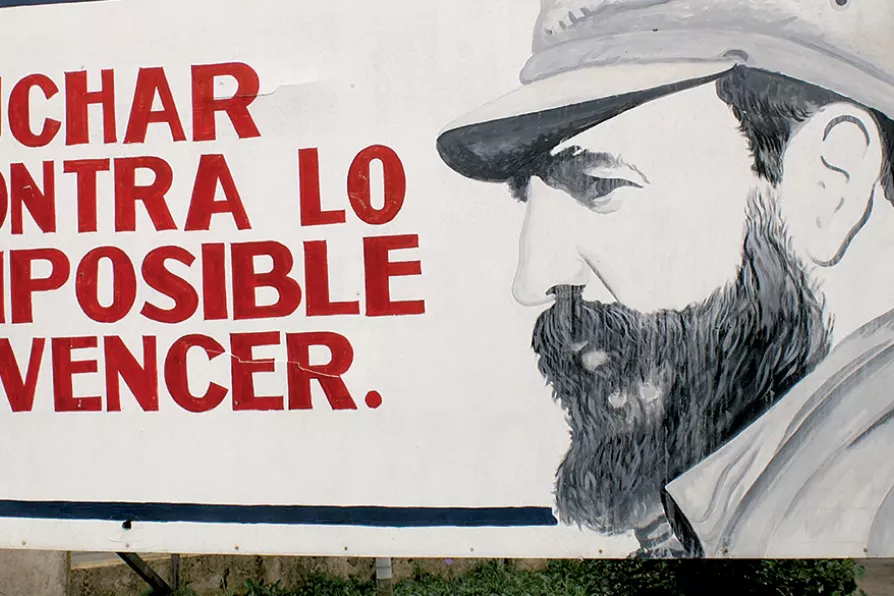
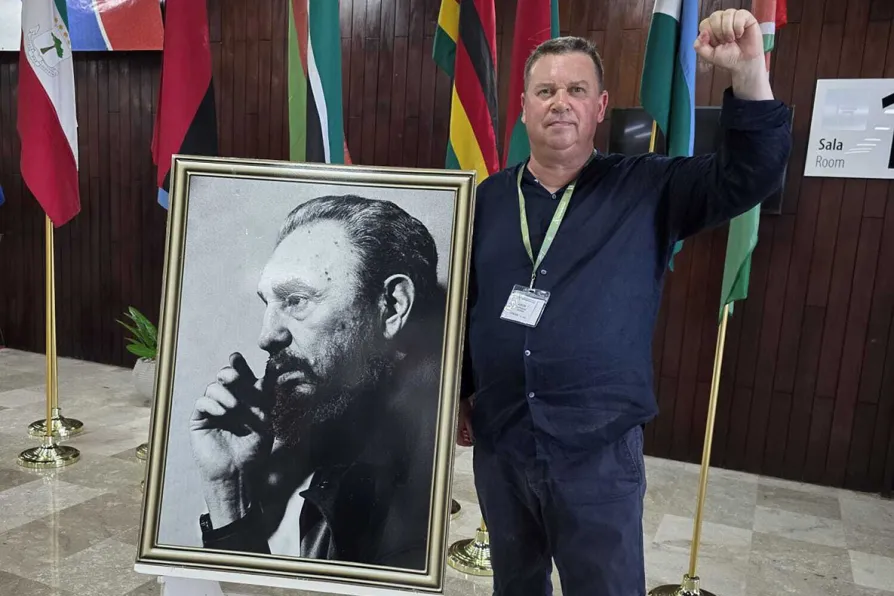
ALEX GORDON and LORRAINE DOUGLAS report from Havana, Cuba, where they represented the Communist Party of Britain at the 24th International Meeting of Communist and Workers’ Parties on August 7-8
by Her Excellency Ismara Mercedes Vargas Walter, Ambassador of the Republic of Cuba to the United Kingdom
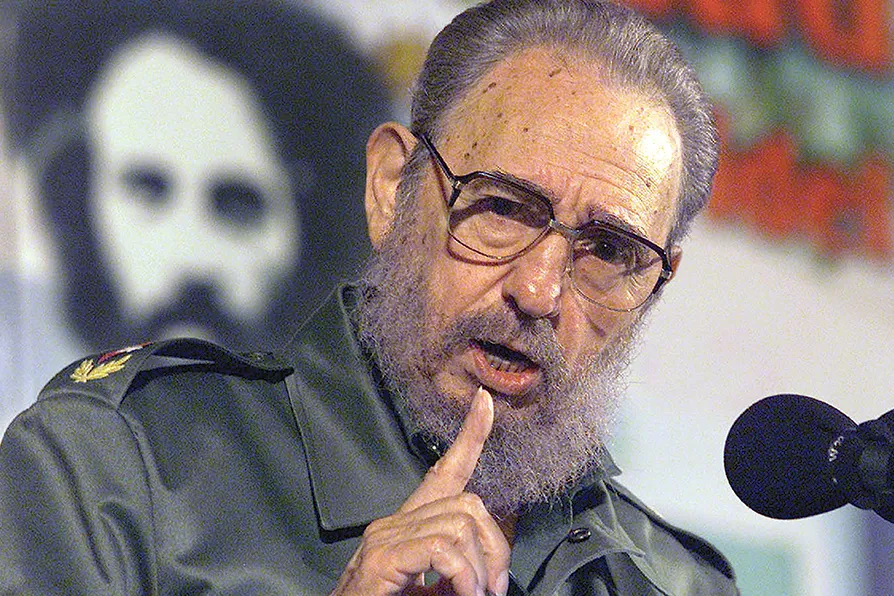
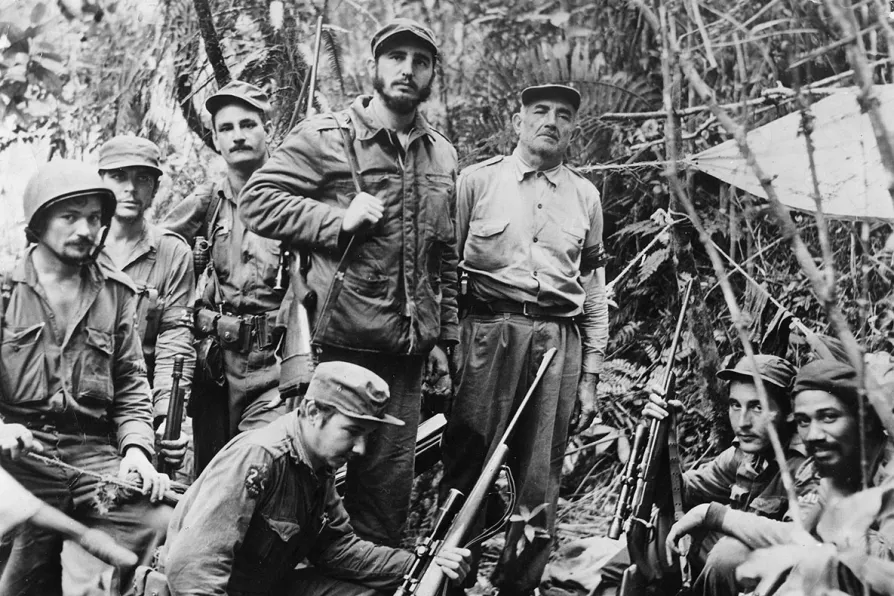
DR STEPHEN WILKINSON assesses the life and legacy of a revolutionary giant