
RITA DI SANTO contemplates two films about journalism that opened this year’s festival


Towards an ecological architecture
JAMES WALSH is moved by a provocative and original take on the relationship between ecology and architecture, and a plea to work with, not against, the materials and minerals of our world
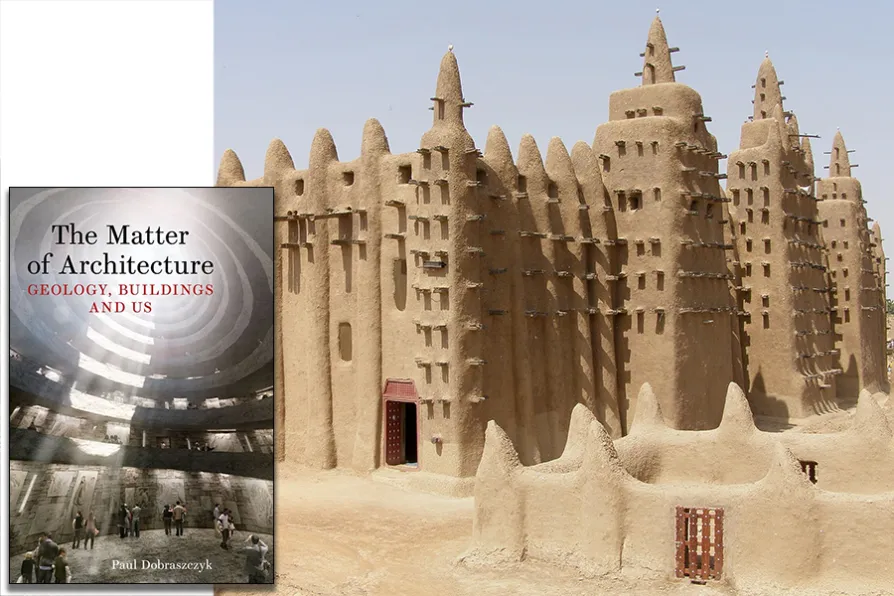
 ECOLOGICAL ARCHITECTURE: The Great Mosque in Djenné, Mali, the largest extant mud building in the world [Pic: BluesyPete/CC]
GEOFF BOTTOMS applauds a world-class production King Lear that pits late feudalism against a rising bourgeoisie
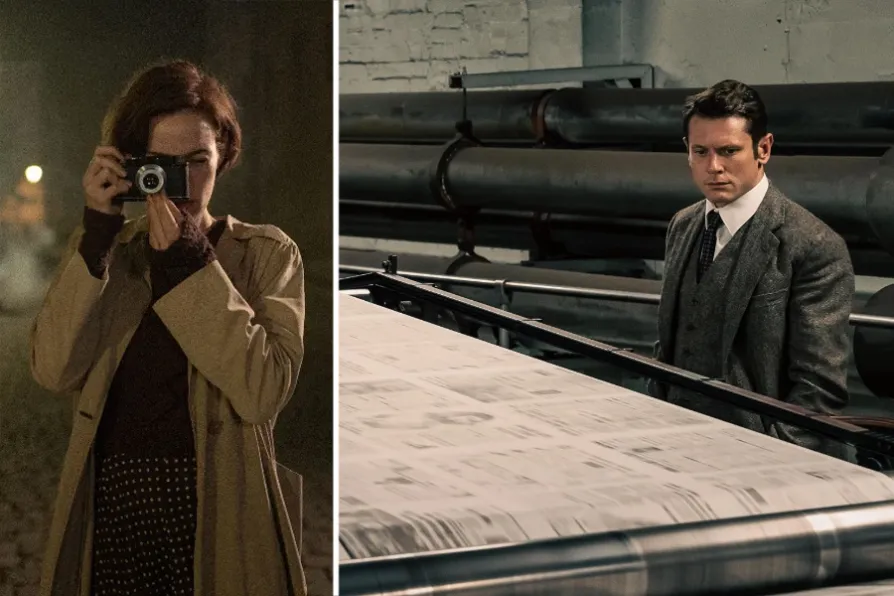
MARY CONWAY keeps up with the sheer pace of a drama about the terrible gap between sanitised reporting and real-life turmoil of race and gender
New releases from Brian Fallon, Antony Szmierek and Hollow Hand
APURBA CHATTERJEE explains how British artists in India used the “picturesque” to reshape colonial landscapes and celebrate imperial power
PAUL DONOVAN welcomes a revival of Reginald Rose’s classic play that reminds us of the fundamental need for trials with juries





The Matter of Architecture – Geology, Buildings, and Us
Paul Dobraszczyk, REAKTION BOOKS, £20
TERRA FIRMA is the “there’s plenty of fish in the sea” of outmoded geological idioms; the ground isn’t as solid as it used to be, and we humans are to blame, thanks to the incredible violence we have wrought upon this earth.
The Anthropocene is absurd in its scale and its speed. The mass of everything made by humans now exceeds that of all living biomass. “Following this trajectory,” as Dobraszczyk dispassionately posits in this extraordinary book, “sometime in the 22nd century, the entire planet will be one great mass of metals, asphalt, plastic, bricks, aggregates and concrete.”
This process, sparked by the industrial revolution, is now accelerating beyond all comprehension in our hyper-capitalist epoch.
The Matter of Architecture concerns itself with the geology of the future but also offers hope for the present — if only architects and planners would learn to work with, rather than against, the materials and minerals of our world.
Taking in myth, history, art, and fictional imaginings alongside architectural schemes and dreams, Dobraszvzyk takes us from deep under the earth’s crust to metamorphic violence on its surface, through Ballardian chambers of crystals, megaliths and monoliths, and visions of cities growing like corals up into the blue impossibility of the sky.
Radical scholars point to the science of geology being intertwined with colonial exploitation — investigation and extraction developing hand in hand. It’s easy for me to type these words without giving much thought to the far-off places and lives ruined to mine the materials to make this laptop possible.
Despite the alienating affects of globalisation, there are still landscapes this ruinous closer to home, like Tunstead Quarry on the edge of the Peak District, the largest limestone quarry in Europe. The author visits via an incongruous footpath across the moonscape, moving from the pastoral to the blasted and pummelled: “Human construction is inextricably linked to destruction: for every building there is a corresponding hole, or holes, in the ground. In most cases, it is very difficult to pinpoint where these holes might be — building materials rarely come with any trace of history attached to them, especially their geological history.
“The most commonly used construction materials — concrete and steel — are only distantly related to their sites of extraction because they are so heavily processed; yet there is always a place where such extraction occurs.”
In 1971, the trade on material resources was around 27 billion tonnes. By 2070, on our current economic course, that number will be 170bn.
None of this is sustainable and, occasionally, this book feels like an elegiac eulogy for doomed dreams of a better world.
This melancholy is especially felt in Dobraszczyk’s exploration of the proposed Mass Extinction Monitoring Observatory, an offshoot of the Eden Project, designed by David Adjaye and never built:
“This 30-metre tall stone spiral housed a winding walkway that would lead visitors upwards past walls carved with the images of the 860 species deemed extinct (in 2016) since the annihilation of the dodo in the late 17th century… this building wasn’t intended to celebrate anything; rather, it would hone in on feelings of loss.”
A bell would toll for each new extinction. Visualisations are extraordinary; the fact that billionaire philanthropists weren’t too keen on such a monument to their own destruction is left hanging in the air (a much cheerier Eden offshoot is planned in Morecambe for 2028).
Image
Dobraszczyk gives short shrift to carbon capture, rightly; instead, via slum architecture and toxic landfill mountains, he wanders through imagined ruins of human times as vivid as Pixar’s Wall-E (a still-radical take on a post-human Earth, smuggled into a children’s film) and Giovanni Battista Piranesi’s capriccios, a fantastic reimagining of Roman ruins. Truth is as shocking as fiction: there is an ironic delight to the recounting of the US Department of Energy’s panels on how to warn future generations of its buried caverns of nuclear waste. Warning sounds, warning symbols: why carve warning words when meaning itself may be lost to dust?
For Dobraszcyk, perhaps, and for us all, the hope is to build on the ruins of “civilisation”’s inevitable collapse. It’s a sobering thought, but — given our current trajectory — perhaps the best we can dream of. We need to carve another path, otherwise alien archaeologists of the far future will look upon our works, ye Mighty, and despair.

Similar stories
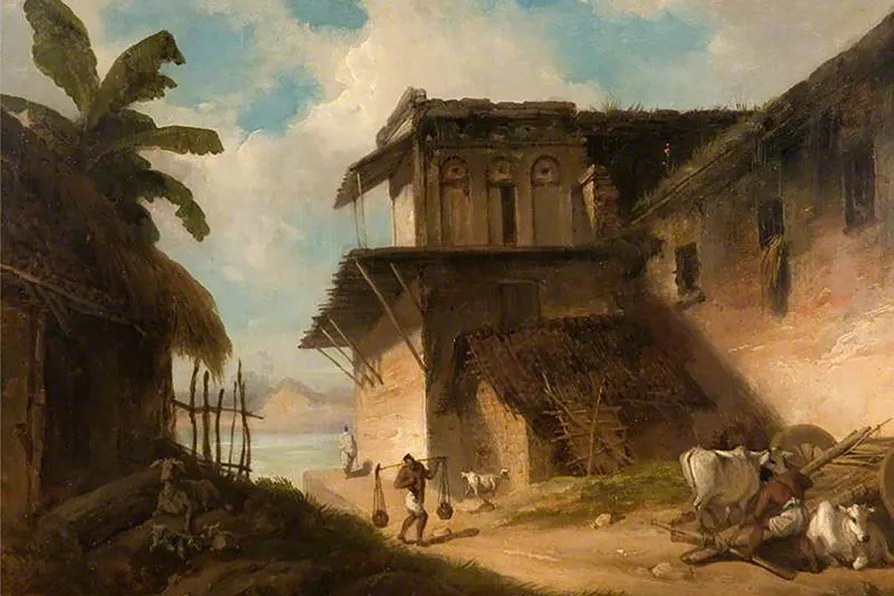
APURBA CHATTERJEE explains how British artists in India used the “picturesque” to reshape colonial landscapes and celebrate imperial power
MIGUEL YOSHIDA explains the evolution and influence of the Cuban Casa De Las Americas in joining culture to the revolutionary struggle
CHRIS SEARLE welcomes a startling vision of contemporary Newport from a veteran photographer of the British working class
JOHN GREEN’s palate is tickled by useful information leavened by amusing and unusual anecdotes, incidental gossip and scare stories