The 25th anniversary meeting of the Shanghai Co-operation Organisation in the Kyrgyz capital may offer a glimmer of hope that international relations do not need to be defined by endless confrontation, writes KENNY COYLE


 Latest editorial

Toothless no more: campaigners force Cambridgeshire’s dental crisis into the open
A searing scrutiny hearing has uncovered thousands of undelivered appointments, vanishing data and a system in chaos – galvanising councillors, patients and activists to demand urgent reform and an NHS dentist for all, writes SIMON BRIGNELL
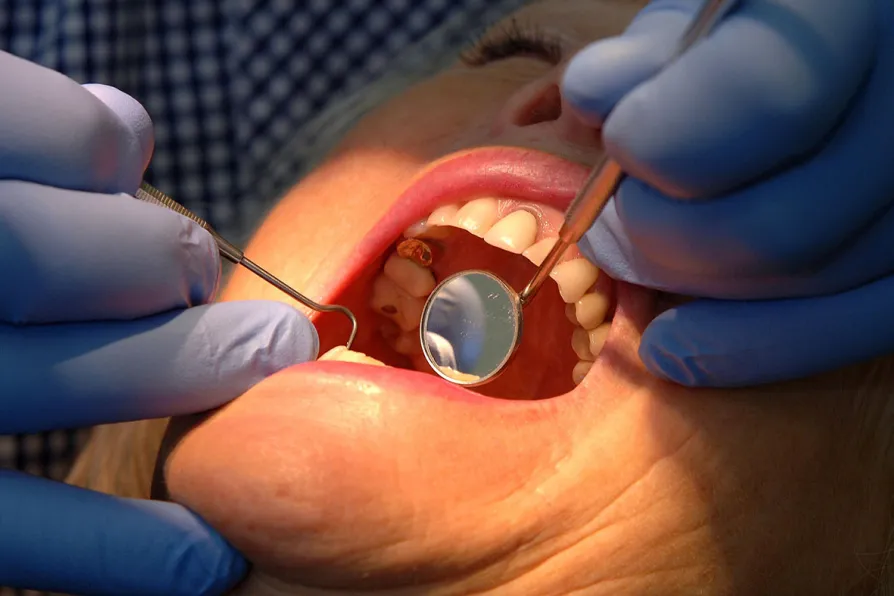 A dentist checking condition of a patient's teeth A dentist checking condition of a patient's teeth
The artist, who has just died, is embedded in the subconscious of the Palestinian people
The five young men killed in the A66 crash were responsible for a devastating tragedy — but the crash should force us to ask difficult questions about wider society, argues RENATA MEDEIROS MIRRA
The unwillingness of the British political elite to acknowledge that we are on the edge of a direct conflict with Russia leaves the peace movement with an urgent and onerous task
Committee for the Defence of the Iranian People’s Rights general secretary GAWAIN LITTLE discusses the impact of the US-Israeli war on the Iranian people and economy
Capitalism has extracted itself from crisis before, argues PRABHAT PATNAIK – but through methods no longer available. So it is turning to authoritarianism, militarism and neocolonialism





AFTER years of work, talking to patients, writing press releases, and doing radio interviews, the true face of the ongoing NHS dental crisis has finally been exposed in Cambridgeshire.
And it is as ugly as sin.
Back in 2023, Toothless in Huntingdon was contacted by local Labour councillor, Alex Bulat, who had found out about our campaign through the local press. We met, and with the help of direct evidence from patient testimonials and other data, we were able to come up with a motion which was to be put before a full meeting of Cambridgeshire County Council.
I attended this meeting and was very pleased to see how unified on this issue all the councillors were, many of whom stood up and told their own story about lack of access to NHS dentistry, as well as that of their constituents. This shared experience united every councillor in the room. Suffice to say that this motion passed unanimously.
It resolved to work with the ICB (NHS Integrated Care Board) to improve access, engage with campaign groups such as Toothless in Huntingdon, promote oral health education in schools, explore mobile dental provision, and call for reform of the UDA contract. Given that the ICB had taken over the commissioning of NHS dentistry in April of that year, this motion was seen as a significant win.
Yet, in the intervening years, it seemed like very little was actually happening. Toothless continued its work on all fronts with the national group meeting with MPs and other officials. The Conservative government in early 2024 drew up a plan to restore NHS dentistry which included some of the recommendations Toothless in England had made — mobile dentistry, golden handshakes and contract reform, to name a few.
After the 2024 general election, Labour pledged to address the dental contract and introduce an extra 700,000 emergency dental appointments nationally as a stopgap. Cambridge and Peterborough ICB was allocated 14,195 of those.
Fast forward to October 9 of this year, we put a public question to the Adults & Health Committee asking for progress on three fronts: What’s the progress on the 2023 county council motion, what evidence is there that the 14,195 emergency appointments have been delivered locally, and what specific actions the ICB is taking to improve NHS dental access, especially for the most vulnerable?
Although this committee wasn’t able to answer all of these questions, we were invited to make a submission to the health scrutiny committee on December 3.
And make a submission we did!
We collected a large body of patient experiences and coupled them with data from the GP Patient Survey released in 2025, which broadly reflected what patients were experiencing. Nationally, the trend continued to show major difficulty accessing NHS dentists, especially among lower-income and disabled patients.
These experiences showed patients being removed from NHS lists when practices go private, residents accepted as “NHS patients” but then told treatment is private-only, pregnant women, cancer patients, disabled residents and others unable to access care, and people travelling 70 to 200 miles for urgent treatment.
Come the morning of December 3, the chair’s opening remarks set the tone for the rest of the meeting.
He told NHS officials he was “profoundly disappointed” that residents are still being advised to rely on NHS 111 to access dental care, calling it “a backstop service” and “profoundly wrong” as a routine route to treatment. He challenged the ICB’s ambition, stating: “I wonder whether the level of ambition has been high enough… I wonder if we shouldn’t be saying that the level of ambition has to be higher.”
He also warned that after 18 months without scrutiny, “it doesn’t look like anything has changed,” emphasising that the lack of progress was unacceptable.
At the previous October meeting, the chair had said to me, “Don’t worry, we are on your side.” A statement that I now believe to be true, given his opening remarks.
What followed in this scrutiny meeting can only be described as a cavalcade of failures, excuses and a staggering lack of transparency as ICB representatives struggled to make their case.
In a document released before the scrutiny meeting (available on the county council’s website), the ICB all but admitted to these failures.
The report showed that of the 14,195 emergency NHS dental appointments commissioned for Cambridgeshire and Peterborough, only 4,226 had been delivered — a shortfall of nearly 10,000 appointments. In fact, just 16 out of 87 dental practices had taken on any of this emergency activity. This astonishingly low uptake had not been publicised, explained or remedied.
Worse still, NHS officials admitted openly that they had “no clear picture” of the true level of unmet dental need in the region. Jess Bender, the ICB’s primary care contracts business partner for dental, told the committee: “We will never know the exact need.” For campaigners and councillors, this was the most damning confession of the day: if the ICB does not know the scale of the problem, how can it possibly fix it?
The committee pressed harder. Cllr Dr Haq Nawaz struck a nerve when he described the impossible distances that residents must travel for NHS care: “In my division the nearest NHS dentist was, at one point, 57 miles away. That’s not patient choice, that’s desperation.”
Cllr Lorna Dupre followed, exposing one of the worst distortions in the NHS dental system today: “People aren’t choosing to go private, they’re being pushed into it because no NHS care is available. Others simply go without. That masks the real level of need and creates a totally false picture of access.”
These councillor testimonies echoed what Toothless in Huntingdon has been hearing from residents since its foundation in 2021: patients rationing painkillers, attempting DIY dentistry, cancelling essential treatment due to costs, or simply giving up entirely.
The ICB attempted to defend itself. Officials stressed that the dental contract, the much-hated 2006 UDA system, remains “nationally controlled” and therefore constrains their ability to act quickly or creatively.
Kate Vaughn, the ICB’s chief officer for partnerships, acknowledged: “It is a nationally controlled contract. So what we are able to do with that is limited.”
This is true — dentists across the country have been fleeing the NHS because the contract punishes complex work, rewards volume over care and caps earnings regardless of patient need. But as the chair pointed out, the ICB had been responsible for dentistry since April 2023, and they had been urged back in June 2024 to show tangible progress. The fact that the situation has deteriorated, not improved, is impossible to gloss over.
Perhaps the most shocking revelation was that the ICB had been given government funding for mobile dental provision, a key policy Toothless has long demanded, yet chose to divert this money to IQVIA, a commercial data consultancy frequently used by national NHS bodies, instead of providing direct care. No convincing justification was offered, just a stark reminder that capital interests are still being placed above people’s welfare.
Throughout the meeting, councillors repeatedly expressed concern over transparency. They demanded to know:
- Which practices delivered the emergency appointments?
- Why only a fraction were used?
- How were patients meant to access them when no information was made public?
- Why had the ICB not published any monitoring data as the scheme was running?
The ICB could not answer these questions with clarity.
And yet, despite this bleak picture, something significant happened that morning.
For the first time, the full scale of Cambridgeshire’s dental crisis was firmly recorded on the official public record. Testimony from Toothless campaigners, patient experiences and councillor scrutiny created an undeniable evidential basis for reform. The committee’s summing-up captured this precisely.
The chair urged the ICB to “be more ambitious” and warned that without transparency, trust will continue to collapse. He demanded clearer data, stronger accountability and a renewed effort to reach deprived and isolated communities. He also criticised the lack of progress toward establishing a local dental training school, reminding the ICB that they had given a “very clear commitment” 18 months ago which had seemingly been allowed to stall.
This all resonates very strongly in the national context: Cambridgeshire is not an outlier — similar crises are visible in Cornwall, Cumbria, Norfolk, Suffolk, Lincolnshire, and every rural and coastal part of England.
Most importantly, the scrutiny committee publicly aligned itself with residents and campaigners, making clear that the current system is failing and cannot continue as it is.
For Toothless in Huntingdon, this meeting has marked a turning point.
For nearly three years we have been out on the streets, speaking with residents, gathering their stories and refusing to let the crisis be swept under the carpet. Many times we were told that dentistry was “too complicated,” “not a priority,” or “impossible to fix.” But now, councillors of all parties have seen the truth for themselves, not in abstract national headlines, but in concrete local evidence and in the voices of their own constituents.
And there is reason for hope.
The national Toothless in England campaign continues to push for a service that is genuinely universal, preventative and free at the point of use. We will hold the Labour government’s commitment to contract reform to account. Locally, councillors have shown that they will not shy away from confronting the ICB when residents are being let down.
This scrutiny meeting was not an end — it was a beginning.
The evidence has been laid bare. The failures have been acknowledged. And the political will to act is stronger than ever.
As campaigners, we will keep working with councillors, MPs, trade unions and patient groups until every resident, whether in a village, a town, an estate, or a care home, can access the NHS dental care they are entitled to.
No more excuses, no more secrecy, no more broken promises.
Cambridgeshire deserves better. We all deserve better — and now, at long last, the fight is out in the open. And this fight can and will be won but we cannot win alone.
I say to every reader: Come and join us in our fight for an NHS dentist for everyone — only together can we win.
