ANGUS REID, ANDY HEDGECOCK and MARIA DUARTE review On The Sea, A Useful Ghost, Brunello: The Gracious Visionary, and Pinocchio Unstrung


 Latest editorial

‘Sonny Rollins album Way Out West took me into the heart of jazz’
CHRIS SEARLE talks to the celebrated saxophonist COURTNEY PINE
 Pic: Augustas Didzgalvis/CC
RON JACOBS enjoys a great tale, told by a US communist, of the lives of working-class New Yorkers
BRENT CUTLER searches a new history of contemporary Iran for an understanding of the Islamic Republic, finding both interesting detail and glaring omissions
MARIA DUARTE recommends the true story of the remarkable woman who sued Donald Trump for sexual assault not once, but twice
KENNY MacASKILL is disappointed by a polemical, rather than factual, account of the Lone Star State and its political path since the civil war
PAUL DONOVAN is fascinated by the lives of Charles and Mary Bagot, and the insight this biography shines on the morals of pre-Victorian society
GORDON PARSONS appreciates fine performances and a feel for ambiguity, but misses the music of the dialogue





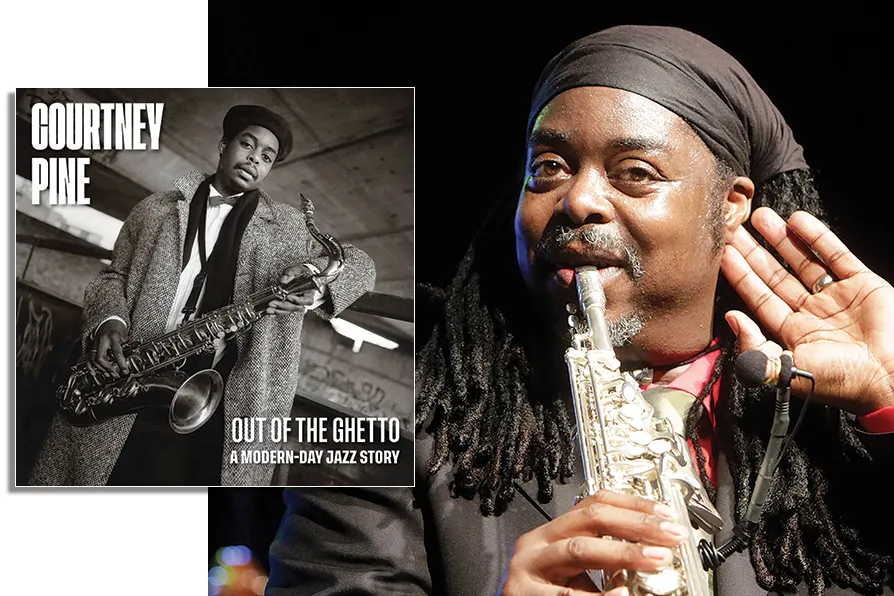
FORTY years ago, the 1964 Paddington-born saxophonist Courtney Pine waxed his first album, Journey to the Urge Within. It was a powerful debut and began an exultant career in British and international jazz.
When I spoke to him in the lounge of the Soho Hotel, close to the dwelling of one of his Jamaican forebears, the revolutionary nurse of Crimea, Mary Seacole, he told me about his early years.
“My dad was a carpenter, my mum a housing manager. I went to Rutherford School on Edgware Road where I first learned recorder, then clarinet and finally saxophone when the boy who had the school’s only saxophone stopped going to his lessons.
“When I listened to ska and early reggae records at home, I loved the saxophones and guitars that I heard on them, but never realised they were being played by Jamaican jazz musicians like Tommy McCook, Roland Alphonso and the wonderful guitarist Ernest Ranglin.
“The saxophonist who really drew me into jazz was Grover Washington Jr playing Just the Way You Are at the 1976 Montreux Jazz Festival.
“So I went to the Brent Town Hall Record Library to borrow some jazz records. I saw a sleeve of a black saxophonist standing next to a cactus, wearing a stetson hat and pistol holster, which attracted me because me and my friends all loved spaghetti westerns.
“So I borrowed it and it was the Sonny Rollins album Way Out West. I loved it! It took me into the heart of jazz. Later, in 1989, I recorded one of its tunes, I’m an Old Cowhand from the Rio Grande, on my album, The Vision’s Tale.”
As a teenager, he got to know some of the major free jazz musicians in London. Revolutionary drummer John Stevens took him to sessions at The Plough in Stockwell, Harry Beckett the Barbados-born trumpeter inspired him and the ex-Salvation Army saxophonist Elton Dean and master of the reed Paul Dunmall all galvanised him.
“These guys nurtured me, they made me sound good. They helped me take away all the boundaries to my playing, they set free my musical impulses and got me away from all restrictions.” He uses a musical persona from his Jamaican heritage of A Ragamuffin’s Tale to tell in notes what he broke away from in his 1988 album, Destiny’s Song: The Image of Pursuance.
I told him that my favourite record of his is one of his least-known, on the German label West Wind, of him playing live and very free in 1987 with the marvellous Beckett, the exiled South African pianist of the Blue Notes, Chris McGregor, the Boston-born veteran drummer Clifford Jarvis who had played with Coltrane, Sun Ra, Pharoah Sanders and Archie Shepp, and Derbyshire’s bassist of Soft Machine, Fred Thelonious Baker.
He remembered the sessions well. “I was so young then,” he recalled, “and those guys were great. Their music was free and unlimited and I just went with them!”
Courtney defines himself as an Afropean, yet simultaneously he has never left behind his family Caribbean roots in Jamaica’s Blue Mountains, close to the Maroon country.
“You play out of your heritage from the womb to the bandstand,” he asserts. Just listen to his prime album House of Legends to know what the Caribbean and its heroes mean to him, from Jamaican rebel slave Sam Sharpe to the pioneer Trinidadian activist and communist in New York and London Claudia Jones, to the young Eltham martyr Stephen Lawrence, Nanny and the Maroons and the Carib rebels of St. Kitts. They are all there, pulsating, grooving with the present and the future.
In his 2017 album Black Notes from the Deep, in between the lyrical and lovestruck balladic tracks is the menacing echo of Powellism, suddenly even more redolent in now-times, Farage-times, called Rivers of Blood.
How do jazz musicians actively combat the racism growing around us, both across Europe and the US, as Max Roach, Coltrane, Charles Mingus and Archie Shepp did so explicitly in the 1960s Civil Rights Movement?
“We need to be even more creative to combat all this. We need to reach out to the creativity in fellow musicians and all our listeners to ignite their human resistance to all forms of racism and restriction — that’s what we must do!”
Out Of The Ghetto, A Modern Day Jazz Story is released by Universal Music Recordings on April 24. Courtney Pine performs at Cheltenham Jazz Festival (April 29-May 4), Ronnie Scott’s (May 7-8), Love Supreme Jazz Festival (July 3-4).
