
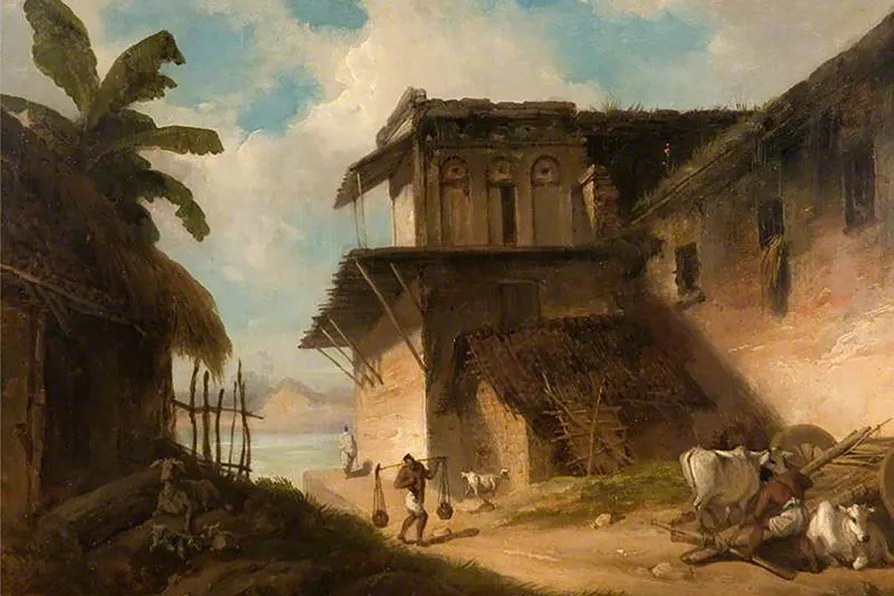
APURBA CHATTERJEE explains how British artists in India used the “picturesque” to reshape colonial landscapes and celebrate imperial power


‘Ey! Behave!
SYLVIA HIKINS is persuaded by an entertaining play that the true miracle of Lourdes would be for attitudes toward disability to change
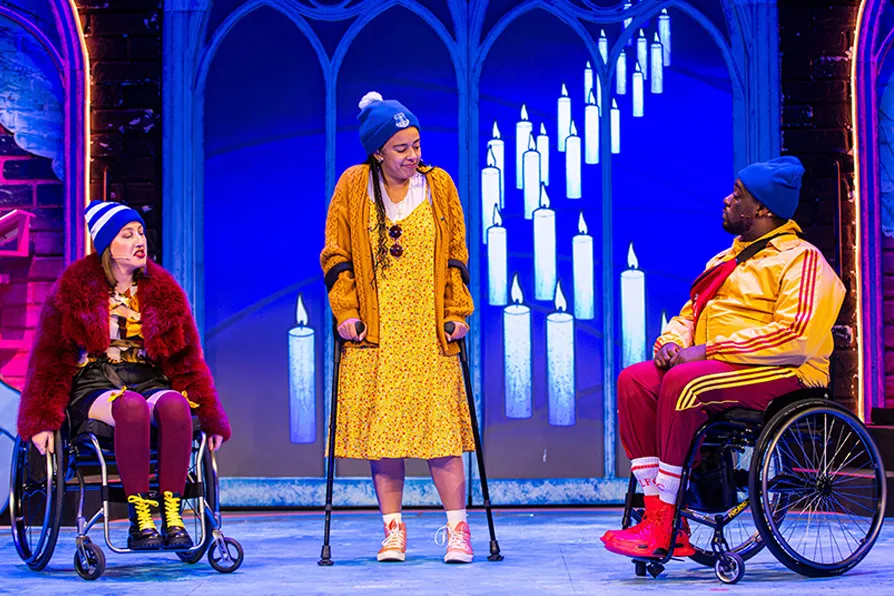
 A PASSION FOR DISABILITY RIGHTS: The cast of Laurence Clark's Cured [Pic: AB Photography]
PAUL DONOVAN welcomes a revival of Reginald Rose’s classic play that reminds us of the fundamental need for trials with juries
SIMON PARSONS applauds an exceptional performance of Wesker’s little-known play, by the same actor for whom it was written 45 years ago
ANDY HEDGECOCK and MARIA DUARTE review Late Fame, The Death of Robin Hood, Leviticus, and Gail Daughtry and the Celebrity Sex Pass
ANGUS REID recommends a uniquely accomplished documentary collage that contemplates our relation to the natural world
GORDON PARSONS enjoys Kant’s ‘mind-boggling’ theory of human reality: that we create the reality we experience





Cured
Royal Court Theatre, Liverpool
★★★★☆
Laurence Clark, comedian, writer, actor, was born with cerebral palsy and through the media he works with, campaigns to change public perceptions of disabled people.
In his latest play Cured, performed in association with the Birds of Paradise Theatre Company, we join four disabled Scousers, three in wheelchairs, one on crutches, on a pilgrimage to Lourdes. Although led by a nun and accompanied by a priest, the Scousers are determined to have a great time that includes pub crawling, mucking about, having it away, just like many of us do while on vacation! St Bernadette, originator of the Lourdes pilgrimage, watches it all from the back of the stage, eventually telling them in a Scouse accent: “Ey, behave!”
The curtain goes up revealing a religious Lourdes setting — church arches, angels wings, St Bernadette on stage and later, God coming out to communicate with us. His figure clearly shows that He is a mixture of both male and female which made me feel unusually comfortable!
From the start it’s obvious that the Scouse pilgrims are there to challenge assumptions made about the desires and activities of people with “disabilities.” Hidden fancies are allowed to surface and develop.
Connor, young and wheelchair-bound, has embarked on this pilgrimage with the intention of losing his virginity. Disabled people can feel passion. Connor is destined to fall asleep with a pilgrim Rose in bed, both lovingly in each other’s arms. Sister Mary tells them they should feel “ashamed.” Symbolically he does, later, literally stand on his own two feet and hoodwinks the onlookers into believing that the dip into holy water has created another miracle.
Likewise, when lowered into holy water, pilgrim Helen declares, “It hasn’t worked.” Pilgrim Rose, submerged, shouts, “Hell, I’m freezing” and has to be escorted back to her chair.
Nun, Sister Mary, constantly reminds them of how, according to the church, they should behave. She takes all their passports, confiscates bottles of wine they have purchased, makes an unannounced visit to the men’s toilet where she finds wheelchair bound, Callum, who is gay, having a wank. Two immortal sins that must be punished. She disengages the motor on Callum’s wheelchair rendering him immobile. He later gets his own back by reversing over her foot and she disappears limping. After this we are told, “Sister Mary has a PhD in guilt.”
We are also asked from the wheelchairs: “Do you think I need to be cured because I have a disability?” Quick fixes clearly aren’t the answer. Whether disabled people feel they can be themselves and do not need to be cured of their disability depends very much on how society and individuals define “normal.”
This play demonstrates that the desires of disabled people are not hugely different from those of non-disabled people. We have to change the fundamentals of inclusion rather than to expect those with a disability to “fit in” with the so-called “able bodied.”
The last scene shows they were all on a learning curve. Sister Mary at last sees the limitations of her rigidity and apologises for her responses, recognising that there are no magic answers. In her final moments on stage, Bernadette herself says to Sister Mary, “Open your heart, open your mind. If you want a job done right, ask a woman.”
Many of the so-called rules are nonsensical, and don’t deal with the realities of life. Real cures are in essence more likely to be human, not miracles. Courage is sometimes about telling the truth to discover your own voice. We must search for the goodness in people.
This powerful play gives insight into being wheelchair-bound and the resulting social attitudes. The actual theatre performance in an example of how we must practice what we preach. There’s wheelchair access, audio descriptions, large letter captions, thereby assisting those with a disability to enjoy the show.
Question: Do we really need to be miraculously cured? An open minded, supportive society is more likely to assist a happy lifestyle. Cured provided an entertaining evening that combined comedy with strong messages of how attitudes need to change.
Runs until June 6; Royal Court Theatre, Liverpool. Box Office: 0151 709 4321, liverpoolsroyalcourt.com; then touring to Belgrade Theatre, Coventry June 11-13, and Hull Truck Theatre, Hull, June 24–27.
