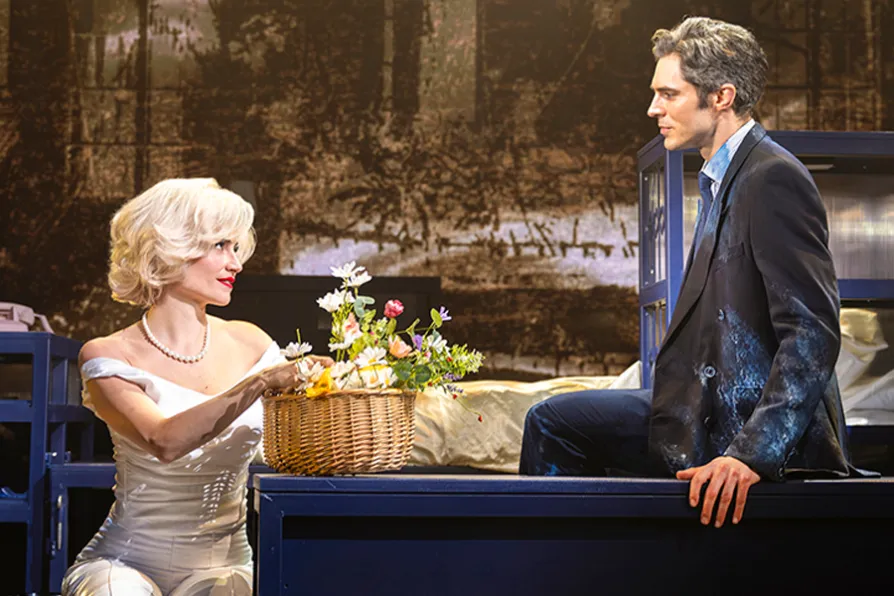
PAUL DONOVAN applauds an intriguing multi-layered depiction, dominated by a stunning impersonation of Marilyn herself


 Latest editorial

Solidarity with Cuban culture
In the face of Trump’s brutal aggression, DODIE WEPPLER and TRISH MEEHAN invite you to share some of the masterpieces of Cuban cinema

LEO BOIX applauds an audacious, self-questioning film about grief, friendship and film-making
MARY CONWAY admires a brave and topical study of Armageddon that is, unfortunately, unable to come to a conclusion
ANDY HEDGECOCK, JAMES WALSH and JAMIE BRITTON review Hanging by a Wire, I Want Your Sex, The Pout-Pout Fish, and Rise of the Foot Soldier: Retribution
Chris Searle speaks to US pianist RAN BLAKE
The Bard hands out medals for his Edinburgh campaign and urges us to support The Men They Couldn’t Hang





CUBA is facing the most formidable challenges since 1959 as US threats to its sovereignty escalate. Severe fuel shortages and widespread blackouts have disrupted every aspect of daily life across the island. Workplaces and schools are only partially operating and transport issues are further testing Cuba’s resilience at every level.
In the midst of the crisis one area that is highlighting the nation’s resilience is the cultural field where artists are continuing to perform across the country in difficult circumstances. The Cuban national ballet is performing through March, the 23rd International Documentary Film Festival is taking place, albeit with a number of hybrid screenings, and local music and dance performances continue to entertain audiences across the island.
As ever cultural participation and provision is showing its centrality to the revolution and its importance in the continuing defence of the island’s sovereignty.
Over 1,000 filmmakers from all over the world have recently responded to the heightened threats from the US government with an open letter calling for “the men and women of cinema” to take a stand against the aggressions and threats against Cuba, and to affirm “its generosity, dignity, and capacity to bring us together to dream and think, as a greater homeland, about a more just and humane world.”
Support for Cuba’s cultural heritage is an integral part of our solidarity with Cuba and it is in this context that this year’s Screen Cuba festival is not only a celebration of film, but also a vital space for solidarity, dialogue, and cultural exchange.
Screen Cuba: Films To Change The World, a celebration of Cuban cinema, returns to London on March 15, with additional screenings to follow in other cities. The festival showcases rarely screened films from the early years of the revolution to present day productions.
A highlight of this year’s edition is the participation of distinguished Cuban guests — Tania Delgado, director of the Havana Film Festival, and the acclaimed actor Mirta Ibarra, widely known for her role in Strawberry and Chocolate (1993). Ibarra appears in Up to a Point (1983), which features in the festival programme.
This year’s festival comes at a critical time, and the festival themes of Love and Resilience shine through in the festival’s programme. Lucia (1968), directed by Humberto Solas and one of the most emblematic films in Cuban cinematic history, narrates the lives of three women who share the same name but come from different eras and classes. Together they are symbolic of the Cuban nation as it goes through three moments in the process of decolonisation, united in their search for freedom.
The film is known for its innovative filmmaking techniques for a new Latin American cinema (or “Third Cinema”): exceptional camera work, unique handheld sequences, and music used as a narrative form. The stunning soundtrack is by Cuban guitarist and composer Leo Brouwer who led the experimental sound for film unit in Havana. It is listed as one of the top 10 most acclaimed Latin American films of all time.
Another iconic film in the programme is The Last Supper (1976) by renowned director Tomas Guttierez Alea. Michael Chanan, the author of Cuban Cinema, describes it as a “subtle, ironic anti-clerical fable.” Set just after the Haitian revolution of 1795, a slaveowner invites 12 enslaved men to enact the Last Supper in “an echo of the beggars’ blasphemous celebration of the Eucharist in Bunuel’s Viridiana.” A tour de force of black comedy, the film was inspired by a real story. The impressive dinner sequence is the structural core of the film: almost an hour long, and which feels experimental and chaotic. It is an extraordinary meditation on “speech and power, slavery and freedom, submission and rebellion, ideology and oppression, ritual and ethics.”
While Cuban cinema excels in historical dramas, music is another of its integral elements. El Benny (2006), directed by Jorge Luis Sanchez, offers a compassionate portrayal of the life of legendary singer and bandleader Benny Moré (1919–1963). The film celebrates Moré’s extraordinary musical talent, illuminating the broader social context of music-making by black musicians in pre-revolutionary years. Distinguished by its outstanding soundtrack, El Benny focuses on the 1950s, a crucial decade in Moré’s emergence as one of the greatest Latin American musicians of the 20th century.
Capablanca (1986) features another remarkable Cuban, José Raul Capablanca, the world chess champion from 1921-1927. He inspired generations of Cubans to play chess and, in later years, both Fidel Castro and Che Guevara promoted it as a tool in educational development.
Directed by Manuel Herrera, the drama is set mainly in Moscow in 1925, where Capablanca participates in a crucial international tournament as he falls in love with a Bolshoi ballerina. Despite embellishing the truth, this Cuban-Soviet production was a big hit in both countries: part sports pic, part tragic love story. The film was lost to Cuba from the 1990s until 2024, when a complete print was discovered in the Moscow film archives making possible an excellent restoration by Russian and Cuban specialists.
This successful restoration is part of a broader initiative by the Cuban Film Institute to preserve works from its vast archive that have deteriorated, largely due to the island’s humidity. The festival programme features several restored titles, including the short animation Elpidio Valdés: Una Aventura (1974), whose restoration was funded by Screen Cuba and its supporters.
Competition: Screen Cuba is offering a pair of free tickets to Morning Star readers to see The Last Supper on Tuesday March 24 at the ICA, London. Email us at cubafilmfest@gmail.com with the answer to this question: Can you name one other film directed by Tomas Alea? Please include your full name and a phone number. Deadline midnight Wednesday March 10.
For venues, dates and tickets see: screencuba.uk
