ROB WARZYNIAK wades knee deep through a pile of ‘dead canaries’ of Trumpist policies which exacerbated the horrors of US capitalism domestically


 Latest editorial

Scottish Labour's cloak of invisibility
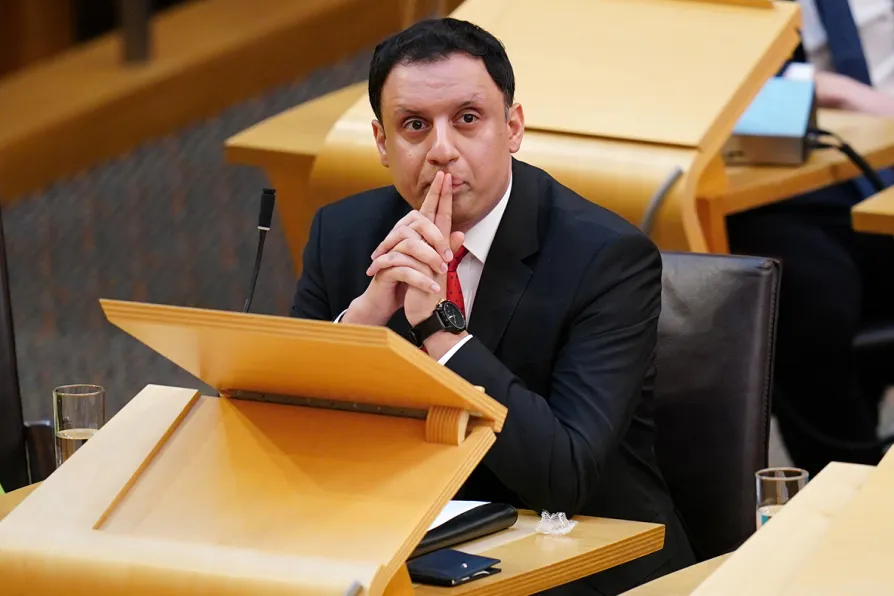 Scottish Labour leader Anas Sarwar during First Minister's Questions at the Scottish Parliament in Holyrood, Edinburgh, November 27, 2025

Without evidence or Nato consultations Berlin’s answer to the Leipzig incident is a rupture of relations. SEVIM DAGDELEN examines why
FRANCISCO DOMINGUEZ introduces the background to a conference on defending Latin America’s sovereignty
The glacier collapse in Nepal is yet another warning that a warming planet is making Himalayan disasters more frequent and destructive – but the countries facing the greatest risks are often those least responsible, says LI YANG
Nick Blair is set to benefit from a hugely lucrative contract to ‘virtually’ train the British army for its next war. Like father, like son, writes SOLOMON HUGHES
Even when tragedy strikes, Western media cannot resist the opportunity to turn it into a sordid propaganda opportunity, as the Nepal-China border tragedy shows, writes CARLOS MARTINEZ
Trade unions should be at the heart of the anti-racist push for reparations for the historic legacy and continuing impact of slavery, writes ROGER McKENZIE





LAST week Scottish Labour leader Anas Sarwar told the Telegraph, of all papers, that he will win the Scottish Parliament elections in May despite Keir Starmer’s leadership, not because of it.
Exactly what Starmer is expected to do in the run up to and during the actual election campaign, is anybody’s guess. Perhaps he has his very own, Harry Potter-style, cloak of invisibility that he can wear should he come anywhere near Scotland. More likely party managers will only allow him to appear in Scottish destinations when he has something positive to say. So, not a lot.
Scottish Labour will certainly need to have something close to a magical solution to win this election, at least according to the polls.
Ballot Box Scotland uses a five multipoll average. According to that average in May 2026 the SNP will win 63 seats, the Tories 10, Scottish Labour 18, The Scottish Greens 10, the Lib Dems 10, and Reform UK 18.
Scottish Labour is, however, not entirely lost in a political fantasy in believing that it could do much better than that. The forthcoming election is taking place in a policy, nearly politics-free zone. I suspect potential supporters of Reform UK would be hard pushed to tell you a single policy that Reform is espousing. It is what they are against that motivates Reform supporters — a political elite that has failed them in health, housing, jobs and social security as well as increasingly believing the notion that immigration is the cause of these problems. (According to YouGov, 53 per cent of Scots believe there has been too much immigration into Scotland over the last decade.) In Scotland the governing elite is the SNP. So Scottish Labour hopes that the undeniable and regressive SNP failures are seen as being linked to the pursuit of independence.
But there’s more to Scottish Labour’s strategy than that and it is even more negative. Each constituency that is targeted by Scottish Labour will be subject to the “Hamilton” process. In the Hamilton by-election of last June, Scottish Labour defeated the SNP by identifying who the Labour voters were and just as importantly delivering them to the ballot box booth — around 8,000 of them. Would delivering the Labour vote alone be enough to win them a significant number of first past the post seats? No. They would need the support of voters from other parties, inevitably on Labour’s right.
Does it sound plausible that Scottish Labour might be able to persuade enough voters, even Reform voters, to give Labour their constituency vote to defeat the SNP because they can support Reform in the regional list where seats are allocated proportionally and Reform is likely to pick up all of its seats?
The immediate implications of a strategy that plays to an even more toxic alliance, this time with Reform, than the disastrous “Better Together” did with the Tories, are not clear. Certainly, it means that Scottish Labour need not trouble themselves with finding a way to talk to many of those who previously voted SNP but have since lost faith. Despite the party predicted 63 seats, the Ballot Box Scotland voting average is only 35.4 per cent for the SNP for constituency seats, barely more than a third.
To exploit such a comparatively weak SNP base, Scottish Labour could have promised that they would campaign for more powers for the Scottish Parliament, including the power to call a referendum, as well as economic powers to tackle the social ills that the SNP have allowed to mushroom. Even within existing powers Scottish Labour could have committed to using wealth taxes, as advocated by the STUC, to improve services. Indeed, initially Sarwar seemed to treat such radical constitutional and political change seriously, but his interest evaporated under pressure from Starmer and the promise of a munificent, high-growth, neoliberal British economy. Such a radical agenda would have allowed Scottish Labour to offer an alternative, not just to the SNP, but to Reform UK and it would have motivated Labour members, voters and trade unionists to work for a Scottish Labour victory.
Still, given the softness of the SNP support, it is not ludicrous for Scottish Labour to believe that it could mount multiple Hamilton-style ambushes. Sarwar has certainly shown that he will brook no obstacles to the success of this strategy. It will depend on very narrow margins.
So many Scottish Labour Party members were bewildered when the popular Pam Duncan-Glancy, clearly under pressure from the leadership, decided to stand down as the candidate for the Maryhill Kelvin seat in Glasgow.
Pam is a hard-working and committed MSP. And whatever else she is, she could not be accused of being unprincipled. As an opponent of assisted dying on the one hand and a strong advocate for trans rights on the other, she sticks by what she believes. That included standing by a friend who had committed a heinous offence but had served his sentence. Of course, that made her easy prey for political opponents, including the SNP. It is difficult to believe that her political demise was not related to the wafer-thin margins that Scottish Labour’s electoral strategy depends on and Sarwar’s perhaps, politically fatal addiction to it.
For such a strategy also depends on mobilising hundreds of Scottish Labour activists committed to winning, and on getting hundreds of thousands of Labour voters out to vote. That cannot be done on the basis of unsavoury, unprincipled alliances. Such a mobilisation would surely be more likely if it were based on a principled and radical response to the bogus claims of the benefits of independence on the one hand and the noxious slogans of Scotland’s ultra-right on the other.
It is quite likely that on May 8, the day after the Scottish Parliament elections, Anas Sarwar will be looking to borrow Starmer’s invisibility cloak and there may well be many in Labour’s ranks who will wish they would both just disappear.
