
Tony Benn’s constituents chose him by an overwhelming majority — but because he had inherited a peerage, parliamentary rules declared their choice invalid, writes MAT COWARD


Refugee massacre in Spanish colonial enclave of Melilla just ahead of Nato’s Madrid summit – a mere coincidence?
Spain is seeking Nato protection for Melilla, where the massacre occurred, and Ceuta, its other colonial enclave on the north African coast. The Nato summit declared irregular migration from Africa to be a threat to the ‘state security’ of its members, reports PAVAN KULKARNI
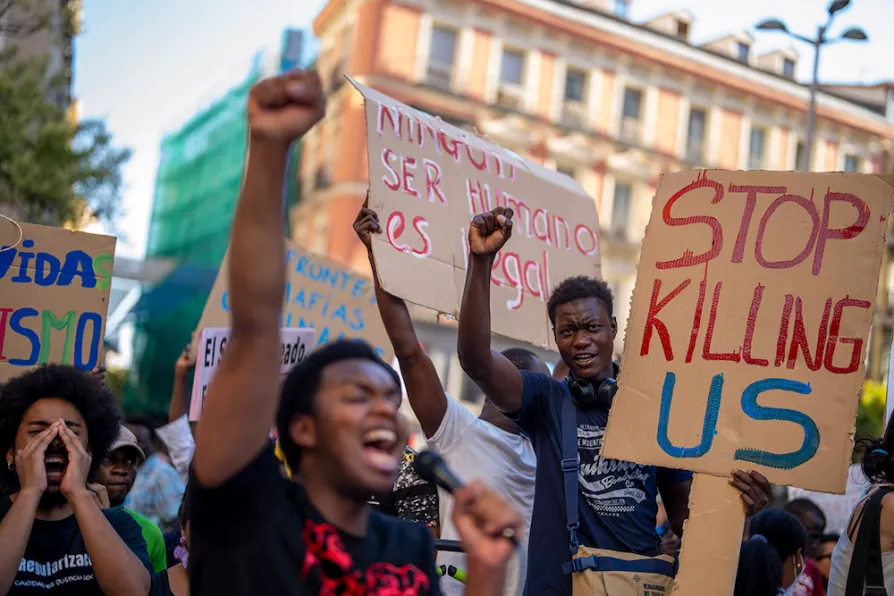
 People shout slogans during a protest over the deaths of at least 23 people at the border between the Spanish enclave of Melilla and Morocco grow at Callao square in Madrid, Spain, Friday, July 1, 2022.

The real welfare dependency is at the top of our society, says ALAN SIMPSON
Two months of student unrest have forced out India’s education minister and rattled the BJP regime. Could this be the beginning of the end for Modi, asks Communist Party of India (Marxist) general secretary MA BABY
Councillor SAM WHEELER says there’s a tangible shift in mood on the left in the city whose mayor has recently become PM — but there’s no room for complacency
Communist Party leaders Alex Gordon and Lorraine Douglas deliver vital medicines in trip to besieged socialist island
TUC Cymru is playing a leading role in tackling far-right ideas in the workplace, says LAURA DOEL





A KEY agenda of the Spanish government in the Nato summit which concluded in Madrid last week was to turn its colonial enclaves on the north African coast, Ceuta and Melilla, into Nato protectorates.
Melilla is where dozens of African refugees were massacred on June 24.
Several reports indicate that Nato has agreed to extend protection to these north African cities of Spain.

Similar stories
CARLOS MARTINEZ shows how EU, Israel and US shenanigans were used in an attempt to destabilise Spain’s mildly socialist government

Spain has joined South Africa’s ICJ genocide case against Israel while imposing weapons bans and port restrictions, moves partly driven by trade unions — proving just how effectively civil society can reshape government policy, writes RAMZY BAROUD