ROB WARZYNIAK wades knee deep through a pile of ‘dead canaries’ of Trumpist policies which exacerbated the horrors of US capitalism domestically


 Latest editorial

A pond brought back to life
Volunteers have helped revive a pool steeped in England’s rural past and now bursting with life. MARK SEDDON takes a look
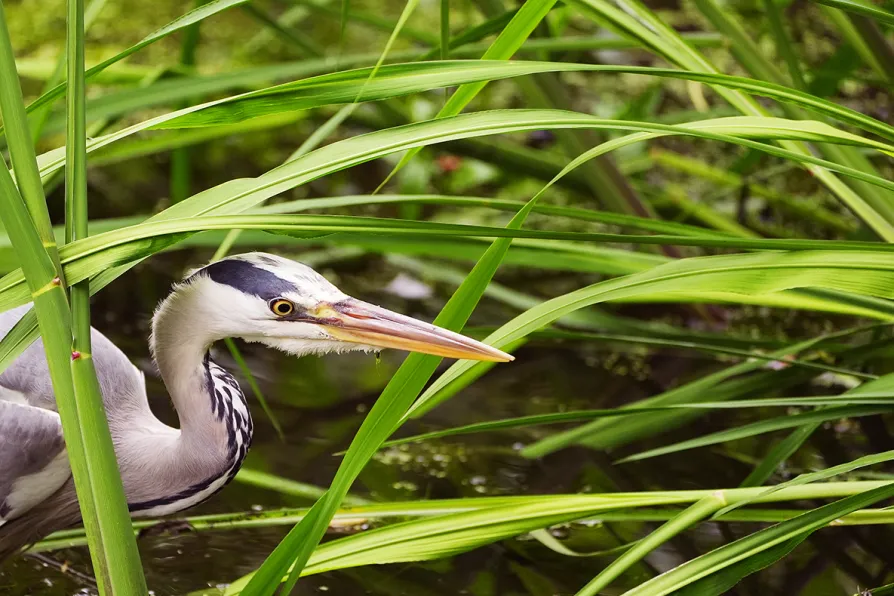 A heron hunts on the pond in Dublin's botanical gardens on the first day of the Meteorological summer, June 1, 2025

Without evidence or Nato consultations Berlin’s answer to the Leipzig incident is a rupture of relations. SEVIM DAGDELEN examines why
FRANCISCO DOMINGUEZ introduces the background to a conference on defending Latin America’s sovereignty
The glacier collapse in Nepal is yet another warning that a warming planet is making Himalayan disasters more frequent and destructive – but the countries facing the greatest risks are often those least responsible, says LI YANG
Nick Blair is set to benefit from a hugely lucrative contract to ‘virtually’ train the British army for its next war. Like father, like son, writes SOLOMON HUGHES
Even when tragedy strikes, Western media cannot resist the opportunity to turn it into a sordid propaganda opportunity, as the Nepal-China border tragedy shows, writes CARLOS MARTINEZ
Trade unions should be at the heart of the anti-racist push for reparations for the historic legacy and continuing impact of slavery, writes ROGER McKENZIE





WHAT a difference a year makes! Last spring when I drove over to one of our local commons, the newly dredged pond was dark and seemingly lifeless.
Volunteers had been hard at work, clearing some of the trees that had crowded this watery place, and the ground was criss-crossed with deep ruts and newly exposed stumps.
Restoration of natural habitat can sometimes seem brutal and nowhere more than here. Looking around I wondered how long it might take for nature to reclaim this pocket of land, a relic, as are most commons of mediaeval, pre-enclosure times?
I had been transported back over the centuries and imagined for a moment a local farmworker grazing his pigs on the fallen acorns and of the sounds drifting across the still air from households who knew that this land was theirs collectively; a place to gather firewood, to coppice the ash and the oak and graze sheep. No tythes for the church or landlord to be paid here!
The small common is this spring a wonder to behold. Nature has simply reclaimed what is hers. The once dark and forbidding pond is now covered with a sheen of water crowfoot, whose white flowers carpet the water.
Where some of the dredged mud has been piled at the water margin, a Canada goose sits warily, one eye open, on her nest surveying all before her. A member of the local volunteer group who worked so hard to restore the common to the vibrant natural habitat it is fast becoming is busy pond-dipping with a giant net.
As it is emptied into a large tank, a kaleidoscope of pond life emerges. First, wriggling tadpoles and then, joy of joys, a palmate newt, which does its best to hide in the weed with which it had been unceremoniously deposited. If only it would turn on its back to reveal the vibrant colours and patterns on its belly for which it is famous!
Then come water boat-men, shiny whirligig beetles and the fry of one of the large diving water beetles. When they are bigger, the latter are no friend to the tadpoles. One of the locals who has grown up around these parts said that she hadn’t seen much frogspawn this year; others of us responded that we had never seen so much!
This amazing bounty of life from what had more or less become a bog, fast being overrun by invasive willow, also owed much to the reduced tree cover around the pond. And as I looked at what had been bare earth and deep muddy ruts a year ago, now I could see primroses in profusion alongside foxgloves, whose tall spires of pink will rise in a few weeks’ time.
Everywhere was a riot of exuberant growth. On the edge of the common, just metres away from where the woodland ends grow two young saplings that have been nurtured by the local volunteers. One is a “small-leaved” or East Anglian elm, the other is a black poplar, the least common of our native trees, and which have a few strongholds including in these parts of the Borders and over in Aylesbury Vale in Buckinghamshire.
The black poplar is an old favourite of mine, since I was introduced to the tree a couple of decades ago by my old friend Roger Jefcoate, known affectionately among his friends as the “guerilla tree planter.”
Should you ever be in north Buckinghamshire or Milton Keynes and pass a roundabout with a tree growing in the middle of it, the chances are high that Roger will have planted it in the dead of night.
This he would do with the aid of a long spike and a whip of black poplar, for poplars, as with willows can root very easily indeed if the ground is damp. I would like to believe that he may have come all the way from Winslow to the common to plant ours. I shall have to ask him when I see him again.
For many years I treasured a rolled-up 18th century print of the pamphleteer, journalist and radical politician. William Cobbett, which Michael Foot had given me.
It was only after I had it framed that I did some serious reading about a man who devoted much of his life to speaking up for the rural poor. He famously wrote Rural Rides in furtherance of his often rumbunctious campaigns; for Cobbett was never concerned to hold back in any argument.
One of his famous rides took him to the wilds of Herefordshire where he marvelled at the rich soil, the size of the turnips and the trees, which tended to be so much bigger and taller that their Home County cousins.
Did Cobbett ever clap eyes on the Great Oak at Eardisley? This is an extraordinary huge and hollow tree, capable of holding five or more people inside its trunk. When Cobbett came galloping through, the tree would have already been in the autumn of its middle age, since it is believed to be around 900 years old today.
For me this old living marvel is nature’s pillar of the temple. It is one of only a very few trees to have its own sign pointing to it from the narrow lane that doesn’t run too far from its spreading branches.
Britain is home to the largest number of ancient trees in Europe and just to think of those who have hidden or taken shelter inside this ancient tree over the centuries is to begin to appreciate how deeply some of these trees are wrapped into our ancient folklore.
This column appears fortnightly.
