WILL STONE samples the 20th anniversary atmosphere of this eclectic end-of-season indie festival


 Latest editorial
Polluting the streamers
DENNIS BROE observes how cutbacks, mergers and AI create content detached from both reality and history itself
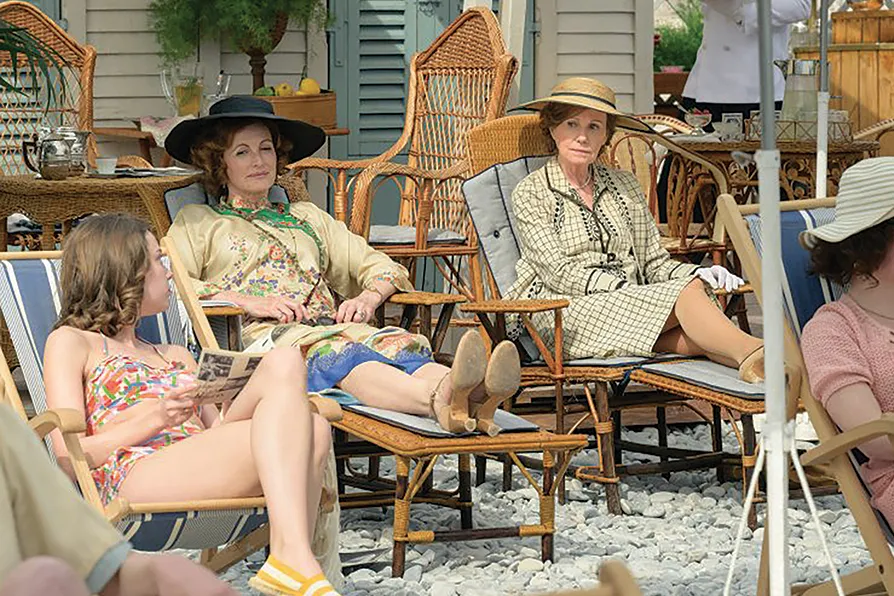 ASKEW OPTICS: Exclusive class paradise / Pic: IMDb

Comics are not just superheroes and spandex – it can be public art, telling public stories, suggests HARRIET EARLE
The bard serenades the Diggers of Wigan and their festive followers
ALEXEI SAYLE speaks to Angus Reid about a lifetime of protest, how to hone political art – and what to do now
ANDY HEDGECOCK, JAMES WALSH, LEO BOIX and MARIA DUARTE review Just An Illusion, Everybody Digs Bill Evans, Blue Film, Oasis: Don’t Look Back in Anger, and Runner
MARIA DUARTE recommends a nerve-wracking reconstruction of the 72 hours before the Normandy landings





THE streaming television industry has a nice way to cover the massive cutbacks in viewing time, in series and in personnel that have been the order of the day for both the streamers and broadcasters.
While the period before the collapse of 2022 was labelled “peak TV,” the current retrenchment is labelled “post-peak TV,” a label designed to remind us that there was once a new Golden Age, and that what has followed is not a hollowing out but a mere course correction that may (in another delusional way of presenting a full-scale crash) favour “quality over quantity.”
This is a difficult characterisation to stomach given the lack of series of substance, and their replacement with cheap documentaries, taking advantage of the True Crime phenomenon, reality series of every flavour and stripe, and a general lowering of not only the quality of the series, but also a blanding out of even ambitious content, as seen most strikingly in the TF1/Netflix French series Summer of ’36. This demonstrates what happens when not a government-backed but rather the leading commercial station TF1 teams up with Netflix.
The series begins admirably as a typical French social realist series about the moment in 1936 when, because of the Leon Blum Popular Front government and the factory strikes that followed it, French workers won the right to two weeks of summer vacation.
The series then recounts their appearing in the glamorous French Riviera capital of Nice where they elicit fear from the returning rich who do not want to share their class paradise. So far, so good, but what then ensures and takes over the series, to the detriment of the class struggle, is a typical murder with the first episode instead devoted to arranging suspects.
What promised to be A propos de Nice, Jean Vigo’s 1930s laying bare of the class subjugation of the service workers by hostile or oblivious hotel patrons, instead turns into Knives Out, Netflix’s hit whodunit which was turned into a franchise.
The influence of the US streamers is growing and constitutes the lion’s share of growth in investment in new series with the reach of the streamers in Europe and across the world increasing with Warners, Disney, Amazon, Netflix, Comcast and Paramount all operating in 40 or more European markets.
Imagine the panic then as two of the top five streamers, Warners and Paramount, are about to merge into a single entity, all controlled by the heavily ideological zionist Larry Ellison and son David, who are attempting already to reshape the US’s most popular broadcasting channel CBS into a pro-Trump, pro-Israeli network.
The European response was a type of government merger, in the form of the creation of a European Council for TV Series, which is talking about pledging £5.9 billion to allow series producers to acquire cross-country investments. There were nine signatories including France, Greece and Italy, and there is some talk in the parliament already of diluting the measure by increasing the payout but allowing the US streamers, who the measure is designed to thwart, to be eligible for funds. Can you detect the lobbyists?
The second major challenge is AI. Last year, at the conference, the talk was also about AI helping writers and producers. Not this year. The panel this year on Generative AI, a major threat to creation, was about regulation and creators hanging onto their rights.
The panel pointed out the courts are divided on the subject of AI appropriating creation and then spitting it back out at the creators with, in the US, not only the New York Times but also Universal studios filing lawsuits against this appropriation.
A Slovakian lawyer, Jana Vozarova, characterised the struggle over copyright as attempting in the courts to reverse the burden of proof, such that, instead of that burden being on the creators to prove their work was appropriated, the burden should be on the shoulders of the AI companies to prove they are not stealing the work.
And so, the onslaught continues with the US streamers presenting themselves as willing partners but actually, along with their AI and social media outlets, inching a little at a time into increased domination of the European market, in yet another area where Europe is in danger of losing its sovereignty.

Similar stories
DENNIS BROE recommends two new series on Apple TV for their examination of inequality and skewed morals

DENNIS BROE points out that two popular TV series promote police violence and disguise it as ‘fun’