
The UK Prime Minister may have the regal touch in northern England, but he’s been wrong-footed on the constitutional challenges posed by the Celtic Alliance of first ministers from Scotland, Wales and Northern Ireland, argues KENNY MacASKILL

Nuclear power’s ‘second renaissance’ is built on a myth
In the second of a four-part serialisation from her new book No to Nuclear, LINDA PENTZ GUNTER highlights how the industry is searching for ways to preserve its relevance
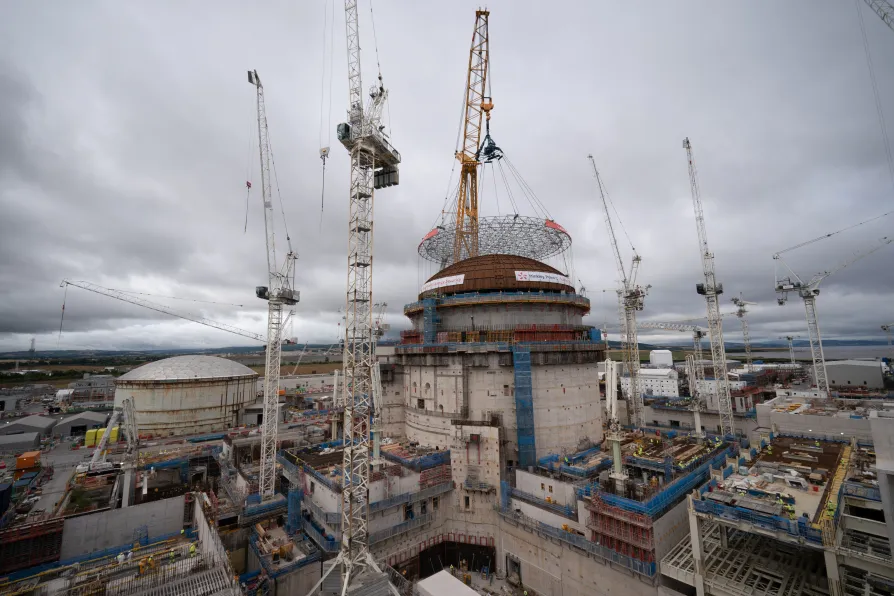
 Hinkley Point C
NEIRLAY ANDRADE, a member of the Communist Party of Venezuela’s political committee, outlines her party’s position on the crisis facing the country
A look at Taylor Wimpey’s accounts shows why Labour’s market-led housing strategy won’t deliver more, cheaper homes, as promised, says SOLOMON HUGHES
DAVID HORSLEY remembers the remarkable life and death of US black revolutionary George Jackson, whose politically passionate prison letters were published as Soledad Brother
Cuban trade union federation CTC leader OSNAY MIGUEL COLINA speaks to Ben Chacko about life and work under a crippling US siege
A part of the British empire’s network of slavery, today the Caribbean island of Nevis faces a new form of exploitation in the form of crypto-colonialism, CLAUDIA WEBBE writes
Challenges from the unscrupulous misuse of AI to steal actors’ voice and physical likenesses is being met with a firm union response, writes LYNDA ROOKE





SO WHY the sudden renewed enthusiasm for nuclear power? Although nuclear power has been in existence as a commercial energy source since the 1950s, it is now finding itself eclipsed as a technology by more advanced and far cheaper renewable energy sources, in particular solar and wind power. While nuclear power has demonstrated what is known as “negative learning” — in other words, the longer it has been around, the more expensive and slower to deploy it has become — renewable energy is getting faster and cheaper almost by the month.
Nuclear power has seen its global electricity share plummet from a global high of just over 17 per cent in 1996 to less than 9 per cent today, while renewables have soared in the same timeframe from a 2 per cent share to well over 15 per cent today.
Consequently, the economically failing nuclear power industry is desperately seeking ways to remain relevant. There are only two ways to do this: by making the argument that it is essential to mitigate climate change, thereby securing massive subsidies funded by taxpayers and consumers; and by providing the pathway to the atomic bomb.
To achieve the former, the nuclear power industry is rolling out its second “renaissance” regardless of the fact that the first one resulted in abject failure. In the US, for example, only two of the 34 promised new reactors heralded under the “Nuclear Renaissance” of the early 2000s ever reached completion.
In France, home to what was supposed to be the flagship “renaissance” reactor with the wildly exaggerated name of Evolutionary Power Reactor (EPR), evolution ended up going in reverse with the vaunted EPR taking longer to build than any of its predecessors. Prices in most cases doubled or even tripled into the tens of billions of euros.
These economic disasters prompted the nuclear industry to revert to an old formula with an even worse track record than that of the current large reactor designs. The small modular reactor (SMR), typically 300 megawatts (MW) or smaller and gaining much hype and fanfare, is a concept rejected long ago because of its poor economies of scale.
Hundreds if not thousands of SMRs would be needed to meet the same energy needs as delivered by a traditional-sized reactor (usually 1,000 MW), including upfront costs for the factory to produce them. But the SMR has been revived to make the convincing-sounding argument that smaller is better and therefore, somehow, also cheaper and safer.
None of this is borne out by reality. The SMR designs in circulation are either simply miniature versions of the current large reactors, with the same vulnerabilities to accident and meltdown and making the same highly radioactive waste. Or they are based on what is known as a “fast reactor” design, one that uses materials volatile to fires and explosions and that produces plutonium, the trigger in atomic bombs. All of this would allow for the continued and seamless transition to nuclear weapons production.
Further, the civil nuclear sector has also made the case that it provides an essential flow of qualified personnel to the military nuclear sector, ensuring the maintenance of the so-called nuclear deterrent. This reasoning has justified not only the squandering of billions of taxpayer dollars to prolong the use of nuclear power but also an obscene increase in military spending, all to prepare for a nuclear war that can be neither fought nor won. As we are seeing today in the US and the UK, especially, this comes at the expense of essential social welfare programmes, plunging more people into poverty.
Those frustrated with fission reactors have turned to another revivalist theme — fusion. The dreams and delusions of fusion — which would involve the fusing rather than splitting of atoms to generate electricity — have been harbored for decades. Fusion is the “breakthrough” that has remained perpetually 30 years away since it was first embarked upon in the 1930s and will likely remain so in perpetuity. The few minor “advances” that garnered recent headlines were minuscule and hugely expensive and, when considered in the context of the immediate, or even future, needs of climate mitigation, entirely irrelevant.
In this book, I endeavor to deliver some clarity and to set the record straight about what “zero carbon” actually means (no energy sources are) and why nuclear weapons do not protect us. But writing the book led me to ask a bigger question. Our nuclear crimes are not committed in isolation, so what underpins our pervasive compunction to continue such a reckless plunder of our planet, actions that can only accelerate and ultimately ensure our own collective demise?
Aside from burning fossil fuels, exploding atomic bombs and melting down nuclear power plants, we have also blotted out the night sky, clear-cut essential forests, sprayed chemicals across our landscapes, and filled the oceans with plastics.
In following such a clearly self-destructive path, we have not only harmed ourselves but also disregarded the survival of the thousands of other remarkable creatures whose homes we have turned into our refuse dumps. (The fact that we refer to “animals” in a derogatory way, worthy of ill-treatment and viewed as lesser than, is already a problem and symptomatic of our misplaced hubris.) In wantonly destroying these crucial members of the web of life, we have set ourselves on the pathway to our own demise.
No To Nuclear: Why Nuclear Power Destroys Lives, Derails Climate Progress and Provokes War by Linda Pentz Gunter is published by Pluto Press, £14.99 (www.plutobooks.com). Part 3 of this serialisation will appear in tomorrow’s edition.

Related articles
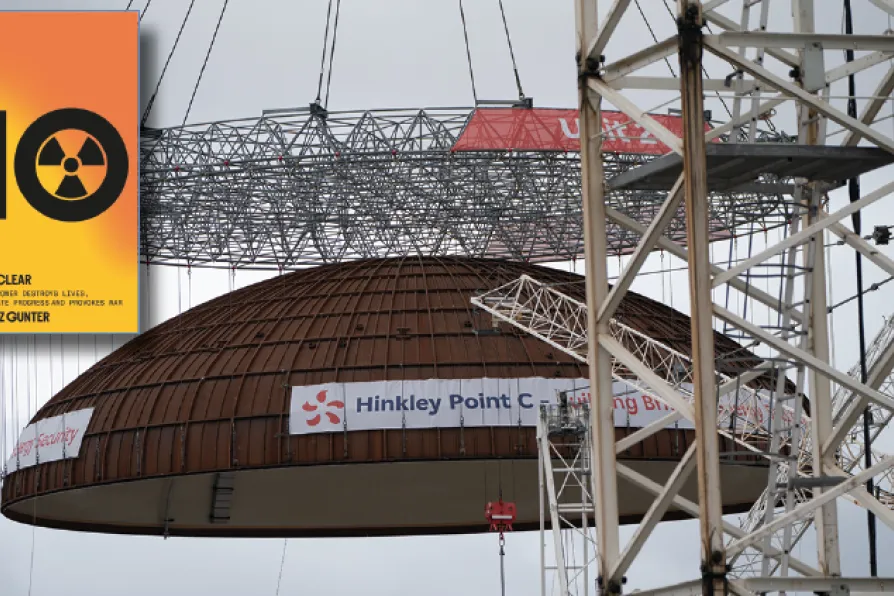
In the first of a four-part serialisation from her new book No to Nuclear, LINDA PENTZ GUNTER outlines the case she will make against this dangerous technology