RITA DI SANTO contemplates two films about journalism that opened this year’s festival


 Latest editorial

Neolithic class compromise
BRENT CUTLER unpicks the complex social relations imagined in a novel about the builders of Stonehenge
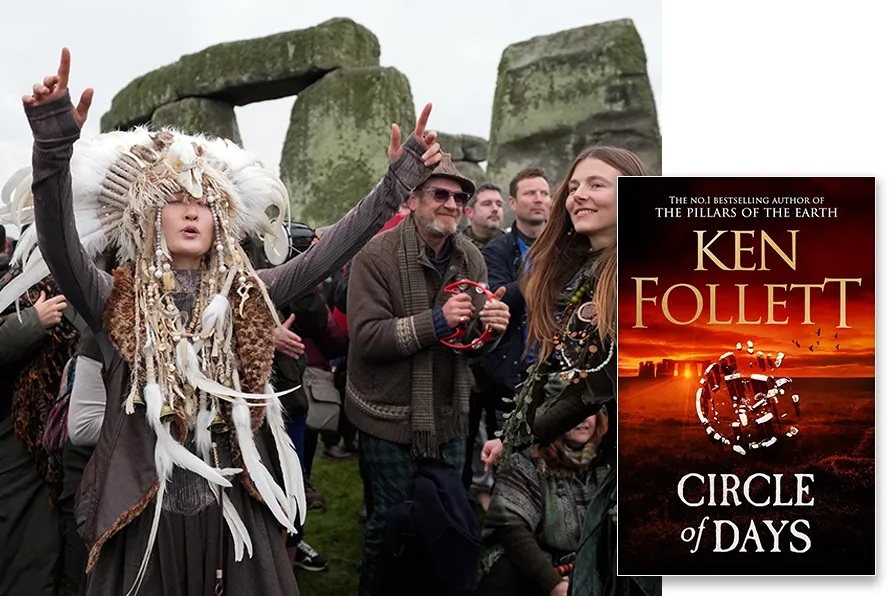 IMAGINARY PAST: Kefan Wang (left), 4th-generation Manchu Shaman, dances as people take part in the winter solstice celebrations during sunrise at the Stonehenge prehistoric monument on Salisbury Plain in Wiltshire, December 2025

GEOFF BOTTOMS applauds a world-class production King Lear that pits late feudalism against a rising bourgeoisie
MARY CONWAY keeps up with the sheer pace of a drama about the terrible gap between sanitised reporting and real-life turmoil of race and gender
New releases from Brian Fallon, Antony Szmierek and Hollow Hand
APURBA CHATTERJEE explains how British artists in India used the “picturesque” to reshape colonial landscapes and celebrate imperial power
PAUL DONOVAN welcomes a revival of Reginald Rose’s classic play that reminds us of the fundamental need for trials with juries





Circle of Days
Ken Follet, Quercus, £10.99
FOR years Ken Follet has been a master of both contemporary and historical fiction. His latest novel, Circle of Days, is an attempt at what is best be described as “prehistoric fiction.”
Circle of Days is set in the neolithic Britain, a time after the development of agriculture but before writing reached these shores. The building of Stonehenge is a major aspect of the novel; a monument still standing just a few miles outside Salisbury in Wiltshire, the area referred to as The Great Plain.
Circle of Days is the first mayor novel set during this period since Bernard Cornwell wrote Stonehenge in 2000. The two novels present very contrasting views of pre-historic Britain. Whilst Bernard Cornwell’s novel portrays a society with an existing hierarchy; Circle of Days is set in a more anarchic world with competing and sometimes conflicting communities – farmers, herders, woodland folk, flint miners and a caste of priestesses. Follet paints a world of conflict.
The farmers are the emerging and most powerful group with an element of the story focussing on the age-old rivalry between them and the herders – the basis of the Cain and Abel myth. Meanwhile the woodland folk, obviously the remnants of a hunter-gatherer society, appear to be a doomed. The novel shows the different attitudes and cultures of the rival groups. Women within the farming community are seen as property of their men; whilst the woodland folk practice a form of free love. The priestesses are an overwhelmingly lesbian grouping; whilst being the only ones who can count.
Follet, who is not a Marxist, is painting a picture of an emerging class society. It is widely known that farming triumphed over hunter gathering and herding, eventually leading to class-society and the rest is history. As one might expect from an author who has always favoured class compromise, he sides with those in the various communities who favour compromise and negotiation. As the story develops, we see tit for tat warfare between the rival groupings; which includes the burning of the forest by herders and attacks on grain stores by woodlanders.
The building of the henge takes place in the later stages of the novel; its construction is the idea of Joia, a priestess who sees it as a means of uniting the rival groupings and bringing more people to The Great Plain. Its construction is opposed by Troon, the leader of the farmers with designs of domination over The Great Plain. As Joia builds the Henge he builds an army.
However, are these not two sides of the same coin? Standing armies and megaliths are both features of a class society; with warriors and priests (in this case priestesses) becoming part of the new ruling-class.
In most ways Circle of Days is pure Follet; it delves into the personal, and often the sex lives of the major characters. It has a strong resemblance to his 1989 novel Pillars of the Earth, set around the building of a cathedral in 12th-century England. Both novels are based on the premise of Build it and They Will Come.
As a novel set in prehistory much of the story is down to the author’s imagination; however it is a fitting tribute to those who built Stonehenge.
