ROB WARZYNIAK wades knee deep through a pile of ‘dead canaries’ of Trumpist policies which exacerbated the horrors of US capitalism domestically


 Latest editorial

Murky waters on the Wye
Beneath the folklore of leaping salmon lies a stark reality: the River Wye is under siege from industrial agriculture – but locals aren’t letting water polluters off the hook, says MARK SEDDON
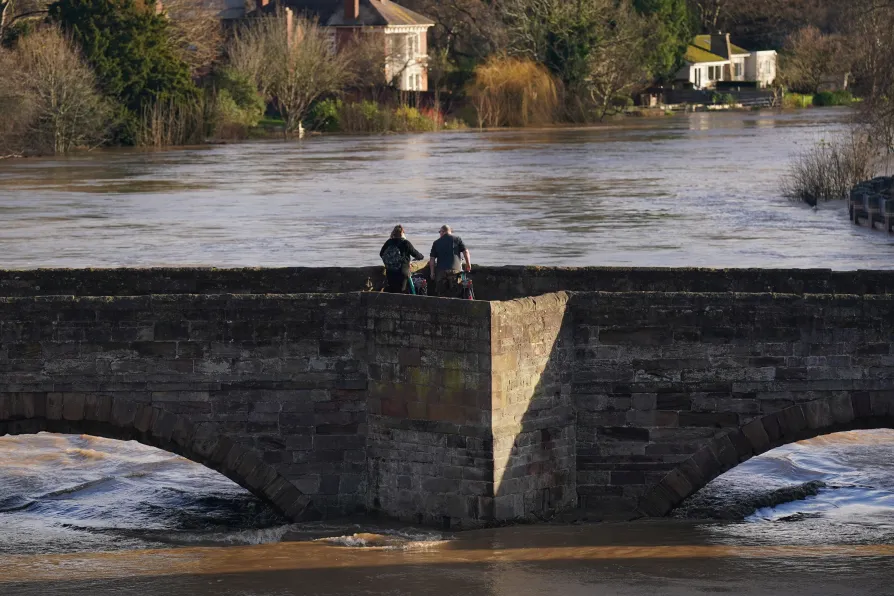 High water levels on the River Wye in Hereford which has burst it's banks, after Storm Darragh hit the UK and Ireland, December 8, 2024
Without evidence or Nato consultations Berlin’s answer to the Leipzig incident is a rupture of relations. SEVIM DAGDELEN examines why
FRANCISCO DOMINGUEZ introduces the background to a conference on defending Latin America’s sovereignty
The glacier collapse in Nepal is yet another warning that a warming planet is making Himalayan disasters more frequent and destructive – but the countries facing the greatest risks are often those least responsible, says LI YANG
Nick Blair is set to benefit from a hugely lucrative contract to ‘virtually’ train the British army for its next war. Like father, like son, writes SOLOMON HUGHES
Even when tragedy strikes, Western media cannot resist the opportunity to turn it into a sordid propaganda opportunity, as the Nepal-China border tragedy shows, writes CARLOS MARTINEZ
Trade unions should be at the heart of the anti-racist push for reparations for the historic legacy and continuing impact of slavery, writes ROGER McKENZIE





IN A small dining area to the rear of the Red Lion pub at Bredwardine, a short skip and a jump from the slow, meandering River Wye, is an enormous, mounted salmon.
It must have been landed sometime back in the 1970s because the salmon has long been in decline in this river, just as it has been throughout these islands and even in previous strongholds such as the Tay and the Spey in Scotland.
Nowadays of course anglers must put their salmon catch back in the river, if they catch anything at all. The pub-cum-hotel is a wonderful three-storied affair and is very popular with visiting anglers during the season. The Wye, in comparison to many other rivers, is still home to large populations of coarse fish, with over 30 species recorded, thus making it one of the most important river systems in Europe.
I think that I must have been in the bar of the Red Lion when I heard a story that turned out not to be one of those old apocryphal fisherman’s tales. According to the grizzled angler telling it, while fishing in his youth from a small rowing boat, a determined salmon heading upriver to spawn literally leapt into his boat!
Many of our rivers and waterways are in a terrible state, courtesy of the privatised water company monopolies. The sheer frustration and fury at what has been allowed to happen right under our noses for decades is almost universal.
Channel 4 Television’s three-part Dirty Business was yet another wake-up call to the sewage and water scandal that sees CEOs and shareholders stuff their pockets, while ministers, whether Tory or Labour, continue to procrastinate and come up with pathetic excuses for not renationalising the water industry.
There are of course plenty of very well-paid water industry sinecures for ex-politicians! And yet the Wye’s problems are not for the most part the result of raw human sewage, more sewage of a different type from the burgeoning chicken industry whose industrial sheds litter the area.
There are estimated to be some 23 million chickens in the River Wye catchment area at any time, and causing what campaigners are saying is massive nutrient pollution. (There are also the sewage discharges by Welsh Water). Fish populations are increasingly being affected, as is tourism while many people who used to love to go bathing and swimming in the Wye just don’t risk it any more.
Solicitors Leigh Day are currently representing over 4,000 people in what is the biggest legal class action in the country against large-scale poultry businesses Avara Foods (a major supermarket supplier and part of the US conglomerate Cargill Inc) and Freemans of Newent as well as Welsh Water for allegedly damaging the Wye as well as the rivers Lugg and Usk.
The big companies are hitting back, saying that they are not responsible for the pollution, but that this is the responsibility of the farmers who buy the feed that creates the pollution. In some respects, observers say, the case mirrors a similar class action against Cargill Inc in the United States. As the buck-passing continues, and spring approaches, will the Wye go green again with algal blooms? Will it be safe to take a dip from the spit of shingle and sand that makes for such a glorious summertime beach close by the old brick-built bridge at Bredwardine that has spanned the river since the late 1700s? And how much longer will anglers be able to sit at the bar of the Red Lion and talk long into the night about the ones that got away?
Never mind the billhooks
AT THE weekend I drove over to Aldwinckle, a honey-coloured stone village not far from the River Nene in Northamptonshire in what is affectionately known as Pytchley country.
Not far from the former steel town of Corby, you could mistake this part of the world for the Cotswolds, but mercifully still largely without the accompanying braying, green-wellied, Range Rover set, who price out the locals.
I was there for the annual meeting of a society that celebrates the life and work of countryman, author, children’s writer and artist, Denys Watkins Pitchford, known by his nom de plume, BB.
Over coffee, I got chatting to a former “Lord Lieutenant” (a ceremonial role) for one of the Midlands counties, who was still in recovery from a conversation he had just had with a newly elected Reform UK councillor, now, remarkably, in a senior Cabinet position. In shock, he recounted the encounter: “His [the councillor’s] response to my request that we start thinking about our annual civic pride event was: ‘No! We aren’t having any of those gay Pride things here anymore!’”
Shortly afterwards I spotted my old friend “Badger” Walker, who hails from Derbyshire and we drifted into a reminiscence about just one of his many hinterlands of countryside-lore and expertise. Badger knows all there is to know about billhooks, which were traditionally used in the countryside to lay hedges.
Just by looking at one, its shape and size, he can tell which county it was likely made in and when. One year, learning that the then Prince Charles also had an interest in billhooks and that he would be opening a nearby country show, Badger decided to take his collection of along to show him.
Unfortunately, the local constabulary who intercepted Badger and his billhooks weren’t persuaded of his story, and the rest is history. (Suffice to say Badger kept his head on his shoulders and was eventually allowed to return home).
This column appears fortnightly.
