The Labour government must deliver on its commitment to bring back privatised services into the public sector. This not only saves money but also creates accountability and generates wider social benefits, argues ANDY MCDONALD MP


 Latest editorial
Minneapolis and the deadly cost of dehumanisation
A society that grows accustomed to ‘undesirable’ people also grows accustomed to undesirable deaths. Minneapolis serves as a wake-up call, including for our own refugee policies, writes MARC VANDEPITTE
 COMPASSION NEEDED: Demonstrators hold signs during a rally against federal immigration enforcement at Federal Courthouse Plaza, Minneapolis, on Tuesday January 27
PCS is demanding the long-overdue return of essential services to public ownership, explains FRAN HEATHCOTE
Despite promises of a new era of insourcing, billions of pounds of public contracts continue to flow to private firms. Unions are now calling for urgent action to bring services back in-house, says EDDIE DEMPSEY
Public ownership of Great British Railways has enormous potential to improve our railway network, but that can’t happen unless jobs, employee rights and union recognition is at the heart of the transition, argues MARYAM ESLAMDOUST
If Labour is genuinely committed to supporting working-class students it must act urgently to reverse the funding crisis affecting universities and colleges, JO GRADY tells Christophe Domec
Challenges from the unscrupulous misuse of AI to steal actors’ voice and physical likenesses is being met with a firm union response, writes LYNDA ROOKE





IN RECENT weeks, Renee Good and Alex Pretti, both 37 years old, were shot dead in Minneapolis during federal immigration actions.
Ten bullets were fired at Pretti while the man was unarmed.
These two killings are causing significant indignation worldwide and are leading to major protests in the US, as well as an open conflict between federal agencies and local authorities.
This is not about “bad cops,” but about an apparatus that is acting increasingly aggressively and allowing itself to be controlled less and less. These deaths are not “accidents,” but the logical endpoint of an ongoing process of dehumanisation.
Dehumanisation
It is tempting to dismiss this brutal violence as an excess of US culture or the whims of an authoritarian president. The truth is much more uncomfortable. What we are witnessing in the US is the physical manifestation of a political climate that systematically reduces migrants and displaced people to “the problem.”
Unfortunately, we see that this has long since become the norm in Europe as well.
As soon as our political discourse ceases to regard people as anything other than profiteers, parasites, or a “tsunami,” the step towards physical violence becomes dangerously small.
In a polarised world where humanity gives way to an electoral scoring frenzy, a bullet or a violent arrest becomes an acceptable instrument.
We do not have to look across the ocean to find victims of this deadly policy. In Europe, too, there are deaths resulting from “the hunt for refugees.”
In my country, Belgium, we bear the scars of Semira Adamu. In 1998, she died after gendarmes suffocated her with a pillow during a forced deportation. Twenty years later, two-year-old Mawda died from a police bullet during a high-speed chase involving a van full of refugees.
Such tragedies are not isolated incidents but the consequences of a policy that hunts people like game. The continuous hunt for undocumented people creates a climate in which the value of a migrant’s life depreciates into an administrative burden that must be eliminated.
Europe’s dirty work in the backyard
While the US builds a wall at the border with Mexico, the European Union (EU) employs an even more cynical strategy: “externalisation.”
We outsource the cruelty to countries on the external border. Through billion-euro deals with authoritarian regimes in Tunisia, Egypt and Libya, we let others do the dirty work, far away from the critical eyes of our own citizens.
We finance the coastguards of dictatorships that drive migrants into the desert or lock them up in torture camps. As long as the figures in Brussels decrease, Europe turns a blind eye to the gross human rights violations being financed with our tax money.
The Mediterranean Sea has, in the meantime, become a far deadlier border than the notorious boundary between Mexico and the US. Every year, more than 3,000 refugees lose their lives while crossing to Europe.
Migration and capital
Why do we keep this violent system in place? Because migration is, in essence, a structural product of global capitalism. This system creates inequality, war and climate damage, forcing people to leave their homes.
At the same time, rich countries attract the labour they need while keeping others out.
This creates a system of “desired” and “undesired” migration. This mechanism serves to maximise profit.
The “reserve” of vulnerable, undocumented people is extremely useful for sectors such as construction, cleaning and agriculture. It keeps wages low and creates a rightless class that can easily be exploited.
Simultaneously, fear of the migrant is stoked to divide the working class against itself.
By pointing to the migrant as the “profiteer,” governments prevent citizens from looking upward at the true profiteers of the system. The dehumanisation in Minneapolis and the pushbacks at our borders serve the same purpose: normalising exclusion to protect the status quo of the powerful minority.
When workers fear for their own social security, the migrant becomes an easy scapegoat. Far-right parties make eager use of this, but so-called centre parties are also shifting further to the right in a race for the strictest asylum policy. The result is a slippery slope toward complete ethical blindness.
The alternative
What is the alternative? It begins with creating legal migration channels. If Europe needs low-paid labour, it must occur legally and with full rights. This prevents wage dumping and pulls people out of the clutches of smugglers.
At the same time, Europe must stop waging wars and supporting dictatorships that force people to flee. If Europe helps to fan the flames of war or allows them to drag on, it cannot simply shift the responsibility of reception onto neighbouring countries.
We proved with Ukraine that we can take people in, so it is possible.
We must work on long-term and fair relationships with countries of origin. We must also invest seriously in regional reception.
Countries such as Lebanon and Kenya take in by far the most people, yet those are the very places where we are tightening the purse strings. If one lesson from the Turkey deal remains clear, it is this: decent funding does make a difference.
A wake-up call for Europe
The deaths in Minneapolis show what happens when you allow a society to grow accustomed to the idea that some lives count less. Today it is undocumented migrants. Tomorrow, as seen in Minneapolis, it may be citizens who act in solidarity or who are simply “in the way.”
We should not believe that Europe is significantly better than the US. We should instead ask ourselves how many deaths we keep out of sight: in the desert, at sea, in detention, during chases, and at deportations.
And we must ask how many political careers are built on the promise of the “strictest policy ever.”
If we do not want to end up with Minneapolis-style scenes on our streets, we must stop dehumanising people now. No outsourcing of violence. No normalisation of pushbacks. No language that reduces people to a pest. The alternative is simply called: equal rights, safe routes, and a policy that does not treat humanity as a luxury.

Similar stories
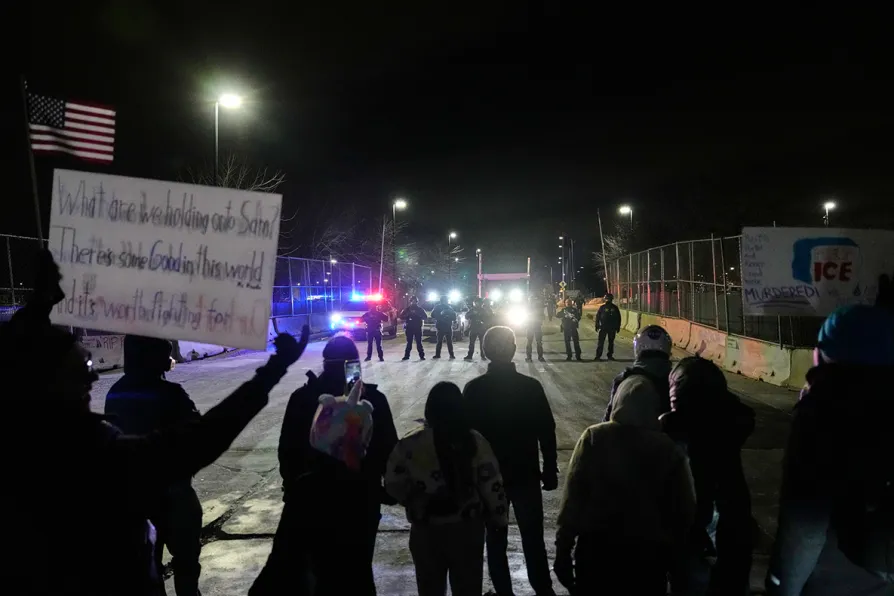
Trade unions and community groups are mobilising to push back against Trump’s racist raids after new revelations of spying on legal protesters. MARK GRUENBERG reports from the US state of Minnesota
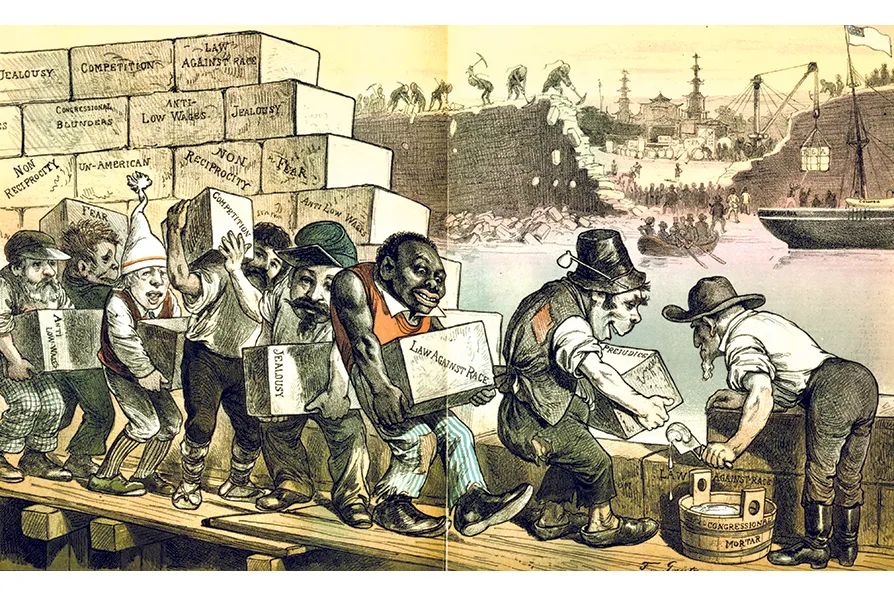
ROY WILKES takes issue with those on the left who argue immigration lowers wages — dividing resident and migrant workers only strengthens capitalist exploitation
Latin America is being swept by a series of right-wing electoral victories. But behind that shift to the right lies less of an ideological conversion than anger, fear, insecurity, and a deep crisis of democracy, asserts MARC VANDEPITTE
The future does not have to be climate chaos and social breakdown. MARC VANDEPITTE looks at the alternatives offered by the Global Justice Report, co-authored by Thomas Piketty