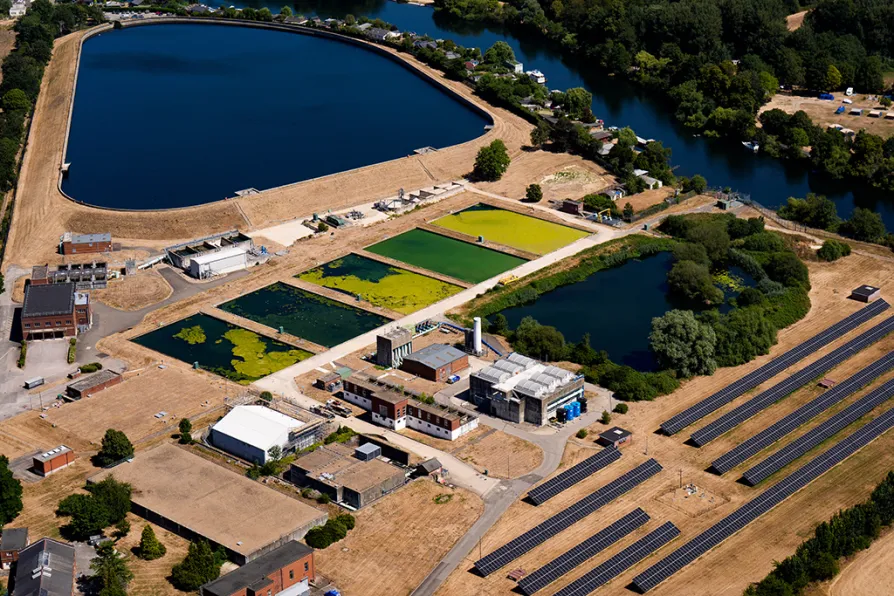
 An aerial view of water treatment ponds and solar panel farm at Thames Water's Chertsey Water Works in Surrey





ANYTHING less than a full restructure of the water industry would be a “total insult” to the public, ministers were warned today as the majority of English waters failed to meet ecological standards.
Clean water campaigners and the GMB demanded PM Andy Burnham take decisive action after new Environment Agency (EA) figures revealed only 14 per cent of England’s waterways are in good health.
While 15 per cent of rivers are classed as good, only around 7 per cent of lakes reached that threshold, the EA said.
Researchers cited phosphate as the largest individual polluter, which comes from sewage and farming runoff. About half of rivers still exceed safe levels.
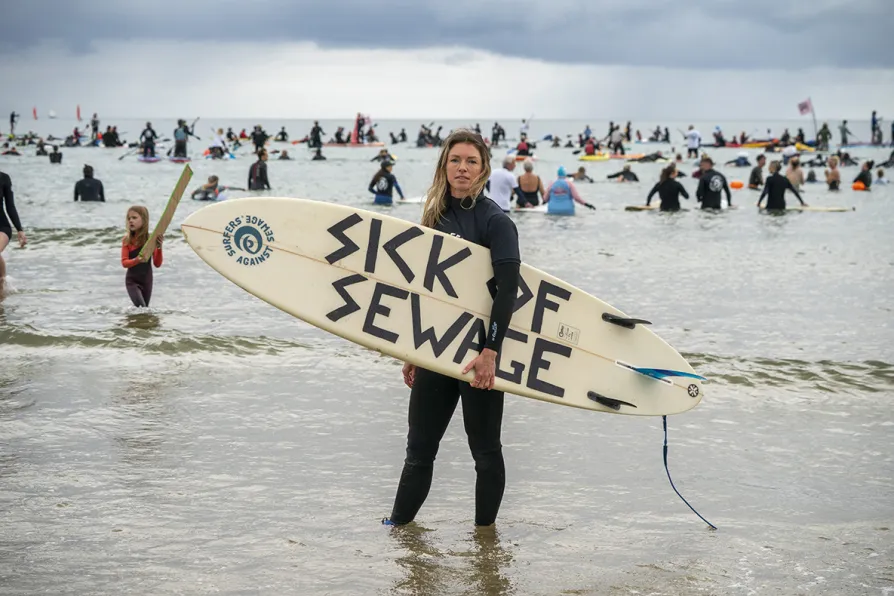
Surfers Against Sewage (SAS) senior policy manager Henry Swithinbank recognised that Mr Burnham previously said “some promising things” on the water sector.
“But now is not the time for lip service,” Mr Swithinbank told the Morning Star. “Burnham must turn those words into urgent action. Anything less will be a total insult to our waters and the public.”
He added: “Despite promises from water companies, and government policies and targets, our waters continue to be degraded into an even more dire state.
“Are we surprised? After years of limp policies, slap on the wrist fines and tinkering, sadly, we are not.
“But we are furious. Our beaches, rivers and lakes are poisoned by sewage. This cannot be allowed to continue.
“If the government does not take control of this issue and restructure the failing water industry, things will only get worse.”
River Action chief executive James Wallace reacted to the new data saying: “Despite successive governments’ promises, nothing has changed.
“Our rivers remain among the filthiest in Europe, poisoned by sewage from polluting, profit-driven water companies and by industrial-scale agriculture, including chicken manure runoff from intensive poultry units that rear tens of millions of birds for fast-food chains and supermarkets.”
Mr Wallace said the government must use the upcoming Clean Water Bill to take back control of water companies from private profiteers and ensure they are owned and operated for public benefit, environmental protection and public health.
He added: “It must also tackle agricultural pollution with the same urgency, holding the biggest polluters to account, supporting the transition to nature-friendly agriculture and ending the regulatory failures that have allowed our rivers to become open sewers.”
GMB national officer Gary Carter called the “terrible state” of English waterways “a badge of national shame,” adding: “Privatised water companies must take a massive chunk of the blame.
“For years they’ve been allowed to pump sewage into our rivers, streams and lakes, as massive dividends and fat cat salaries take priority over repairing crumbling infrastructure.
“Water workers try to stem the tide but they are fighting with one arm tied behind their backs.
“The new regulator must be given the powers it needs to curb private water companies fouling our waterways — and workers must have a seat on the board.”
Yesterday’s revelations about the state of rivers, lakes and coastal waters in England revealed an overall picture which has not substantially changed in recent years.
This was despite a record £22 billion dedicated to improving the environmental records of water companies.
And watchdog the Office for Environmental Protection warned legally binding targets to restore 77 per cent of English waters to good ecological status by 2027 will be missed by a “considerable margin.”
It has also launched an ongoing investigation into both the government and the EA over possible rule breaches.
Environment Secretary Angela Eagle said the figures “underline the need for wholesale change across the water sector,” but pointed to new laws introduced by the government to hold water firms to account and record investment.
She added: “We will drive forward a system that puts the public interest first,” without mentioning public ownership.

Channel 4’s Dirty Business shows why private companies cannot be trusted with vital services like water, says PAUL DONOVAN