TUC president and POA leader STEVE GILLAN speaks to Ben Chacko on the eve of Congress 2026


 Latest editorial
Exposing the rot in Britain’s water industry
Channel 4’s Dirty Business shows why private companies cannot be trusted with vital services like water, says PAUL DONOVAN
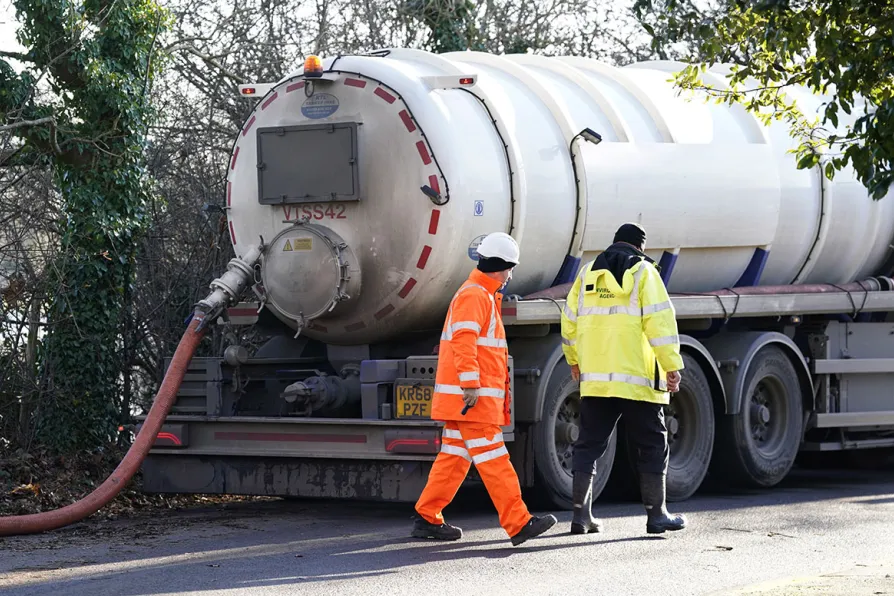 A tanker pumps out excess sewage from the Lightlands Lane sewage pumping station in Cookham, Berskhire which flooded after heavy rainfall, January 10, 2024

DOUG NICHOLLS welcomes a turning point at this year’s Congress, where many motions call for a co-ordinated plan to revive British industry, a perspective outlined in his new book
HOPE VIRGO of campaign Dump the Scales warns MPs voting today they should be alert to the threat legalised assisted death poses to people with eating disorders
The Together Alliance is hosting two summits, North and South, to build power and plan action against the scourge of racism peddled by the right. DANIEL KEBEDE urges mass participation
The drift toward militarisation in Europe is not inevitable, left-wing and peace movements can preserve sovereignty and prevent war, says DÁIRE HUGHES MP
Whatever differences exist among international sympathisers of the Bolivarian revolution about its current trajectory, they should unite against the imperialist power that is the source of an enforced retreat, argues ROGER D HARRIS
Trade unions need to step up and force a turn in the policies of the labour movement to effectively confront the far-right threat, argues NICK WRIGHT





THE Channel 4 drama Dirty Business lays out for all to see the disgraceful state of our waterways, courtesy of the privately run water companies.
The drama charts the struggle of two men, Peter Hammond and Ashley Smith, to expose what has gone on with releases of sewage into the River Windrush, Witney, Oxfordshire.
Hammond and Smith are backed by a growing campaign of angry people.
Another strand of the drama sees eight-year-old Heather Preen contract E coli as a result of playing on a Devon beach. She dies shortly afterwards in hospital. A tragedy that later results in her father committing suicide.
The ridiculous situation whereby private companies have been allowed to rip off the taxpayer to make profit is made crystal clear (unlike the water).
The drama exposes how virtually unregulated operation of the waterways has caused such damage.
Water was privatised, in the 1980s, on the basis that private money would be brought in, so that the utility could run better. In reality it became a licence to print money. The companies totally neglected the decaying infrastructure. Leaks were not fixed and reservoirs not built, while sewage was pumped into the rivers and sea. Meanwhile, shareholders reaped big dividends and debt piled up.
Regulation was supposed to be a safeguard, yet the Environment Agency (EA) has proved totally inept at enforcing regulation. Under-resourced, it resorted to letting the water companies monitor themselves.
This is brilliantly summed up in the drama, when an EA employee, referring to the water companies, says: “So what you’re saying is regulate yourselves and let us know if you’ve committed any crimes.”
There has been some tightening of control of the water companies by the present government (they have committed to stop “operator self-monitoring”) but nowhere near enough.
The whole sector needs to be taken back into public ownership, then run on a not-for-profit basis. This can be done in a number of ways, such as taking the companies, like Thames Water, into special administration. At present, more bailouts seem on the cards.
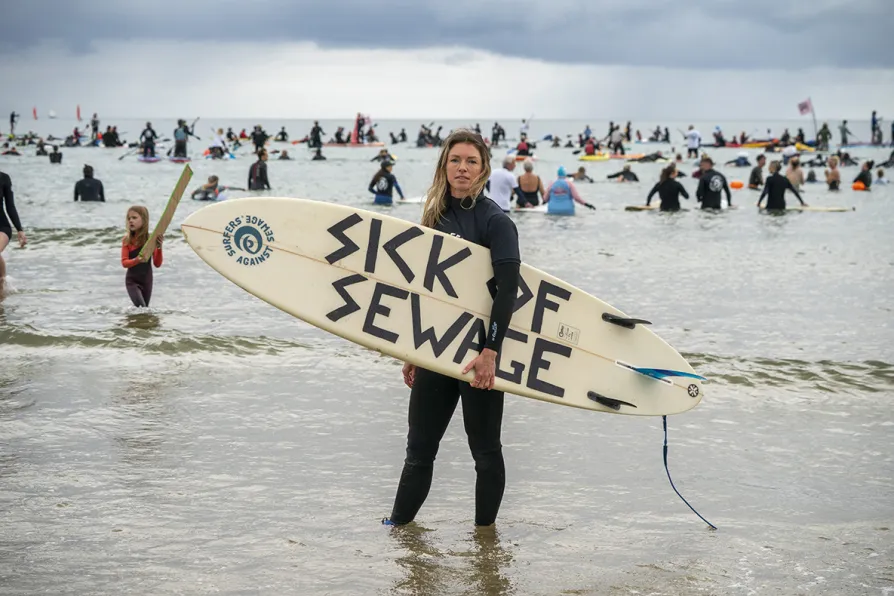
One important development highlighted in Dirty Business is the growth of campaign groups seeking to hold these companies to account. The Windrush Against Sewage Pollution campaign is the focus. But there are many others, like Surfers Against Sewage.
In east London, there is the River Roding Trust, which is doing fantastic work, improving the river with a growing army of volunteers, as well as holding Thames Water and the EA to account over maintenance of the river.
These grassroots groups are growing all over the country, demanding democratic accountability. And it is much needed.
More widely, the reckless way the infrastructure generally has been handed out to the private sector to asset strip and run down is clear across the country. We have a creaking infrastructure from waterways to roads, bridges and rail networks.
There is much that needs to be done to put the situation right. Tough, enforced regulation is a start, followed by taking the facilities back into public ownership, when failing.This of course all needs resourcing.
The present generation is reaping what was sown over the past 40 years of neoliberalism, now is the time to start putting things right, starting with taking water back into public ownership.
Dirty Business is available on C4 catch-up.

Similar stories
![Dirty water [Pic: Kayla Gibson / Creative Commons]](https://msd11.gn.apc.org/sites/default/files/styles/desktop/public/2026-07/kayla-gibson-__bB2pjOLXQ-unsplash.jpg.webp?itok=tqNzj1Z5)