Britain funds the policing of black culture 16 times better than the culture itself. The Diamond Jubilee is the moment to end that, argues CLAUDIA WEBBE


 Latest editorial

Britain’s unstable political order
With our ruling class struggling to secure a new vehicle for power and the disintegration of the traditional party system, a volatile new chapter is opening, sharpened by war, austerity and electoral distortion, argues NICK WRIGHT
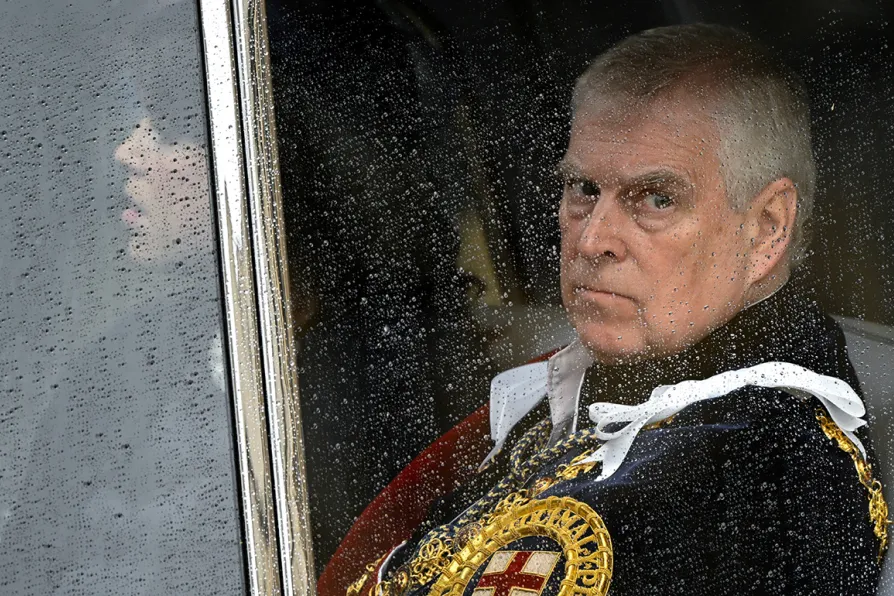 Andrew Mountbatten-Windsor at Westminster Abbey, London, May 6, 2023

Growing instability in the US economy and financial markets could have serious consequences worldwide because of the central role of the US dollar and financial system, argues MICHAEL BURKE
Despite Andy Burnham’s declaration defending the continued partition of the island, all major international and internal trends are converging to make Irish reunification inevitable
Humans are part of the ‘animal kingdom’ – and of nature in general – but also distinct from it and labour (work) is part of what makes us unique, declared Engels. His insights 150 years ago into how our species came to be and how we differ from the rest of nature, are as important today as they were then, says the MARX MEMORIAL LIBRARY
Growing instability in the US economy and financial markets could have serious consequences worldwide because of the central role of the US dollar and financial system, argues MICHAEL BURKE
From Margate to Deal, mining memories are being kept alive. National co-ordinator for General Strike 100, HENRY FOWLER continued his nationwide tour of partner organisations in the Garden of England





AS WE celebrate the publication this week in 1848 of the Manifesto of the Communist Party, we can imagine that Peter Mandelson, Andrew Mountbatten-Windsor and Morgan McSweeney are contemplating the line in the Manifesto in which Marx and Engels show that “all that is solid melts into air, all that is holy is profaned, and man is at last compelled to face with sober senses, his real conditions of life, and his relations with his kind.”
For these men the power that position and patronage gifted them has indeed melted into air. McSweeney — the West Brit parachuted from Ireland into the British Labour Party — and transformed into Keir Starmer’s eminence grise, was unceremoniously jettisoned.
That Mandelson had his collar felt by the Old Bill this week has brought much joy to the nation.
Meanwhile the brother of the king is getting accustomed to his serial rebranding. If he is uncomfortable with his preposterous new name — itself a confection to disguise the royal family’s immigrant origins as Battenberg Saxe-Coburgs — he might anticipate that his descent into the lower orders recalls the line in Marx and Engels’ historic text: “alongside ruined roues with questionable means of support and of dubious origin, degenerate and adventurous scions of the bourgeoisie,” there is the lumpen proletariat.
For the moment the declassed Andrew is probably well provided for, although he may well be spending more time among the criminal underclass if the police prosecution is successful.
That he has been unceremoniously excluded from the charmed circle is a testament to the admittedly tardy willingness of the royal institution to sacrifice its own for its protection. And of a ruthlessness that the working class itself might adopt as energetically in the acquisition of state power as our present ruling class does in its defence.
The fate of these three individuals stands as an example of the general tendency in political life in today’s Britain where nothing seems fixed.
Where the British ruling class traditionally relied on the Conservative and Unionist Party as the principle guarantor of its continuity in power — with the Liberals as an occasional reinforcement and the Labour Party as a relatively compliant alternative when a reset was necessary — today the Tory Party lies shattered with most of Boris Johnson’s former Cabinet now in Reform UK.
This itself is a demonstration that the Tory Party’s present organisational and political traumas and may well anticipate a more existential crisis.
The reinforcement of Reform UK as a Tory Party mark two will not, of itself, resolve the split in our ruling class.
Equally, the collapse of Labour as a potential alternative party of government in the project to guarantee capitalist continuity means, for the moment, this option is no longer credible.
Attempt by fractions of capital to establish Reform UK as a right-populist political alternative to the Tories illustrate our ruling class’s difficult struggle to find a new mechanism that might ensure its grip on the political institutions of bourgeois democracy remains intact.
Where one tendency mirrors US oligarchs and their performative racism to pursue a sectional interest, the other keeps a firm grip on the main levers of City of London financial power and now seeks a re-entry into the European Union as the necessary accompaniment of the war drive by the most reactionary sections of European capital.
The Communist Party’s general secretary Alex Gordon pointed out last weekend that “the problem of the right in British politics is that both factions are built on quicksand. The US AI-tech bubble that partly funds Nigel Farage will implode, possibly as soon as this year. The City of London, which became a portal for global (US and Japanese) finance capital into Europe in 1986 following the ‘Big Bang,’ now relies on US banks that are also deeply implicated in the coming crash.”
Today’s by-election may well see Labour humiliated in a seat it comfortably held and either the Green plumber or the Reform UK controversialist elected. The signs are that whatever the result, even if the big business lobbyist parachuted in to stand for Labour edges ahead as the candidate most likely to beat Reform UK, the dynamic which makes by elections such a beauty contest will not necessarily function in a general election.
The extreme volatility of British politics is illustrated by the implausibility of Labour’s 2024 majority of 174 and the 411 seats it won. This was achieved on just a third of those voting and a much lower percentage of those entitled to vote.
This hollow victory — gifted by the division in the ruling class which saw Tory votes haemorrhage to Reform UK — was less substantial than Boris Johnson’s 2019 victory which gave him a majority of 80 on 43.6 per cent. Note that even at that election Corbyn’s Labour won a similar percentage to Starmer in 2024 and rather more actual votes, while in 2017 it had won 40 per cent and millions more.
It is clear that the peculiar political architecture of British bourgeois democracy is an imperfect fit for the popular will and this, as much as the clear redundancy of the capitalist economic model, is a feature of the intensifying volatility of British politics.
There are great dangers present in the way in which a section of British capital sees the creation of a far-right political vehicle like Reform UK, aligned even more closely to the Trumpian model, as a way out of its crisis.
But this is not necessarily destined for success. A Reform UK government — if it followed the Farage formula — might find itself under pressure from the banks and big business and the “independent” Bank of England and be forced to conform more to the standard European model. And it will undoubtedly find itself on a collision course with the trade unions. Already Reform UK’s vote share is coming under pressure and the point may be coming when the freedom it has to play at the boundaries of conventional politics ends.
The now more explicit pitch by Reform UK’s business spokesman — to weaken regulation, scrap net zero and emission policies, new employment rights and rent controls — is a the basis of an “unpopular front” with the Tories at the next election. Recollect the tactic of Farage’s earlier political vehicle in giving the Tories a free run in the European Parliament elections (and only standing in areas where Labour might win) that produced an otherwise improbable result.
But the danger of being dragged into a new European war in the service of Rheinmetall’s profits and Chancellor Friedrich Merz’s territorial ambitions is no less.
The rupture in the Atlantic alliance is driving a political crisis both within the EU, and on our continent as a whole, in which Starmer is first in adopting a reckless approach to what could be a disastrous extension of the war in Ukraine.
The bid to station Nato troops in Ukraine is a red line that if crossed means war. Similarly, the drive to ramp up arms spending, if sustained at the level at which it completely compromises the remaining elements in the postwar welfare state, will produce an even more intense crisis which, as we are seeing in Britain, will result in further attacks on our liberties and rights as workers fight to defend living standards and the social wage.
The arguments for voting for the Green candidate in the by-election today are enhanced by her particular status and her local political role. Her election is a necessary tactic to prevent a Reform UK win but she cannot be a tribune of the working class if she remains bound by the contradictory postures of the new Green leadership on these vital questions of war and peace.
Deep within the Greens are precisely the illusions about the European Union that allowed the Mandelson/Starmer axis to subvert the Corbyn project, torpedo the 2019 election and purge the party.
Where the Greens propose a European defence alliance as a faux alternative to Nato they fall into a trap laid by the most reactionary sections of European capital who want an assertion of continental priorities over those of the present US regime and, on present indications, can rely on most of the Green and “socialist group” in the European Parliament.
