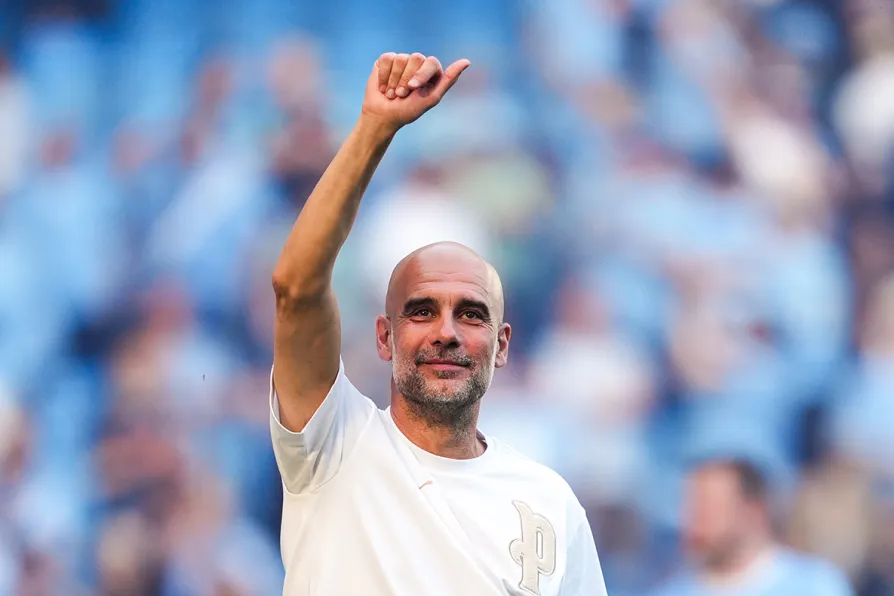
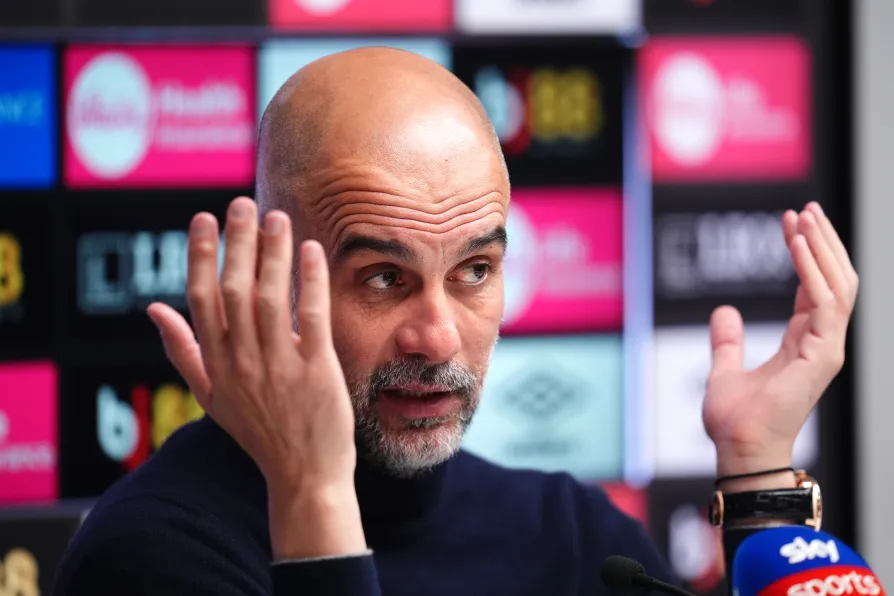
Pep Guardiola leaving City marks the end of an era of peak modern football, says JAMES NALTON
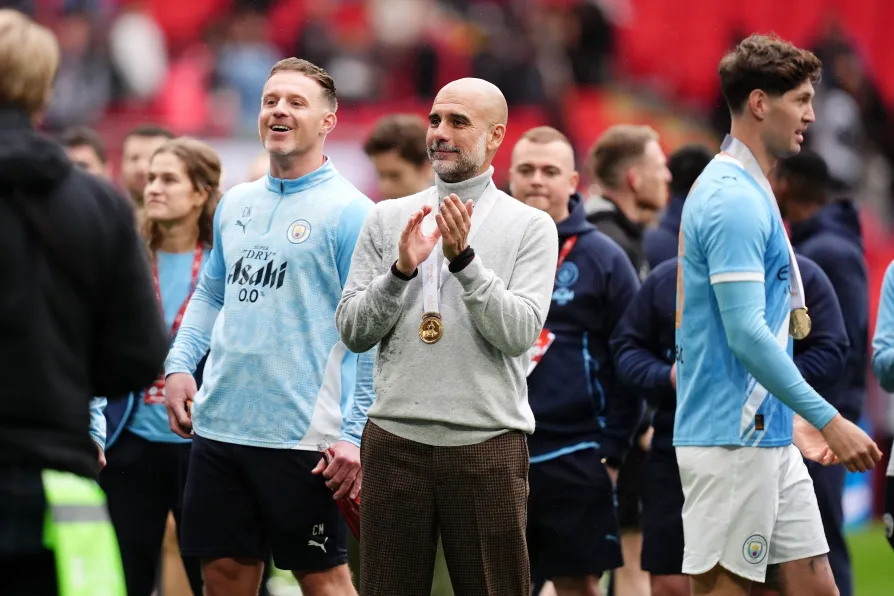
 Manchester City manager Pep Guardiola celebrates after the Emirates FA Cup final at Wembley Stadium, London, May 16, 2026





THE club confirmed the legendary manager’s departure this morning, and the game against Aston Villa on Sunday will be his last as City manager.
In a goodbye video posted on the club website, Guardiola referenced the city’s working-class union spirit, name-checking the Pankhurst family and mentioning the industrial revolution.
“This city is built from work, from graft,” he said.
“You see it in the colour of the bricks, the factories, the Pankhursts, the unions, the music, the industrial revolution, and how this changed the world.
“I think I grew to understand that, and my teams did too.”
It reflects how Guardiola has embraced the city of Manchester (and of Salford, where he lives in the heart of the two neighbouring cities), and how this has helped what might have otherwise been a characterless state sponsored multiclub ownership project have a sense of local identity and at least some cultural connection to the supporters from the Maine Road era.
The latter elements are something Manchester City will struggle to maintain in Guardiola’s absence.
In terms of his influence on the sport, Guardiola’s 10 years at Manchester City further reinforced his status as one of the greatest managers of all time. Not just for the trophies won, but also for his influence on the game.
A culmination of factors came together to allow his ideas to flourish and titles to be won in an era where the sport reached a peak.
It could be said that this era of peak football ended back in 2024 when Jurgen Klopp left Liverpool.
The battles between Guardiola’s City and Klopp’s Liverpool, both in the league table and in head-to-head matches, represented a coming together of decades of ideas, influences, and tactical evolution, applied via a collection of the best players in the world in the best league in the world.
It gathered the main strands of football tactics that have been evolving since the early 20th century, bringing parts of them all together via the football minds of these two managerial greats, combining the possession and pressing games.
It’s a family tree of football ideas, teams, and individuals that can be traced back for 100 years or so. Some of those figures had the ideas, others had the success, but Guardiola and Klopp had both — a rare combination of tactics, man management, and sports psychology.
The pass and move, the pressing, the positional play, the adaptation of players’ roles to meet new challenges, and the subsequent counter to these newer ideas by the opponent.
“I will never forget these battles, never, ever in my life,” Guardiola said in April 2024, a few months after Klopp announced his departure from Liverpool.
“The reason I give incredible credit to the five Premier League titles that we won in the last five or six years, is because we were battling with this unbelievable football club like Liverpool — incredible manager and staff, and incredible players.
“I think everybody knows that Liverpool made me a better manager.”
On the other hand, this era of football, and those two clubs, also represented football’s late-stage capitalism and the geopolitical battle between Middle Eastern state capital and Western, US capital.
The Premier League’s growth mirrored the concentration of wealth in a small area seen in other areas of society, and the major players in global capitalism infiltrated the sport unopposed.
It was a battle of money, of data, and for City, an ongoing legal battle related to financial fair play and the apparently unending issue of the “115 charges.”
Guardiola always acknowledged that the resources he was working with helped him do this job to such a high level, and it was a marriage of theory and the players to put it into practice, acquired through advanced data and scouting developments, that created this peak modern football environment.
As far as his own personal political views are concerned, Guardiola has been one of the more outspoken figures in football.
He is one of the few in the game to voice his support for Palestinians and other peoples around the world suffering at the hands of oppressive regimes.
In a press conference in February, he explicitly referenced the genocide in Palestine, and the actions of Ice in the US.
“Never ever in the history of humanity have we had info in front of our eyes more clearly than now,” he said.
“The genocide in Palestine, what happened in Ukraine, in Sudan, and everywhere, what happened in front of us.
“Look what happened in the United States of America with Renee Good and Alex Pretti. They have been killed, one a nurse, with five or six people around him, on the grass, 10 shots. Tell me how you can defend that?”
It’s unusual for such high-profile figures in football, or in sport generally, to air such unfiltered views, but when it happens, it can have a big impact.
In terms of his impact on the sport, his work from Barcelona to Bayern to Manchester City is unprecedented. From helping Lionel Messi become the best player in the world to seeing Mancunians become a part of his world-class City team, there is individual player development within those much-discussed team tactics.
“I swear you’ll never see anything like this ever again,” is one of a couple of iconic lines uttered by the commentator Martin Tyler when Sergio Aguero scored the goal to win the title for City under Roberto Mancini in 2012.
What Tyler said was probably true, but though they might not have seen anything quite like that specific moment, under Guardiola, City supporters witnessed many more memorable moments. “We see things they’ll never see,” reads one of their banners, in reference to the success of the club and the link to the Oasis song “Live Forever.”
Guardiola was emotional as he confirmed his departure in today’s goodbye to fans and to the city. “It will be tough, guys,” he said, his voice breaking up as he did so. It will also be tough for Manchester City post-Guardiola.

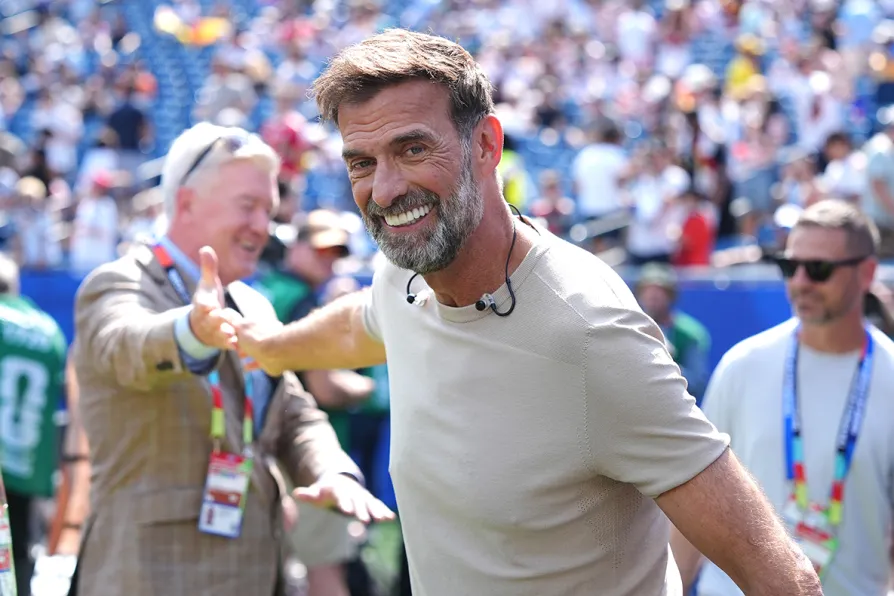
Germany’s new boss has spoken out against far-right nationalism while taking an unconventional approach to his first international break, writes JAMES NALTON
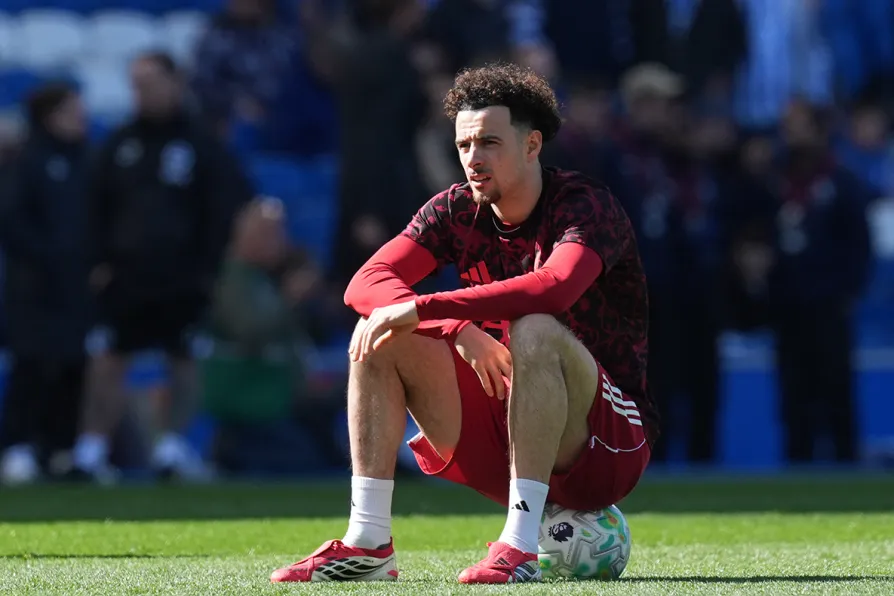
JAMES NALTON argues that Curtis Jones’s departure leaves Liverpool facing a stark local void as the club’s roots are increasingly swallowed by football’s globalised model