ALAN SIMPSON offers a few pointers on dealing with the ongoing, Trump-led destruction of the norms of a rules-based international order established post-WWII


 Latest editorial

Introducing a Marxist classic
Karl and Eleanor Marx – father and daughter – share the credit for a pamphlet which was widely read as an introduction or alternative to his longer Capital and is still relevant today, asserts the Marx Memorial Library and Workers’ School
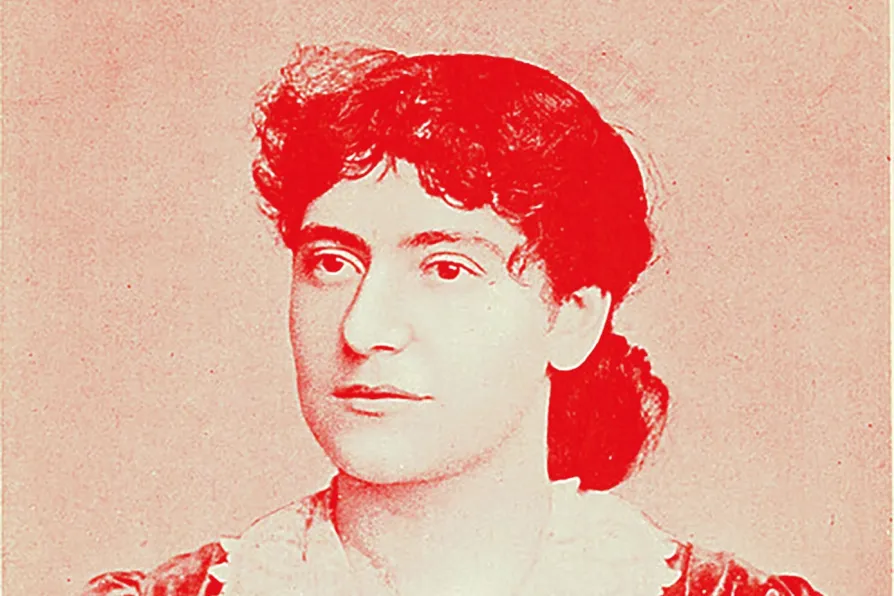 INITIATIVE: Eleanor Marx, who edited her father’s archive and defended his legacy against reformism
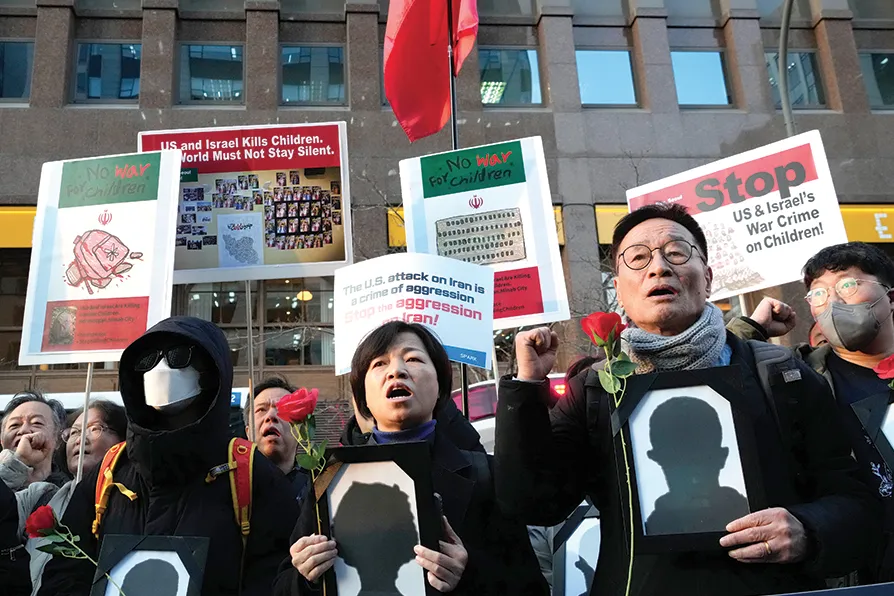
The Morning Star publishes an edited transcript of a speech by NICOLAS MADURO GUERRA, a Venezuelan MP and son of Venezuelan President Maduro. The speech was given at the recent Voices from Venezuela event marking two months since Trump’s attack on Venezuela and kidnapping of President Maduro and First Lady Cilia Flores on January 3
From the hills of the England–Wales border, our new fortnightly nature columnist MARK SEDDON reflects on rebellion, faith and the small dramas of rural life — from medieval fugitives to the quiet rescue of a bucket of tadpoles
While public outrage has focused on the abuse committed within Jeffrey Epstein’s orbit, key questions remain unresolved, says JOHN GREEN
KEITH FLETT argues that we need to stand up to those in power every single time they transgress
Gloucestershire’s phlebotomists have brought their historic strike to a close after almost a year of action, leaving a legacy of determination – and a clear lesson about the power of solidarity in the face of anti-union laws and austerity, says FBU general secretary STEVE WRIGHT





VALUE, Price and Profit, also published as Wages, Price and Profit, is a pamphlet based on Karl Marx’s manuscript notes for presentations he gave to the International Working Men’s Association (the First International) in London in 1865.
The full manuscript was never published during Marx’s lifetime. It was later prepared for publication by his daughter, Eleanor Marx and published in 1898.
Already well known for his publications and activism, Karl Marx was elected to the IWMA general council and quickly became a leading figure. Another council member and British trade unionist, John Weston, argued that wage increases were futile because prices would simply rise to cancel them out. This sparked debate about whether workers should organise for higher wages.
Marx responded to Weston with a structured theoretical rebuttal, explaining the relationship between value, wages, prices, profit and labour. However his address (the notes for which were in German as well as English, including speaking prompts) were never prepared for publication; they were circulated only as summaries and reports in IWMA council minutes.
Marx was in the midst of compiling Capital (Volume 1 was published two years later in 1867) and it is possible that he preferred that people should read this for a full theoretical treatment of the issues.
Much later, after Karl Marx’s death (1883) his daughter Eleanor edited her father’s speech as a response to other suggestions on the left that it might be possible to achieve socialism without revolution.
Engels was at this time busy editing Marx’s manuscript notes for Volumes 2 and 3 of Capital (published respectively in 1885 and 1894) as well as with his own contributions to Marxist theory and practice. He had custody of much of Marx’s unpublished material, found the original manuscript and passed it to Eleanor whose initiative, inspiration and effort was responsible for its appearance.
In 15 short chapters (some 20,000 words, in most printed editions around 30 pages) Value, Price and Profit (VPP) presents many key ideas of Marx’s developing analysis of capitalist political economy but in a shorter, more accessible form. It builds on, and develops Mark’s earlier analyses of capitalism, presented most particularly in his pamphlet Wage Labour and Capital.
VPP is effectively a primer — a compact, popular exposition of arguments that are contained in Volume 1 of Capital (there is little coverage of the content of later volumes). It starts by challenging Weston’s argument (that any benefits of general wage rises are necessarily cancelled out by general price rises) arguing that this is incorrect both logically and empirically and that a scientific analysis of wages and prices is essential.
The pamphlet then summarises the Marxist labour theory of value. It argues that labour is the only source of new value and it distinguishes between labour-power (what the employer “buys”) and the (greater) labour that the employer actually “gets.” Value is determined by “socially necessary labour time” which ultimately determines prices (though supply and demand can influence fluctuations in price); money is a means of exchange, not itself the source of value or price.
The pamphlet then distinguishes different kinds of “wage.” “Nominal” wages are the money paid by the employer to the employee; “real” wages are what that money will buy and “relative” wages are the worker’s share of the value produced compared with that of the capitalist.
It explains that capitalists strive to keep relative wages low even if nominal wages rise. Profit arises because workers are paid less than the value they create. This difference is surplus value, and is realised in money terms as profit.
The pamphlet concludes that wage struggles do matter; that there is a constant battle between workers and capitalists — between those who actually do the producing and those who own the means of production. It asserts that trade unions are essential to resist increases in exploitation.
However, lasting emancipation ultimately requires abolishing the wage system, not merely bargaining within it.
Within the First International, Marx’s address had some influence. Trade unionists, in particular, valued Marx’s defence of wage struggles. But the failure to widely publish it as a standalone text until after Marx’s death restricted its potential impact. Moreover, its theoretical analysis, developed and presented in Volume 1 of Capital, was initially limited by the latter’s much greater length and limited accessibility.
The First International — the IWMA — was effectively dissolved in 1876, following the collapse of the Paris Commune in 1871. A “Second International” — the Socialist International — was founded in 1889 to celebrate the centenary of the French Revolution. This became a forum for major debates within socialism, largely based on Marxist ideas.
On its publication as a pamphlet in 1898, Eleanor Marx’s Value, Price and Profit became more widely distributed and had a significant impact, alongside other publications of Marx, Engels and others, used by socialist parties, trade unions, and in workers’ education programmes as a short, accessible, and clearly written introduction to Marxist economics. It became a reference point for debates on wage struggles, the labour theory of value and the relationship between reform and revolution.
Value, Price and Profit today remains a short, readable, “stand-alone” introductory text to Marxist political economy (and an accessible gateway to Capital) providing a concise explanation of value creation, exploitation, profit and class struggle. It is still hugely relevant to critical issues of the present including debates over the minimum wage, on phoney “self-employment” and the gig economy; and the escalating differentials between remuneration of the owners and managers of large companies and the wages of their workforce.
VPP challenges today’s dominant narrative, whenever monetary policy, the cost-of-living and “wage-price spirals” are discussed in the media, that wage increases are inherently inflationary. The reality is that both in the capitalist “core” and in the world economy, the share of labour in the production of value is declining while that of capital (ie its profits) is increasing. Value, Price and Profit explains why this is the case.
The pamphlet is one of a number of examples of Eleanor Marx’s editing of her father’s archive. Without her initiative it would not exist, at least in the clear, concise form in which she produced it. Her defence of Marx’s legacy against reformism was followed a couple of years later by the publication of another communist (and Jewish) feminist, Rosa Luxemburg’s Reform or Revolution (1900).
Their struggle — against reformism, gradualism and “utopian” socialism — is as important today as it was then.
The pamphlet’s closing argument — that workers and the labour movement as a whole need to fight for better wages and conditions and at the same time need to recognise that true emancipation requires a system beyond wage labour, remains as true today as it did in 1865 and 1898.
The next Marx Memorial Library and Workers’ School online course is Marxist Economics for Beginners starting on Tuesday January 27 2026 with an introductory Zoom session and with Value, Price and Profit as the text for its first class. Details of this and of MML’s rich programme of events and activities on its website www.marx-memorial-library.org.uk/education. The full text of the Marx’s pamphlet can be read on tinyurl.com/ValuePriceProfit and a pdf can be downloaded from tinyurl.com/ValuePriceProfit-pdf.
