ROB WARZYNIAK wades knee deep through a pile of ‘dead canaries’ of Trumpist policies which exacerbated the horrors of US capitalism domestically


 Latest editorial

Inside a feminist book festival challenging the mainstream
Held at a last-minute undisclosed venue amid fear of disruption, a Women’s Rights Network event brought together authors and activists, offering a day of debate on feminism’s past, present and future. JADE MIDDLETON reports
Without evidence or Nato consultations Berlin’s answer to the Leipzig incident is a rupture of relations. SEVIM DAGDELEN examines why
FRANCISCO DOMINGUEZ introduces the background to a conference on defending Latin America’s sovereignty
The glacier collapse in Nepal is yet another warning that a warming planet is making Himalayan disasters more frequent and destructive – but the countries facing the greatest risks are often those least responsible, says LI YANG
Nick Blair is set to benefit from a hugely lucrative contract to ‘virtually’ train the British army for its next war. Like father, like son, writes SOLOMON HUGHES
Even when tragedy strikes, Western media cannot resist the opportunity to turn it into a sordid propaganda opportunity, as the Nepal-China border tragedy shows, writes CARLOS MARTINEZ
Trade unions should be at the heart of the anti-racist push for reparations for the historic legacy and continuing impact of slavery, writes ROGER McKENZIE





ON Saturday September 29 2025, a feminist book festival was organised by the Women’s Rights Network and volunteers.
The location was kept secret until the day before due to security risks; luckily, on the day, everything went smoothly and the event felt very safe. The festival aimed to promote “sex-realist” feminist authors, who are often excluded from mainstream book festivals.
The event began at 9am with registration and the venue quickly filled with women and men of all ages. The atmosphere was exciting and very welcoming. It was clear that everyone in attendance was there to learn more about the feminist movement alongside other like-minded feminists.
I also spoke to one of the organisers, who explained how difficult it had been to find a venue willing to host the event due to fears of backlash and protests. Bookshops were contacted but declined for the same reasons. Fortunately, the event remained safe and there were no protests at the chosen venue. The organiser specifically noted that the festival was attended by women and men from a wide range of political and economic backgrounds. Attendees represented all sides of the political spectrum, both as authors and as visitors.
Some attendees included students from Cambridge, The Insightful Sisters, and the Lancashire Lesbian Society, with whom I was fortunate to speak about their experiences. They explained that they attended because lesbian spaces can be difficult to find. One member of the society said that it is more difficult being a lesbian today than it was in the 1980s.
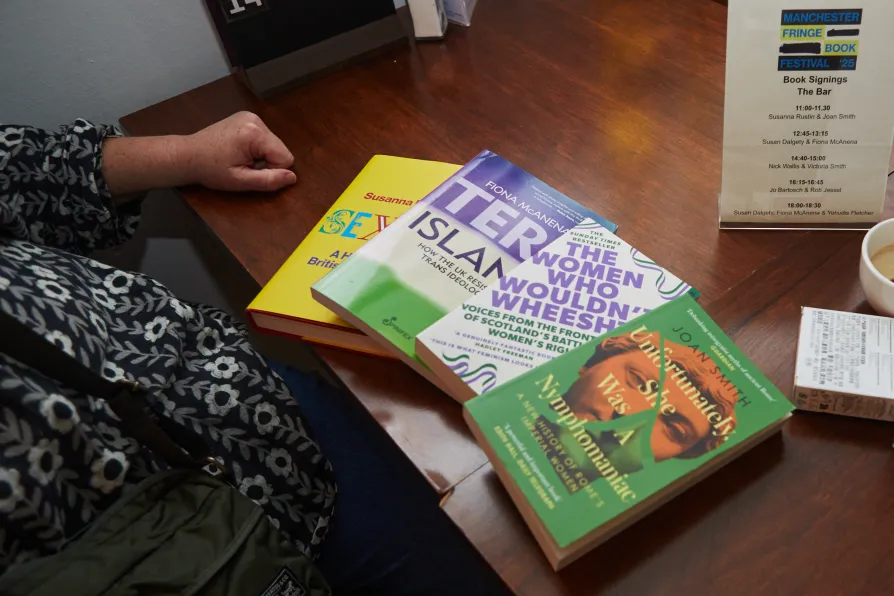
At 9.45am, the first speakers began. I attended Susanna Rustin’s talk about her book Sexed: A History of British Feminism, which covers feminism from 1790 through to the modern day.
During her talk, she discussed topics such as what prompts a woman to become a feminist, the suffragette movement, and the issues feminists have faced over hundreds of years of fighting for equality.
She also spoke about working-class feminism and how their struggles differed from those of middle- and upper-class women.
While working-class women were fighting for the right to work and earn their own money, middle- and upper-class women were fighting for the right to education.
After a short break, two more speakers followed. I attended the talk by Susan Dalgety. Her book, The Women Who Wouldn’t Wheesht, covers Scotland’s feminist movement and features accounts from many women who were on the front lines of defending women’s rights.
During her talk, Susan discussed how difficult it can be for authors like herself to get published, as publishers often fear backlash due to the subject matter. She also mentioned the case of Sandie Peggie, a Scottish NHS nurse who has been in the news for her complaints about sharing changing rooms with a transgender doctor.
The final talk I attended was for Pornocracy, a book by Jo Bartosch and Robert Jessel. The book focuses on how pornography has severely impacted women’s rights. Jo and Robert spoke about how rapes are now filmed for profit and how once “niche” fetishes, such as choking or slapping, have become commonplace.
This has contributed to unhealthy attitudes towards sex and women. Robert spoke about the prevalence of porn addiction and how it has led many men to struggle with erectile dysfunction. They also explained how pornography tracks viewers’ eye movements and tailors videos to keep people watching.
Like any addiction, this can lead to viewers needing more extreme content to achieve the same physical response. Many young women are feeling the effects of pornography and are being told that selling their bodies is a legitimate form of labour. They are increasingly viewed as “sexual playthings” by some men and boys — objects to be bought and sold.
Beyond sex, the influence of pornography is visible in women’s daily lives, with more women undergoing cosmetic surgeries to look like porn performers, such as enlarging their lips or breasts. Laws surrounding pornography are beginning to change, and there is hope for a future with stronger protections.
Other authors who promoted their work at the event included: Yehudis Fletcher (Chutzpah: A Memoir of Faith, Sexuality and Daring to Stay); Fiona McAnena (Terf Island); Victoria Smith (Unkind); Nick Wallis (The Great Post Office Scandal); Joan Smith (Unfortunately She Was a Nymphomaniac: A New History of Rome’s Imperial Women).

Similar stories
Professor MARY DAVIS argues that feminism has been hollowed out by liberal co-option – and only a revival of socialist, class-based politics can restore International Working Women’s Day’s original, radical purpose
Half a century after transformative laws reshaped Britain, women’s rights are again contested. This International Women’s Day is a call to remember how change was won, and to organise to defend it, says KATE RAMSDEN
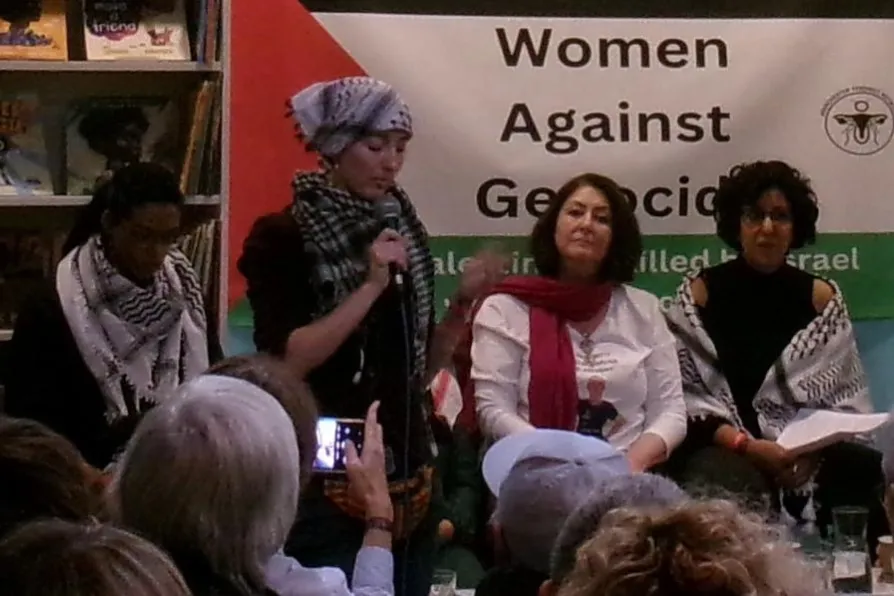
KAY GREEN explains how the Middle East and colonialism were explored at at last weekend’s FiLiA conference
AMANDA J QUICK warns about the ever-expanding influence of the sex industry – and the harm it unleashes on both the women involved and society collectively, especially the young