
Tony Benn’s constituents chose him by an overwhelming majority — but because he had inherited a peerage, parliamentary rules declared their choice invalid, writes MAT COWARD


How the Kinder Scout Mass Trespass paved the way
Nearly a century ago several hundred young workers went on a ramble in a mighty show of solidarity for public access to land, says WILL from YCL Yorkshire & East Midlands
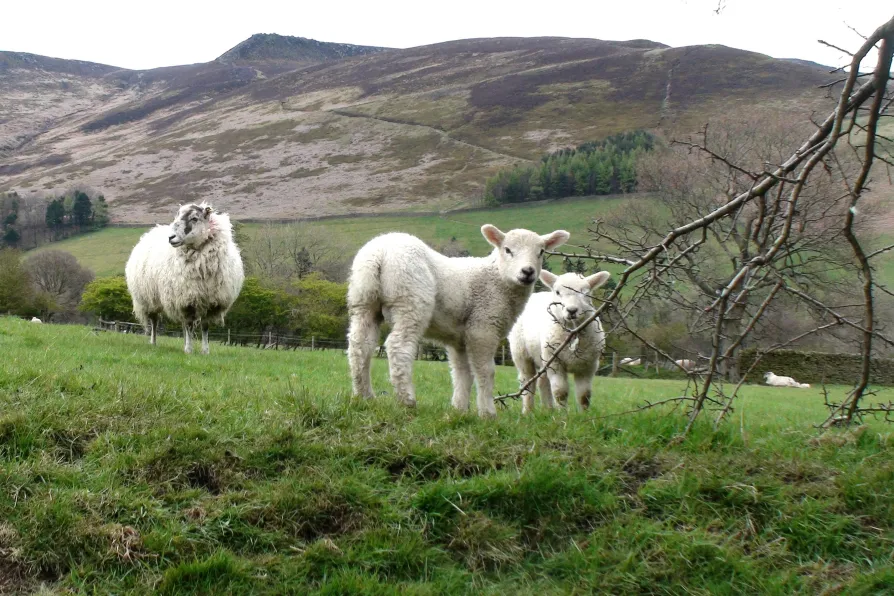
 A general view of lambs on Kinder Scout in the Derbyshire Peak District
The real welfare dependency is at the top of our society, says ALAN SIMPSON
Two months of student unrest have forced out India’s education minister and rattled the BJP regime. Could this be the beginning of the end for Modi, asks Communist Party of India (Marxist) general secretary MA BABY
Councillor SAM WHEELER says there’s a tangible shift in mood on the left in the city whose mayor has recently become PM — but there’s no room for complacency
Communist Party leaders Alex Gordon and Lorraine Douglas deliver vital medicines in trip to besieged socialist island
TUC Cymru is playing a leading role in tackling far-right ideas in the workplace, says LAURA DOEL





WHEN enjoying the beauty of the Derbyshire Peak District few will realise the indelible mark Britain’s Young Communist League (YCL) has made upon that scenic landscape. It was there in the village of Hayfield, situated beneath the Kinder Scout hill, where 400-600 YCL led ramblers successfully carried out a mass trespass, defying gamekeepers and policemen and sounding a clarion call for all future generations to continue the fight against the private ownership of British land.
The road to the great Kinder Scout Trespass is storied. The modern campaign for the right to roam began in the late Victorian period, when groups such as the Hayfield and Kinder Scout Ancient Footpaths Association, Manchester YMCA Rambling Club, and Yorkshire Rambler Club were formed. At that time, working-class people who wished to traverse their own countryside had no legal right to do so, and armies of gamekeepers viciously patrolled their masters’ land, beating trespassers with impunity. When the YCL was formed in 1921, it took an immediate interest in the pursuit of sporting activities among the working class — a practice long since enjoyed by the idle landed classes — and assumed leadership of the British Workers’ Sports Federation (BWSF). Amid the backdrop of the Great Depression, thousands of inner city workers attended BWSF Derbyshire weekend camps. It was on one such outing in 1932 that a London contingent of young workers on a ramble over Bleaklow, led by the YCL’s Benny Rothman, were threatened by gamekeepers. Reflecting on the incident back at their camp, Rothman and his comrades decided that “if, instead of six or seven, there’d been 40 or 50 of us, they wouldn’t have been able to do it.” Immediately putting this belief into practice, the trespass was organised and carried out on April 24 of that year.
The trespassers understood that all too often forgotten lesson that concessions from the ruling class are only won when fought for by the masses. Rothman’s organisation and leadership on the day cost him dearly, and he was sentenced to four months in prison, alongside four other trespassers who also received prison sentences for riotous assembly or, in one case, causing bodily harm. Their sacrifice was not in vain, and the spectre of further mass civil disobedience raised at Kinder undoubtedly paved the way for the National Parks and Access to the Countryside Act of 1949, and all future reforms for public access to the countryside to this day.
The struggle continues
The contemporary state of British landownership can be traced back to the centuries long process of enclosure, which violently eradicated the feudal norms of common land and open-field farming, and replaced it with privately held plots of land spanning the entire isle. This process left the old peasant class destitute and forced to flock to the towns and cities to accept whatever work was available. It wouldn’t be until the 19th century that the new working class became sufficiently organised to begin to effectively fight back against this historical injustice. Today, while working-class-won parliamentary reforms have given us a right to access a fraction (8 per cent) of privately held land and established several national parks, the 99 per cent remain largely shut out from ownership. Over 15 million homeowners in England, the majority of whom belong to the working class, account for just 5 per cent of the land in England; while 1 per cent of people, comprised of old aristocratic families and the capitalist class, own nearly 50 per cent of land in England. As the YCL looks forward to celebrating and retreading the Kinder Scout Trespass on its 96th anniversary, we will be militant in asserting that the only way to achieve our complete right to roam is to smash the system of private property which upholds the minority possession of land rightfully owned by all.
Our place in history
As thousands descend on Hayfield to call for “land for the people,” we will be mindful that the campaign is not isolated to Britain. In Palestine, we have seen an end to outright hostilities and a continuation of a campaign of armed apartheid, in which the Palestinian people are being ethnically cleansed from their commonly held lands by a rogue Israeli state. In Venezuela, we have watched as the United States has deposed a president in the name of private ownership of Venezuelan oilfields. The need for international solidarity between the British working class and groups such as the Landless Workers’ Movement in South America is as acute as ever. Fundamentally, we are reminded above all that our campaign of “land for the people” heeds no borders, that is needed across the globe more than ever in an era of capitalist climate crisis; and that as the Kinder Scout trespassers proved nearly a century ago, we will win nothing from the ruling class which we do not fight for, together, as one.
