Britain funds the policing of black culture 16 times better than the culture itself. The Diamond Jubilee is the moment to end that, argues CLAUDIA WEBBE


 Latest editorial

The great noticing: Mandelson’s true nature mysteriously revealed
A political culture of spin and wilful blindness where journalists play along with power has meant the so-called ‘Prince of Darkness’ has been given an easy ride by the media – until now… MATT KERR reports
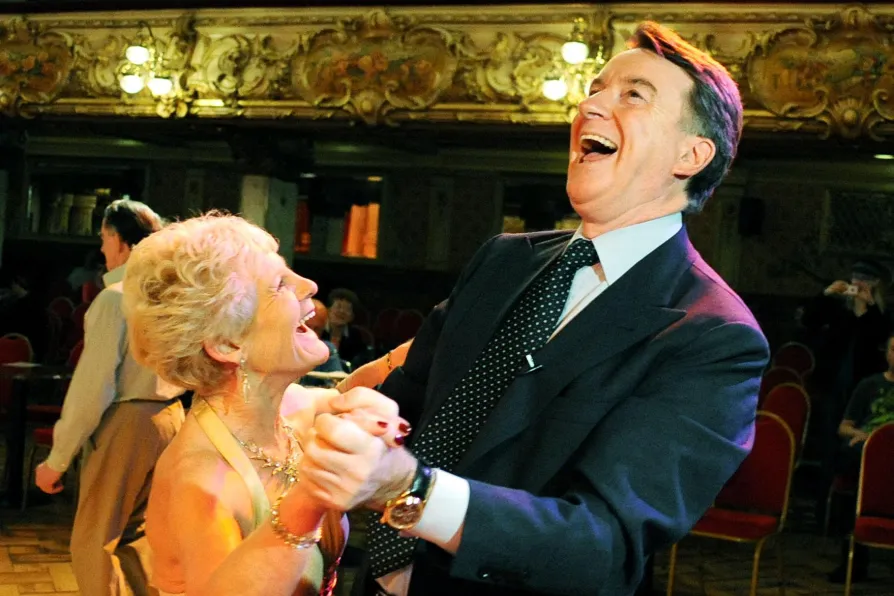 Then Business Secretary Lord Mandelson dancing with Hannah Mackenzie in the Tower Ballroom when he visited Blackpool while on the General Election campaign trail, April 15, 2010

Growing instability in the US economy and financial markets could have serious consequences worldwide because of the central role of the US dollar and financial system, argues MICHAEL BURKE
Despite Andy Burnham’s declaration defending the continued partition of the island, all major international and internal trends are converging to make Irish reunification inevitable
Humans are part of the ‘animal kingdom’ – and of nature in general – but also distinct from it and labour (work) is part of what makes us unique, declared Engels. His insights 150 years ago into how our species came to be and how we differ from the rest of nature, are as important today as they were then, says the MARX MEMORIAL LIBRARY
Growing instability in the US economy and financial markets could have serious consequences worldwide because of the central role of the US dollar and financial system, argues MICHAEL BURKE
From Margate to Deal, mining memories are being kept alive. National co-ordinator for General Strike 100, HENRY FOWLER continued his nationwide tour of partner organisations in the Garden of England





A LONG time ago, in a galaxy far far away, a young councillor done up his tie to go off and make his maiden speech.
I had been told I should write it down, but I’ve never been very good at reading out loud. Half-an-hour later I was on my feet in the belly of the chamber, and 15 minutes later it was over. Everyone was very supportive, across the parties, as is the way on such occasions.
Through the polite clapping and pats on the back when I fell back into my seat, I heard a voice.
“We’ve got two of them now…”
The other was Dr Christoper Mason, long-time leader of the Liberal Democrat group and the man who recruited Vince Cable to his party from Labour.
Until that day, the length of a speech was at the discretion of the Lord Provost, and by convention people speaking for the first time were cut a great deal of slack. By the next meeting a traffic-light system had been introduced and speeches limited to five minutes.
The odd thing of course is that it has only served to narrow contributions over that time, and delivered a new tendency from various administrations to run down the clock. The farce found a new gear after webcasting turned speeches into mere fodder 10-second social media content.
Attention spans are not what they were, I’m told, but accepting what we’re told is the root of the problem.
My first speech was in support of a national postal strike called by my union, the CWU, on pensions and liberalisation of the market. I accept these may not seem like the most exciting of subjects, but if they mattered then, they sure as hell matter now.
At that time, cuts were being proposed to Royal Mail pensions to fill a gap. A gap that had appeared after the employer took a decades-long contributions holiday while the posties dutifully continued to pay in every week.
Throughout that time, the state-owned company had turned a profit, and when the profits fell, they came after the workers’ deferred pay. Not an unfamiliar tale.
In their love affair with markets and the EU, the Blair and Brown governments had begun to liberalise the postal market, a process that would turn Britain’s postal system from the cheapest and fastest in Europe into the mess that we see today.
I’m reminded of these moments every time I see some tired, stressed, delivery driver on piece-work flying around our streets in the dead of night.
Some legacy.
Mandelson, of course, was at the very heart of this. It raised a few eyebrows that a Labour councillor would use his maiden speech to tear into the actions of the newly minted “lord,” but the dogs in the street knew he was looking to privatise Royal Mail, and that could not be tolerated.
In the end, of course, it wasn’t. CWU lobbying and the efforts of back-bench MPs defeated this idiotic idea, but the liberalisation continued apace, setting the scene beautifully for Vince Cable and the Liberal Democrats to succeed where Mandelson failed.
If Mandelson had only done that, he’d be in my bad books, but of course he already had considerable form. Twice being forced to resign from Blair’s Cabinets, and he had been accused of doing favours for Russian oligarch Oleg Deripaska while he was an EU commissioner, having holidayed on his yacht with, among others, the then Tory shadow chancellor George Osborne.
Despite that, and a long-standing animosity, a desperate Brown put him into the Lords and brought him back into office. Why?
He had built a reputation as a man who could make the weather, who had the magic touch with the media, who knew how to win. He revels in the “Prince of Darkness” myth he entwined around himself, but the fear he could engender on his own benches was built on nothing.
He has a talent for manipulation and a serious case of avarice, but when push comes to shove, he’s just another little man who would crawl over broken glass to be at the feet of a billionaire.
Presumably this is what Sir Keir Starmer believed qualified him to be the British ambassador to Trump’s Washington. Who can tell?
Well, it appears the Prime Minister is wholly incapable of telling. Any of the issues I have listed alone should have been enough to ensure Mandelson never held a public position for the rest of life, and that’s before we even mention his well-publicised friendship with paedophile sex-trafficker Jeffrey Epstein.
We are either expected to believe that a man who was once England’s head of prosecutions, however, was blissfully unaware of any of this, or that an extremely former human rights lawyer simply did not believe any of it mattered.
That a prime minister would attempt to cling on in this way is an insult to the intelligence of every single citizen, not to mention the women and girls abused by Epstein.
The great noticing of Mandelson’s nature would be comical were it not so serious. Every member of the British political press corps knew who Mandelson was, but happily wined and dined with him while he was a handy source for gossip.
A perfect example of the cosy little world that could and should have been shattered by the Leveson inquiry, but even now, after all the scandals, the phone-hacking compensation, the resignations, still stands intact.
Remember the picture of Emily Maitlis dining with Mandelson, and ask yourself why the person who so expertly took down the Andrew Mountbatten-Windsor, appeared unable to do the same with him.
Ask yourself why political journalists like Jon Sopel were praising the decision to send Mandelson to Washington little over a year ago, offering only the slightest caveat that it may be “risky.”
These are not fools, nor have they been hiding away from the internet or the political world for decades; these are people who have been drawn into the game and lost sight of themselves.
What a game it is too. The old spin doctor’s dictum not to let a crisis go to waste must have sent cogs whirring around what passes for Wes Streeting’s mind. The sheer vulgarity of his piece in the Guardian — published within hours of Scottish Labour leader Anas Sarwar calling for Starmer to go over the Mandelson/Epstein affair — was notable, even by his standards, What remarkable timing!
Streeting has now noticed that the guy he had been exchanging texts signed off with an “X” for years may, rather than being the bridge to No 10 he hoped for, actually be a roadblock to his wild delusions of adequacy being fulfilled.
His answer? Publish all those texts and flush it into the open. But among the bilge, this gem appeared: “Israel is committing war crimes before our eyes. Their government talks the language of ethnic cleansing and I have met with our own medics out there who describe the most chilling and distressing scenes of calculated brutality against women and children.”
He called Israel’s actions in Gaza “rogue state behaviour.”
These statements may constitute the first time I have agreed with Streeting, but they may also be enough to land himself and the rest of the cabinet in The Hague one day.
In his overweening ambition, and the kind of arrogance in dealing with the public that Mandelson has bred in the extreme centre, he dropped the ball.
Texts that were to display his openness and preparedness to govern merely confirm he and his Cabinet chums as the duplicitous genocide enablers that anyone paying attention knew them to be long ago.
It confirmed something else though.
The great noticing has a long, long, way to run yet.
