KEN COCKBURN traces the one original language – that of the Yamnaya pastoral nomads – from which all European and Indian languages derive


 Latest editorial
Good news for disabled writers
FIONA O’CONNOR welcomes the the return of the Barbellion prize for disabled writers
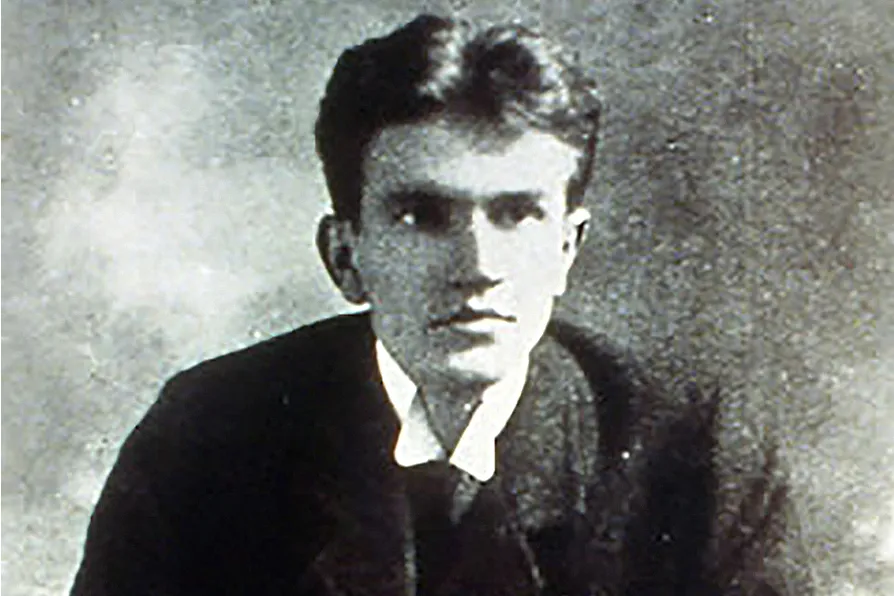 EXCEPTIONAL LITERARY TALENT: Multiple Sclerosis sufferer WNP Barbellion (Bruce Frederick Cummings, 1889-1919) [Pic: Public Domain]
PAUL DONOVAN is fascinated by the debunking of the iconic British war hero
ALEX HALL recommends a searing panorama of our global predicament
Comics are not just superheroes and spandex – it can be public art, telling public stories, suggests HARRIET EARLE
ALEXEI SAYLE speaks to Angus Reid about a lifetime of protest, how to hone political art – and what to do now
The bard serenades the Diggers of Wigan and their festive followers





The Barbellion Prize 2026 is now open for submissions.
The Barbellion Prize celebrates and promotes writing that represents the experience of chronic illness and disability. Founded by writer Jake Goldsmith and relaunched this year following a hiatus, the prize has built a reputation for promoting talented writing.
That the best writing is often born from the worst difficulty is a truism rarely examined: Keats, Joyce, Bronte, for instance, Dostoyevsky, Orwell, Kafka, Flannery O’Connor, Sylvia Plath, Lourde — great writers we don’t tend to think of as disabled or as people managing chronic illnesses. Why is that?
Perhaps we are used to scepticism towards those “claiming” disability. Francis Ryan has written in the Guardian: “Disabled people have to prove our humanity on repeat, sharing ever more intimate details of our lives and bodies to prove ourselves worthy, not least of taxpayer money.”
Barbellion founder Jake Goldsmith, who has cystic fibrosis, believes the prize is unique.
On looking around for writing competitions for his own work, Goldsmith found that there just wasn’t a substantial international literary prize for disabled authors. “This was both surprising and unsurprising,” Goldsmith says.
Deciding to set one up himself, “the prize was jerry-rigged from my bedroom. I created the website, set up some accounts, spoke to people like Tom Shakespeare” (FBA, professor of disability research at London School of Hygiene and Tropical Medicine).
The project is also supported by writer David Collard and Goldsmith’s publishers, Sagging Meniscus Press. Each winner has been interviewed on BBC Radio 4’s Front Row, generating valuable publicity to boost book sales and promote authors.
The prize is named in tribute to WNP Barbellion (the pen-name of Bruce Frederick Cummings) for his remarkable literary achievement The Journal of a Disappointed Man (1919). Barbellion, an impoverished, self-educated genius became a respected entomologist despite severe health problems. He died from multiple sclerosis aged only 28.
In The Journal of a Disappointed Man, Barbellion layers vivid nature writing across a tragic realisation of the rapid demise of his soaring intellectual and artistic abilities. Against the backdrop of the Great War, the journal is a profound reckoning with life, literature and love.
In keeping with a general turning away from disability The Journal of a Disappointed Man is undervalued as a part of literary heritage. “Disability is scary for people who are not themselves disabled,” Goldsmith notes. “It’s sort of an existential reminder.”
Goldsmith is keen to invoke the spirit of Barbellion on the prize but is careful to avoid pigeonholing disabled writers as diarists reporting from the abyss of disease. For this reason all genres of writing are eligible for consideration.
“You don’t want to have some fetishistic sense of pain and suffering as integral to great writing. But it’s still very much the case that you wouldn’t have Nietzsche without Nietzsche’s disabilities, without his neurodiversity, one of the most important moral philosophers who ever lived.”
The 2020 inaugural Barbellion Prize was won by Chicagoan painter and activist Riva Lehrer for her memoir, Golem Girl. In 2021 Irish writer and climate activist Lynn Buckle was the recipient for her novel, What Willow Says, and in 2022 a self-published book, The Book of Hours: An Almanac for the Seasons of the Soul, by artist Letty McHugh was awarded the prize.
The submission window for the 2026 Prize remains open until September 1. The judging panel includes Letty McHugh (winner of the last Barbellion Prize), Penny Pepper and Professor David Bolt.
Full details are available on the website: barbellionprize.org Authors and publishers from the Anglophone world are invited to submit work for consideration. There is no entry fee.
