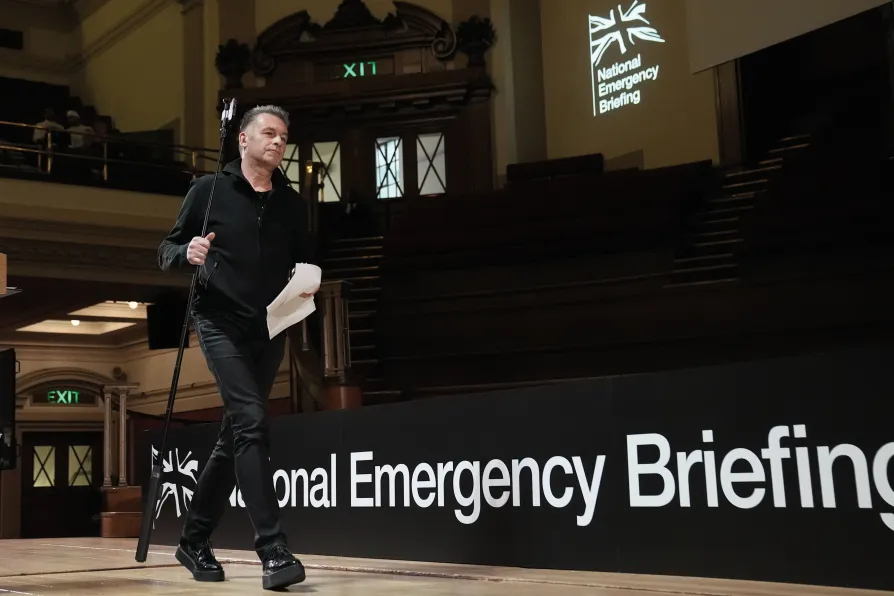
The National Emergency Briefing outlines the need for urgent action to address environmental crisis, says PAUL DONOVAN, warning that there’s no time to indulge the arguments of the fossil-fuel-funded climate-change deniers


 Latest editorial
Glasgow, city of closure
In Voices of Scotland YANA PETTICREW looks at the crippling deterioration of working-class art provision and support
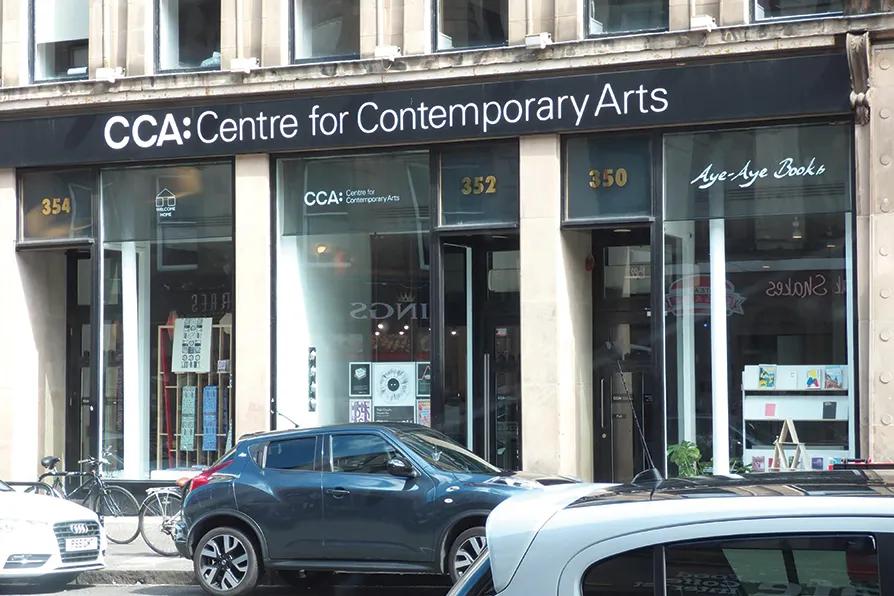 FORMER GLORY: Centre for Contemporary Arts, Glasgow in 2017 / Pic: Sam Saunders/CC
Campaigners say criticism of Labour MP Stephen Morgan’s position on Gaza has been met with police intervention and cancelled opportunities for debate. HESTER WOLFE reports
The Committee for the Defence of Iranian People’s Rights warns of escalation danger in Iran war
Claudia Webbe pays tribute tribute to KANYA KING CBE, February 12 1964 to June 3 2026
The Milburn review presents itself as a plan to help young people into work, but Dr DYLAN MURPHY argues it is laying the groundwork for a harsher benefits regime
Campaigners from across the continent will gather in Brussels on June 14 to oppose Europe’s accelerating militarisation and cuts to public services, write MAGGIE SIMPSON and BOB ORAM of No Cold War Britain





DESIGNATED Europe’s first City of Culture in 1990, Glasgow has become a global exporter of art, music and literature. The city is littered with venues, galleries, museums, theatres, and clubs that notable subcultures and artists have made their bedrock, experiencing waves of new-found appreciation for the Second City [of the British empire] throughout the years.
However, in the first months of 2026, Glasgow has experienced a gutting of its arts sector through closures, rent hikes, and unsustainable funding models finally collapsing. The accelerated decline in these spaces cannot go ignored, and so the question must be asked, what culture? And who for?
The City of Culture title, merely a Conservative Party salve for the ravaging nature of deindustrialisation that faced the city during the 1980s, has led to a severe generational divide in the sector, and has entrenched a series of class dynamics often ignored and suppressed by middle and upper-class artists, employers, and government.
Funding for the arts is consistently cut across state schools, and spaces for Scottish students at Glasgow School of Art have disappeared as universities transition into businesses seeking to increase profit and state-funded maintenance grants became loan-based debt.
The glitterati of Glasgow’s culture sector, the main benefactors from the upward draught initially provided by the export of culture, now reside in West End mansions and gated farmhouse conversions overseeing the impoverishment of workers in their venues, while working-class artists fight for scraps of limited opportunities and unpaid work under the guise of “exposure.”
Some through necessity must supplement their artistic work with flexible (read: precarious) employment in hospitality or retail, confined to creativity between shifts and rare breaks.
The “explicitly” working-class art that is picked up by the sector simply re-dresses the shortbread tin in Burberry fabric and produces pastiche effigies of what-we-had-before. But the political and material rot at the base of working-class culture is rarely challenged head-on.
Challenging class dynamics in the art sector does not make for a successful funding application.
Ultimately, Glasgow’s art sector finds itself devoid of class politics, exacerbated further by its extremely low trade union density. Unions utilising the service model can easily become insurance providers for those who can afford to pay their dues and will often lend credibility to venue owners that, while providing slightly better conditions for artists using the venues, refuse to collectively bargain with their workers who provide their labour behind the bars and box offices.
To combat the economic decline in the sector, particularly within venues, the unions must build their density and effectively identify and utilise industrial leverage against employers to secure sectoral collective bargaining that is meaningfully enacted through the workplace.
As displayed in recent cases, the concept of the Scottish government’s Fair Work policy, sounding good on paper, can only be materially mandated by workers, not employers.
Organisations may say the right thing to appear politically correct, and programmes will reflect the trendy left’s appetite for surface-level activism available only on evenings and weekends, while their workers will be denied secure employment and collective bargaining.
On January 30 2026, staff at the Centre for Contemporary Arts (CCA) were made redundant effective immediately via an online meeting, with no consultation and no consideration.
The Centre was housed in a building designed by Alexander “Greek” Thomson and owned by Creative Scotland that sits on Sauchiehall Street as a boarded-up shell of its former self, cutting away a multi-purpose venue comprised of a cinema, theatre, and shop-spaces from the city’s artists and residents.
As the Third Eye Centre, it hosted Billy Connolly and Glasgow Poet Laureate Edwin Morgan and was important in the development of painter Ken Currie, all artists who portrayed Scottish working-class life and culture as something multifaceted and complicated, rather than the current caricatures of a dead horse flogged.
While we are heading towards the biggest economic crisis faced within capitalism and material conditions rapidly deteriorate for the working class, it is easy to forget and dismiss the role art plays in daily life.
The working class deserve to partake in the culture they create, and they deserve to imagine a life where art is accessible to not just those who can afford it.
When working-class people are given the opportunity to create and see themselves in art, they can shape national culture into something that represents their interests and experiences rather than having it dictated to them by rich snobs with too much money and not enough taste.
A renewed effort to organise the arts sector with an industrial basis comes from the former CCA staff, aiming to bring artists and cultural workers into the trade union movement.
Their public meeting, supported by Unite Hospitality Glasgow and Glasgow Trades Council, is at the Boardwalk Theatre on April 9 at 6pm, and seeks to bring together a coalition focused on securing sectoral collective bargaining and increased union density across the respective creative unions. To stay updated, follow @cultureconditions on Instagram.
