
PETER MASON applauds the revival, 39 years later with the same team and cast, of Manfred Karge’s version of Brecht’s 100-year-old play, Mann Ist Mann

Get Agrippa
CATHERINE STEEL relishes a compelling novel about Augustus’s right hand man, but misses the politics, the cultural shifts, and more detail about his restoration of Rome
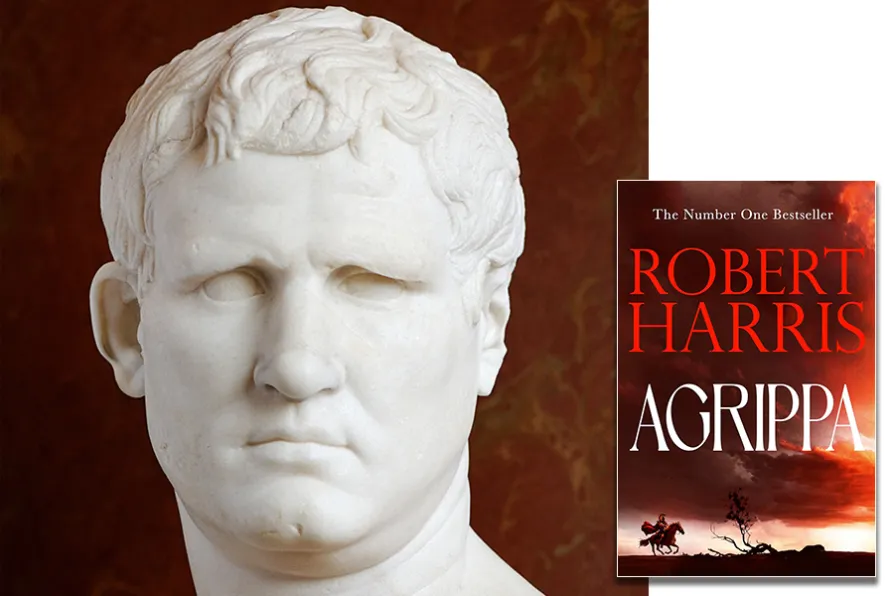
 A bust of Agrippa, circa 25–24BC. [Pic: Louvre Museum, Marie-Lan Nguye/CC]

New releases from Biita Houdei, The Mary Wallopers, and The Tubs
New releases from Biita Houdei, The Mary Wallopers, and The Tubs
MAYER WAKEFIELD applauds a fearless attempt to bring to the stage the 1984 toxic gas disaster in Bhopal, India
ALEX HALL applauds the account of a dogged, traumatic and punishing campaign for justice that has lasted from 1998 to the present day
NICK WRIGHT laments the political bias of an epic attempt to tell the history of the liberation of France from the Nazis, that excludes both the decisive contribution of the Soviet Red Army, and of the French communist party itself





Agrippa
Robert Harris, Hutchinson Heinemann, £9.99
ROBERT HARRIS has returned to Rome with his new novel, Agrippa. It’s a fictional autobiography of M Vipsanius Agrippa, right-hand man of the Emperor Augustus, purportedly written in the days before Agrippa’s death at the age of 50 in 12BC.
In Harris’s Cicero trilogy (2021), narrator Tiro allowed readers to see an intimate side of the Roman statesman Cicero. In a similar way, Agrippa – and the device of his “real – but now-lost” autobiography – gives Harris a perspective on the life of Octavian (also known as the young Caesar, and later Augustus).
Agrippa was Octavian’s close companion and trusted lieutenant from the moment Julius Caesar’s assassination pushed Octavian into the centre of Roman politics until Agrippa’s death. By that time, Augustus had firmly established himself as Rome’s sole ruler.
Unlike Tiro, however, Agrippa was a major military and political figure in his own right. A highly competent soldier, he was integral to the young Caesar’s victories. Agrippa later pivoted into politics and became part of the growing imperial dynasty through his marriage to Augustus’s daughter Julia. Agrippa’s life and Augustus’s sit side by side. Agrippa was, after all, the grandfather of Caligula and great-grandfather of Nero.
Harris is a superb storyteller, and Agrippa is a compelling read. The complexities of the civil wars of the triumviral period (43-31BC) are positively lucid, and a skilful balance is struck between Rome and the rest of the empire. Public events and private intrigues keep the momentum going throughout. What is perhaps less clear, however, is what is the point of all this skill.
After all, a lot of recent research has emphasised the fluidity and uncertainty of the triumviral period, and the political experimentation that Augustus engaged in as he tried to find a form for his new and astonishing reign.
Australian historian Kathryn Welch has written about the importance of Sextus Pompeius, the son of Caesar’s civil war opponent Pompey the Great, who seized control of much of the Mediterranean after Julius Caesar’s death. Jeff Tatum, professor of classics at Victoria University of Wellington in New Zealand, meanwhile, has published on Mark Antony’s grappling with the problems of power. Kathryn Tempest, a historian of Rome at the University of Leicester, has detailed the contexts from which Brutus’s assassination plan arose. Maecenas, another of Augustus’s closest confidantes, has been the object of four separate book-length treatments since 2014.
Much work has also been done on the traumatic consequences of a generation of civil war for Roman society and culture. Researchers are now much more conscious of the gendered consequences and increased female visibility in public life which followed from the creation of an imperial family. None of this is evident in Harris’s novel.
In this account, Octavian is bent on world domination from the moment Julius Caesar is killed. What follows is the systematic elimination of his rivals until none is left. The idea that different political outcomes were possible in the 30s BC, or that people were thinking furiously about what the state might look like, or even that what actually happened was one of the less plausible possibilities, is not countenanced in this version.
There is no jeopardy, and not much by way of surprises. Even the “revelation” about Agrippa, which I won’t spoil, doesn’t seem to do much work in the plot. Whatever genre this is, it’s not a thriller.
Nor is there very much to remark on in Harris’s characters. Anyone who knows the novel I, Claudius by Robert Graves (1934) will recognise the character of Livia the poisoner and schemer. Augustus is a rather chillier and nastier character than in Graves’s book, but Harris’s Agrippa is entirely recognisable as the loyal subordinate.
Indeed, Harris seems to be too fond of his protagonist to let him do anything really horrible – at least in the context of the period’s brutalities. All he can do, in the end, in a work striving for accuracy, is let Agrippa record his private disquiet.
So this is not a work about politics. And it isn’t a revisionist account of the period. It is not interested in cultural shifts – though Horace and Virgil surface for one entertaining paragraph. What it turns out to be, rather endearingly, is a book about making.
Agrippa’s chosen way of easing his conscience is through creation and restoration. He demonstrates this through projects that improve Roman infrastructure, including the rebuilding of the navy and harbours, his work as aedile (the elected magistrate responsible for public buildings) in 34 BC to restore Rome’s physical environment, and the construction of a major new aqueduct in Campania.
Image
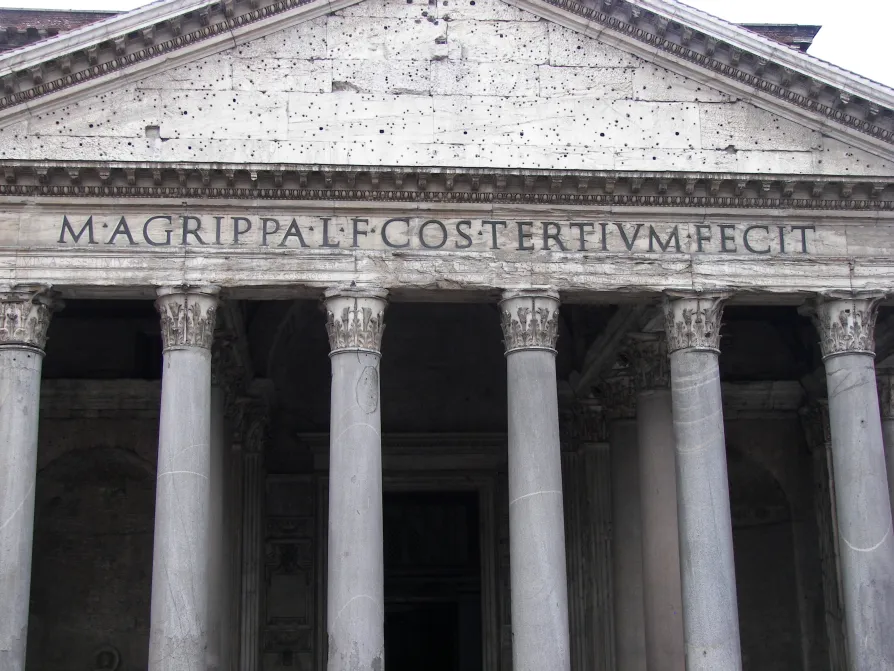
The book comes alive when Agrippa is engaged in engineering and construction projects. The afterword concludes with the Pantheon, the temple Agrippa originally commissioned and whose surviving facade still carries his inscription: M. Agrippa L.f. cos. tertium fecit (“Marcus Agrippa, son of Lucius, consul for the third time, built this”).
As a study of how that inscription came to preserve and shape Agrippa’s legacy, the book makes perfect sense. Indeed, it almost made me wish Harris had written not about Agrippa’s lost autobiography, but about his lost work on aqueducts. It’s a text that would perhaps have better reflected the aspect of Agrippa’s career that survives most clearly: his achievements as an engineer and builder.
Catherine Steel is Professor of Classics, University of Glasgow
This article is republished from The Conversation under a Creative Commons license.


Similar stories

The fawning obituaries have painted a flattering portrait of Rod Liddle. STEPHEN ARNELL offers a rather less reverential view of the man and his legacy
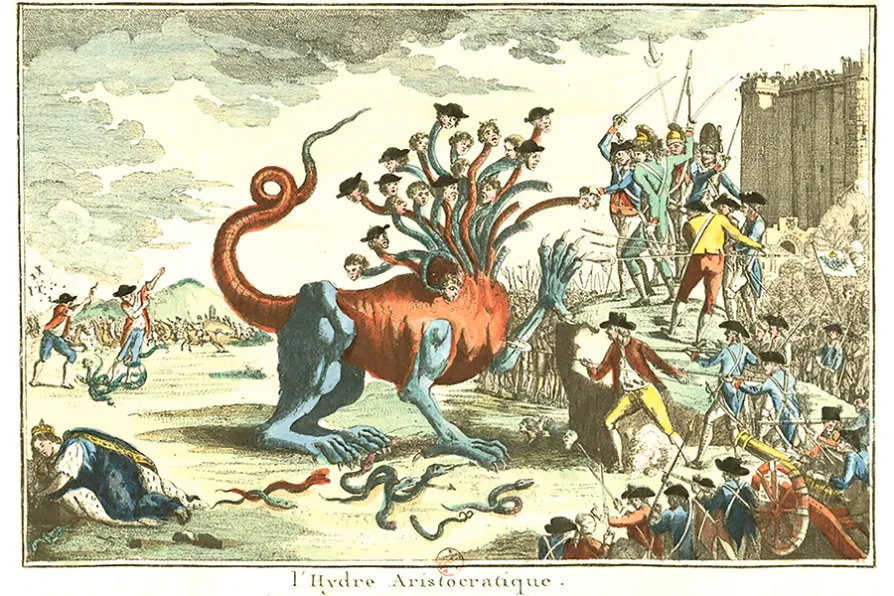
Before Greek myths reached the multiplex, they were weapons of political satire. CALLUM SMITH explores the evidence
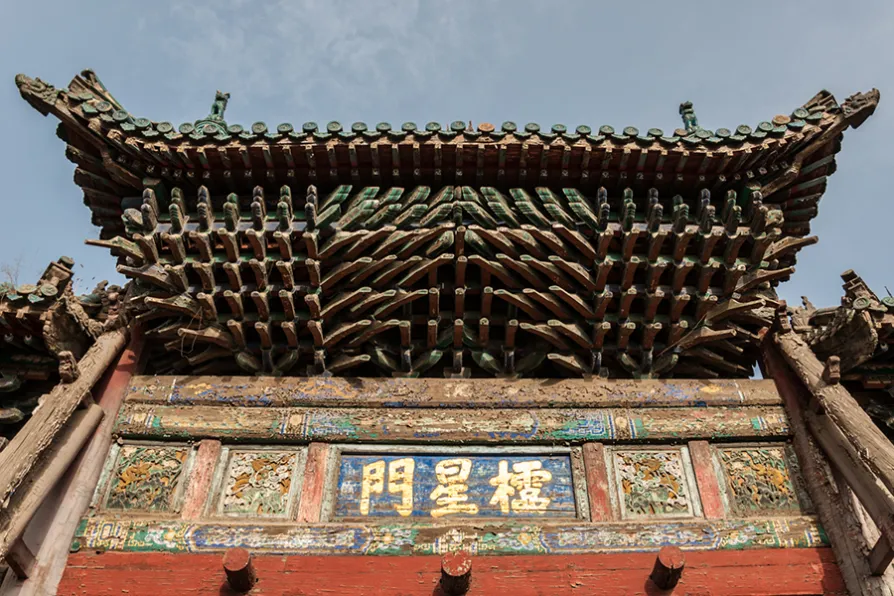
BEN CHACKO unpicks the significance of the discovery, in 2015, of ancient texts about Confucius. Was he simply a teacher, or a philosopher, statesman and saint?
MARTIN HALL examines the way the Roman orator took on different schools of philosophy