Labour must deliver its manifesto promises in full and begin the bigger task of restoring workers’ collective power, says MATT WRACK


 Latest editorial
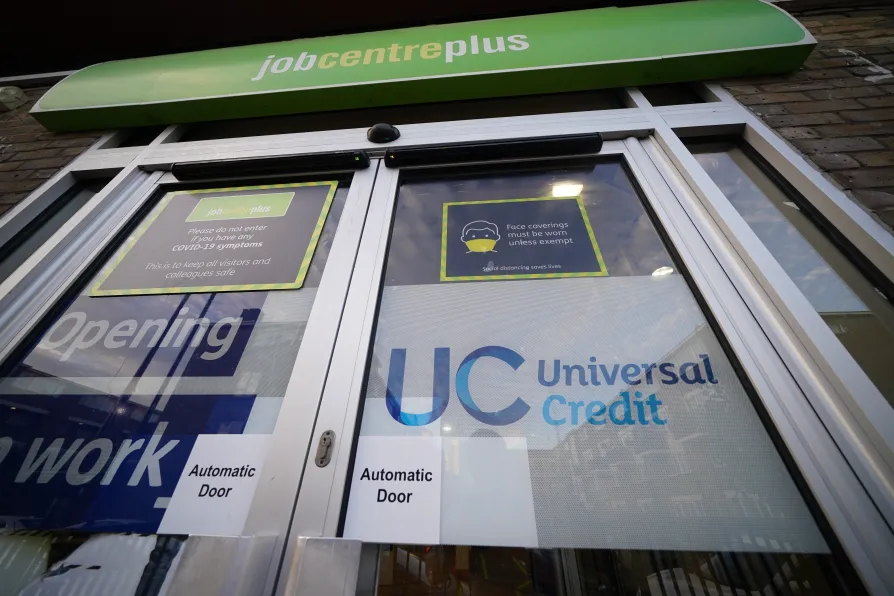
A generation at risk: Labour’s proposed war on disabled youth
Plans to delay access to the universal credit health element until age 22 have triggered fierce opposition from disabled people’s groups, who warn it would deepen poverty and entrench discrimination against young disabled people under the guise of ‘encouraging work.’ DYLAN MURPHY reports

This summer’s fire outbreaks highlighted once again the deadly cost of job, equipment and funding cuts to the fire service. Ten years after the Grenfell tragedy, serious lessons still need to be learned, says STEVE WRIGHT
Live music and musical education are both under attack and threaten to impoverish our culture. The Musicians’ Union seeks allies in the fightback, writes NAOMI POHL
The TUC fell for the illusion of a ‘Social Europe’ in 1988 and backed single-market membership. DOUG NICHOLLS argues that dramatic changes in the EU prove the need for an independent economic policy
As Cuba faces an unprecedented US energy siege and growing threats of military intervention, TUC Congress must stand unequivocally with Cuban workers and their right to determine their own future, writes STEVE GILLAN, POA general secretary and TUC president
By organising for boycotts, divestment and sanctions, trade unionists can turn solidarity into action, writes JESS BARNARD





IN A MOVE that has sent shockwaves through disabled communities across the country, the Labour government is considering a policy that would slash vital financial support for young disabled people aged 18 to 21.
As the campaign group Benefits and Work has pointed out, “One of the proposals in the Pathways to Work green paper was to delay access to the UC [universal credit] health element until age 22, meaning that younger people would not be eligible. The claim is that this would make it less likely that young people would be trapped in a life on benefits. The proposal is pencilled in for 2027/28.”
This has sparked a firestorm of criticism from disabled people’s organisations (DPOs), which warn of a “devastating financial impact” that will push a vulnerable generation further into poverty and away from the very employment opportunities the government claims to be promoting.
The government’s rationale for this drastic measure is to prevent young people from being “trapped in a life on benefits.” However, this narrative has been widely condemned as a gross misrepresentation of the reality faced by young disabled people.
Labour’s proposals are not based on evidence or a genuine desire to support young disabled people, but on a harmful and ableist stereotype that paints them as lazy and undeserving. The reality, as DPOs have been at pains to point out, is that young disabled people are facing a perfect storm of systemic barriers that the government’s proposals will only exacerbate.
A chorus of condemnation
Disability Rights UK has warned that the cuts would mean “a huge drop in income of almost £100 per week for nearly 110,000 Disabled young adults claiming UC in their own right.” It stresses that this will not only affect those who are not in education, employment, or training (NEET), but also many who are in education or low-paid employment and rely on UC to top up their earnings.
The organisation has launched a campaign urging the public to write to their MPs to “Stop Devastating UC Cuts For Disabled Young Adults.”
Contact, a charity for families with disabled children, has been equally vociferous in its opposition. It states that the proposal “pushes disabled young adults and their families further away from employment prospects and further into poverty,” and that it is “not a policy that should be implemented. It is not a proposal that Contact could support in any way.” It highlights the “crippling drop in financial support of more than £125 per week” that families would face when a disabled child turns 19 and transitions to adult benefits under the new system.
Contact’s position is clear: “Ultimately, Contact does not accept that there is any justification for slashing financial support for any young disabled person aged 16 to 21.”
Scope, another leading disability charity, has described the proposed cuts as a “catastrophe for disabled people’s finances” that will have a “devastating impact on disabled people (and their children), sending hundreds of thousands into poverty, and many more into deeper poverty.” Sense, a charity for people with complex disabilities, has also launched a campaign to “act now to stop financial support for young disabled people being cut.”
The real barriers to participation
The government’s focus on benefit cuts as a means of encouraging young disabled people into work is not only cruel but also fundamentally misguided. It ignores the real barriers that prevent them from participating in employment, education and training. As my own submission to the government’s consultation highlighted, these barriers are complex and multifaceted, and have nothing to do with a lack of aspiration.
1. Health-related barriers: A significant and growing number of young people are living with mental health conditions, neurodevelopmental conditions, and other disabilities.
The government’s own data shows that four in five young people claiming the UC health element do so due to mental health or neurodevelopmental conditions.
These are serious health conditions that require appropriate medical care, support, and time to manage. Forcing young people with severe anxiety, depression or autism into unsuitable work environments without the necessary support is not only cruel but also counterproductive.
2. Systemic barriers in the benefits system: The proposed changes to the UC health element will create a two-tiered system of support, where a young person’s right to an adequate standard of living is denied by virtue of their age.
Do disabled young people have fewer needs than those disabled people aged over the age of 22?
This is a clear violation of the principle of non-discrimination enshrined in both the UN Convention on the Rights of Persons with Disabilities (CRPD) and the International Covenant on Economic, Social and Cultural Rights (ICESCR), both of which Britain has ratified.
3. Labour market and societal barriers: Young disabled people face significant discrimination and stigma from employers. Many employers are unwilling to make the reasonable adjustments required by law, and there is a pervasive lack of understanding about the needs of disabled employees.
The suggestion that young disabled people should be forced into the hospitality and construction industries demonstrates a profound lack of understanding of the diverse skills and abilities of disabled people, as well as the realities of these sectors.
A call to action: are you prepared to speak up for disabled young people?
The government has commissioned Alan Milburn, one of the architects of privatisation in the NHS while health secretary from 1999-2003, to write a report into why so many young people are not in work, education or training.
The Milburn review has launched a public consultation wanting answers to two questions:
1. What is stopping more young people from participating in employment, education or training?
2. What would make the biggest difference to support more young people to participate?
The government’s consultation on this issue is open until Friday January 30. This is a crucial opportunity for left activists and the wider labour movement to make their voices heard and to stand in solidarity with young disabled people. The message from DPOs is clear: these cuts are unacceptable and will have devastating consequences. The government must abandon its punitive approach and instead focus on creating a supportive and enabling environment that respects the rights and dignity of all disabled young people.
As Benefits and Work starkly puts it: “If you don’t agree that young people with mental health and neuro-developmental conditions are all TikTok-trained blaggers who should be prevented from getting the health element of UC and instead forced into working in the hospitality and construction industries, then please take the time to respond to the consultation.”
In my submission to the consultation I concluded: “Instead of punishing young people for their disabilities, the government should be investing in their futures. By upholding its international human rights obligations and implementing supportive measures, the government can create a society where all young people, regardless of their disability, have the opportunity to reach their full potential.”
The government claims it is listening. Are you prepared to speak up for disabled young people?
You can respond to the consultation by emailing your submission to youngpeopleandwork.report@dwp.gov.uk. For more information, please visit the official consultation page: tinyurl.com/YoungPeopleCallForEvidence.

Similar stories

Including races at Epsom and Doncaster
JOHN GREEN welcomes a remarkable study of Mozambique’s most renowned contemporary artist
STEPHEN ARNELL looks back to when protesters took to the streets in London demand to Irish liberty, fair pay and free speech — and wonders what’s changed in 138 years