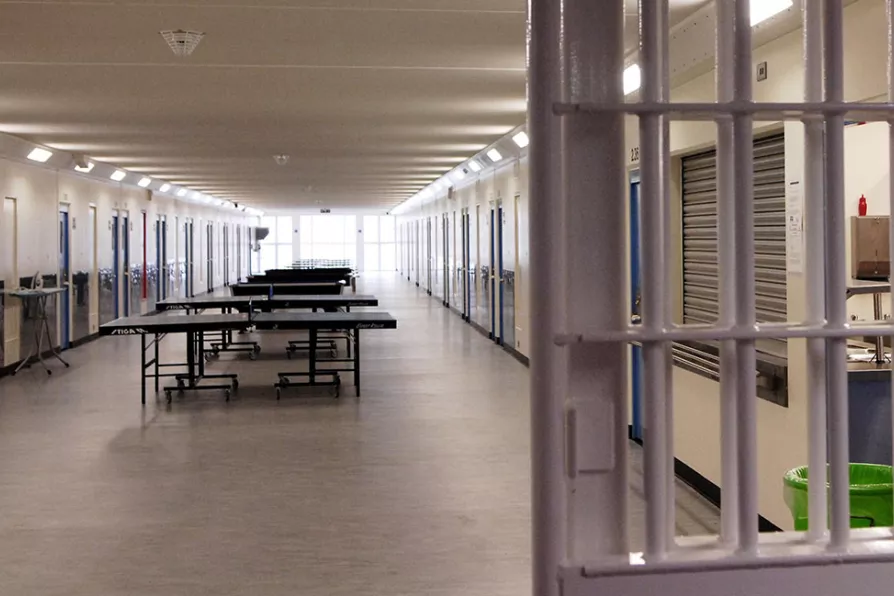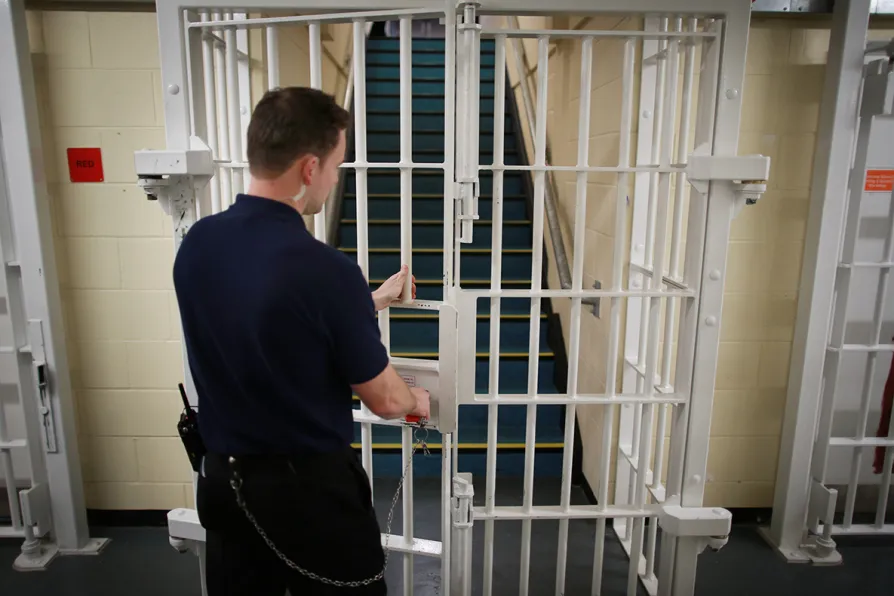
 A door being closed by a prison guard at a Young Offenders Institution, January 17, 2014






FEELING unsafe is inevitable for many children in youth custody, research by HM Inspectorate of Prisons has revealed, as poor incarceration standards persist.
The review analysed evidence from four young offender institutions (YOI) and one secure training centre in England and Wales between April 2025 and March 2026, finding that outcomes remained unacceptable in most establishments.
Boys at Feltham and Werrington were unlocked for less than four hours a day on average, while education provision was inadequate everywhere except Parc YOI, which achieved good outcomes across all four healthy prison tests.
Meanwhile, “fundamental” weaknesses at Oakhill STC prompted an Urgent Notification to the Justice Secretary.
Some 39 per cent of children said they had felt unsafe at some point in custody, with 14 per cent feeling unsafe at the time of the survey.
Only 26 per cent said they would report bullying, and one in three had no staff member they could turn to for help.
Chief Inspector of Prisons Charlie Taylor said: “The number of children in custody has never been lower and these establishments are comparatively well resourced, yet the Youth Custody Service has failed to make the meaningful improvements that children urgently need.
“This is even more concerning given the numbers in YOIs are likely to rise as 18-year-olds are held in youth custody for longer to ease pressure on the adult prison estate.”
Howard League for Penal Reform’s Andrew Neilson said prison is “no place for a child,” adding: “It is time for the government to act decisively.
“Get children out of these toxic places and into an environment where they will receive the care and support they need to turn their lives around.”
The Prison Officers Association called the findings “very concerning,” saying it shows that “there are still serious problems across the youth custody estate.”
It said in a statement: “Children in custody need to be safe, have access to education and support, and be given the opportunity to spend meaningful time out of their cells. But we also need to recognise what frontline staff are dealing with every day.
“POA members are working in an environment where violence, assaults, weapons and challenging behaviour are a reality. Staff are being asked to manage these issues while dealing with staffing pressures and increasing demands.
“The progress at Parc shows that things can improve when there is good leadership, proper resources and strong relationships between staff and children. We need to see that approach across the whole youth estate.
“The Youth Custody Service needs to listen to its frontline staff and make sure they have the staffing, training and resources to keep both children and staff safe. You cannot improve outcomes for children without supporting the staff responsible for their care and security.”


With the agitated debate now raging in the media about the early release schemes, Prison Officers Association general secretary STEVE GILLAN gives the view of those who work in the sector