
The SNP’s government programme for the next five years raises the threat of more cuts and attacks on the public sector, engagement with unions and service users is essential, argues ROZ FOYER

The day the BBC told the truth
On January 2 2014, PJ Harvey used her turn as guest editor of the Today programme to expose the realities of war, arms dealing and media complicity. The fury that followed showed how rare – and how threatening – such honesty is within Britain’s most Establishment broadcaster, says IAN SINCLAIR
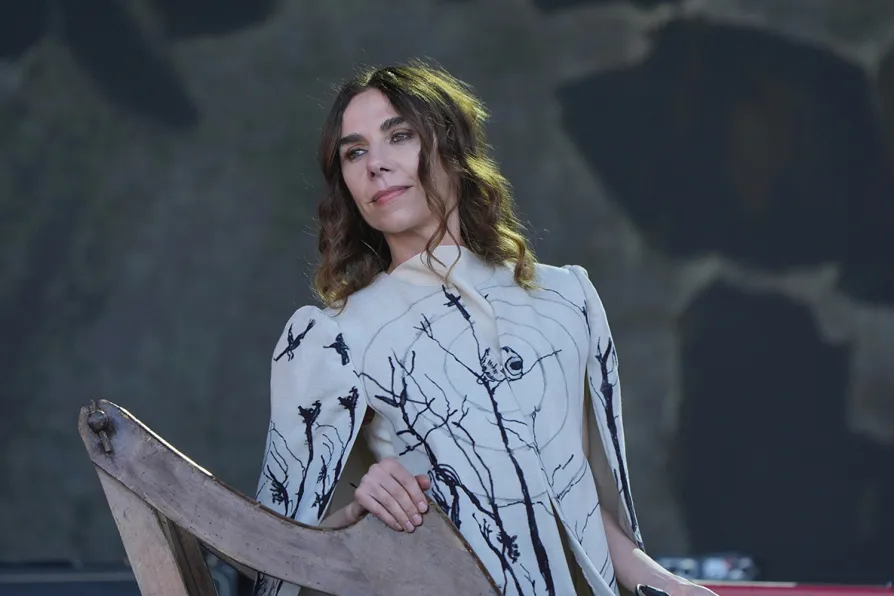
 PJ Harvey performing on the Pyramid stage, at the Glastonbury Festival at Worthy Farm in Somerset, June 28, 2024
MARK JONES recounts the remarkable revolutionary pioneers Goodwyn Barmby and Catherine Watkins, who brought the term communist into the British labour movement.
The West’s policies in Yemen are in tatters as the Ansarallah forces have taken strategic territory and humiliated Saudi-backed militias. This provides an opportunity to end Britain’s shameful policy in the region, argues STEPHEN BELL
KEITH FLETT pays tribute to the resilience of the peace and anti-imperialist movement in Britain that emerged after the September 11 attacks and is ever-more needed today
The US administration is endangering lives by reversing environmental protection laws, CHAUNCEY K ROBINSON argues
It’s time to stop retreating and go on the offensive to promote working-class interests, argues DOUG NICHOLLS





TWELVE years ago something absolutely extraordinary happened. Something that should be commemorated every year by the British left.
On January 2 2014 the British musician PJ Harvey guest edited the BBC Today Programme, as part of their annual shake-up of their schedule which hands the reins of the flagship morning radio show to the (so-called) great and the good from politics, business, science, the military, culture and sports.
“All our guest editors have brought something different to the programme but this is probably the most different,” Mishal Husain, one of Today’s presenters, told listeners.
Having released her Mercury Prize-winning Let England Shake album in 2011, Harvey organised contributions from a slew of critics of Western power and foreign policy, including John Pilger, historian Mark Curtis, Julian Assange from WikiLeaks, activist John Rees, journalist Ian Cobain, lawyer Phil Shiner and former senior United Nations official Denis Halliday.
Writing a month after the seismic radio broadcast, Pilger revealed Harvey’s guest selections had “caused great panic from the moment she proposed them” with “weeks of absurd negotiations at Broadcasting House about ways of ‘countering’ us and whether or not we could be allowed to speak without interruption from Today’s Establishment choristers.”
Which likely explains Harvey’s introductory remarks at the start of the programme, explaining that before she accepted the invitation to be a guest editor she asked Today to agree to not edit her contributors or restrict them in any way.
From their power-friendly perspective the BBC were right to be worried.
In his slot, titled “Arming Repression,” Curtis explained how “British arms are exported to many of the world’s worst human rights abusers as a matter of routine,” with then Princes Charles and Andrew acting “as high-level salesmen for British arms exports abroad.”
Curtis concluded with a dose of reality perhaps never heard on Today before: “The sad truth is Britain sells arms to repressive regimes in the Middle East and elsewhere because it supports them. It wants to keep them in power. And often prefers them to democratic movements which may not support Western policies.”
An hour later Pilger started his contribution by noting the results of a “shocking” May 2013 ComRes poll that found the majority of respondents believed fewer than 10,000 Iraqis had been killed as a result of the 2003 US-British invasion. That “scientific studies” estimated up to one million Iraqis had died in the carnage revealed “that we in Britain are being misled by those whose job is to keep the record straight… from the BBC to CNN the echo chamber is vast,” Pilger stated. The award-winning journalist had done the unthinkable live on (BBC) air to an audience of millions — criticised the media itself.
Elsewhere there were snippets of music, including The Jam’s In The City and the anti-war song Johnny I Hardly Knew Ye from Joan Baez, along with testimony from victims of British torture in Kenya, Cyprus and Northern Ireland. The programme ended with Assange giving his Thought For The Day.
For those who weren’t listening at the time, it’s difficult to describe the shock and excitement of waking up to hear Pilger et al scything their way through the dense thickets of propaganda that normally runs through the Today programme like a stick of rock.
The response of the mainstream media was swift, and largely negative. “Drivel! PJ Harvey accused of filling BBC Radio 4’s Today programme with ‘leftie tosh’,” was the headline of an article on the Daily Mail website. Ditto the Daily Telegraph, whose article headlined “BBC Radio 4 Today criticised for ‘left-wing tosh’ chosen by guest editor PJ Harvey” seems to have been published just 36 minutes after the end of the programme.
Over at The Guardian Michael White had mixed feelings: he enjoyed listening, he said, though found space to belittle Pilger’s “kind of indignation” as “best suited to young people for whom things are simpler than they become as most of us get older.”
The BBC had obviously planned to try to head off any backlash in advance. After Curtis’s segment a statement from arms company BAE Systems was read out. Brenda Kelly, chief market strategist at trading and investment company IG Group, was interviewed in response to Rees’s critique of the dominance of the City. And after Pilger’s monologue Today presenter Sarah Montague explained that “a different view” on civilian deaths in Iraq would be heard on the programme the next day.
This “different view” entailed wheeling out Toby Dodge from the London School of Economics, an adviser to top US General David Petraeus during the US-British bloody occupation of Iraq, to try to counter the studies Pilger had cited.
Harvey’s achievement on January 2 2014 is especially impressive when you consider just how Establishment the Today Programme is.
Yes, there’s lots of debate and occasionally robust questioning of politicians, but largely within relatively narrow parameters, usually limited to the positions of the two main political parties, with occasional contributions beyond this.
As the academic Dr Tom Mills summarises in his book The BBC: Myth of a Public Service, the BBC’s “journalism has overwhelmingly reflected the ideas and interests of elite groups and marginalised alternative and oppositional perspectives.”
Today presenter Amol Rajan inadvertently confirmed this in November 2023 when he let slip live on air that “as broadcasters we generally err on the side … of trying not to give too much airtime to protests.”
Why would this be?
Kevin Marsh, the editor of the Today programme in 2003, provided some insight when I interviewed him about the BBC’s coverage of the run-up to the Iraq war.
“Since we … see ourselves as public policy journalists then necessarily we look at what is happening in public policy ie politicians and officials” rather than “those who were not in a positon to make decisions, like the anti-war movement,” he told me.
2025’s guest editors have been the actor Cate Blanchett, former prime minister Baroness Theresa May, broadcaster Melvyn Bragg, historian Tom Holland, inventor Sir James Dyson and Microsoft’s head of artificial intelligence Mustafa Suleyman.
All very safe hands, of course. In 2021 General Sir Nick Carter, then Britain’s chief of defence staff, was a guest editor, and so was Sir Jeremy Ian Fleming, the director of Britain’s intelligence, cyber and security agency, GCHQ, a year later.
Make no mistake: as long as there is a senior manager at the BBC Today programme who remembers January 2 2014 nothing similar will ever be allowed to happen again.
You can listen to the January 2 2014 edition of the BBC Today Programme on PJ Harvey’s website: tinyurl.com/PJHarveyToday.

Similar stories
The campaign against the Bank of England’s ongoing theft of Venezuelan gold is gaining support across the labour movement and beyond, writes MATT WILLGRESS
Media Lens at 25: David Cromwell and David Edwards reflect on a quarter-century of media criticism, explaining why independent journalism is more important than ever
IAN SINCLAIR examines the curious memory lapses across liberal media when it comes to British government crimes
Outrage greeted Donald Trump’s suggestion earlier this year that Britain stayed off the front lines. But evidence suggests our forces were at times pulled from the most dangerous fighting — not by military failure, but by pressure at home, says IAN SINCLAIR