ROB WARZYNIAK recalls the emblematic 1906 book, The Jungle, in its analysis of the crisis presently engulfing the US Food and Drug Administration


 Latest editorial

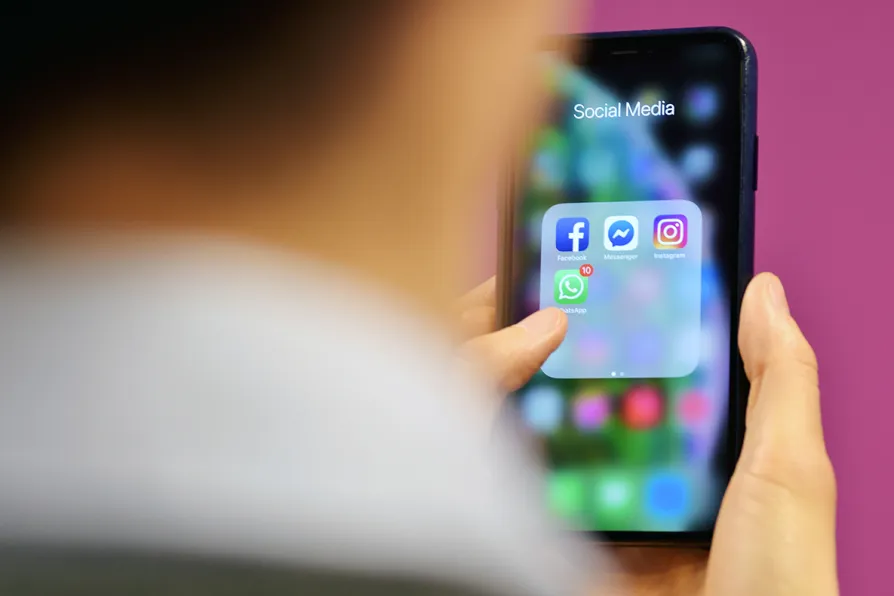
Daniel Kebede: why I support a social media ban for under-16s
The National Education Union general secretary speaks to Ben Chacko on growing calls to protect children from a toxic online culture

Welsh wanderings showcase fiery destruction, alternative water ways and revive memories of a local mining legend, writes MARK SEDDON
As thousands die in the eastern DRC, a global health emergency is being starved of funds, says S KRISHNASWAMY
MAT COWARD explains how in the 17th century a row over whether to kneel at communion became a battle over religion, class and royal power
Renewed illusions in social democratic reformism are sprouting as a result of Andy Burnham’s rhetoric, but material conditions are already intruding into the debate, argues NICK WRIGHT
Andy Burnham could learn a few lessons from a previous Labour government in the pre-privatisation era on how to tackle water shortages, writes KEITH FLETT





DANIEL KEBEDE, general secretary of the National Education Union, backs a ban on social media for under-16s.
Pressure is growing on Keir Starmer to introduce such a ban, with a letter signed by 61 MPs calling for one sent to him on Sunday. The issue cuts across political divides — the BBC’s Nick Robinson dubbed Kebede “the union leader who agrees with the Tory leader” last week on account of it. Kebede hastens to assure us that it is pretty much the only thing he agrees with Kemi Badenoch on.
“I’ve supported a ban since I was a teacher, and have called for one since becoming NEU general secretary in 2023,” he tells the Morning Star.
“Access to unregulated tech is causing a huge crisis in children’s wellbeing. Suicide prevention charity the Molly Rose Foundation found that social media was at play in one child’s suicide a week.”
In schools, he sees “teenage boys exposed to extreme misogynistic content that is shaping their ideas about sex and relationships.”
Constant social media activity is linked to the accessibility of online porn — “they’re two sides of the same coin,” Kebede says. “Easy access to extreme, degrading pornography is having a huge impact on young boys’ attitudes to women and girls — and of course the attitudes they take into adulthood. I’m surprised nobody saw it coming — your typical 14-year-old boy has seen more sex and debauchery than Henry VIII in his whole life.
“Naturally that then affects their treatment of girls, and the welfare of girls growing up.”
Social media affects the way children interact in other ways too.
“Disputes between children now take place in group chats, and they’re 24-7. It’s not like when we were at school Ben — where you might have a row with other kids but you went home and by the following morning everyone had forgotten about it. When it comes to bullying, that now follows children around everywhere too in a way it didn’t used to.
“Social media is extremely addictive. Schoolkids are spending an average 35 hours a week on it — like a full-time job. You see them becoming anxious when they are parted from their phones.
“There is a direct, causal link between all this and the rise in mental ill health among the young.
“You can track that rise in sync with the creation of the big social media platforms — Facebook, Twitter/X, Snapchat and so on.
“Young girls are being pumped full of content distorting their body image, boys being spoon-fed misogyny and toxic ideas on what it means to be a man.
“Of course it isn’t the only cause of the rise in mental health conditions. Child poverty is a big factor. So is a very prescriptive, high-stakes education system built around constant testing from a very early age.”
Kebede represents teachers — does he believe children’s access to social media affects teacher welfare?
“It can do, and there are also instances of the way parental group chats are used that can undermine teachers. But what underpins our call for a ban is children’s welfare — we want a society in which children can be children.”
A ban on social media access by children has been introduced in Australia, while in China smartphone settings enforce age-related restrictions.
Some argue these bans are an infringement on people’s freedoms, while others warn measures like the Online Safety Act have the potential to be abused for political censorship. Donald Trump’s US administration, close to “tech bros” like Elon Musk, has threatened retaliation against countries which attempt to regulate online platforms.
“Frankly, anyone who thinks the Wild West we have online is acceptable is wrong,” Kebede argues.
“Of course we support free speech. Freedom is for adults, though.
“When it comes to children, we want to provide a scaffold through childhood that keeps them safe, and allows them to develop into well-rounded human beings. We do that in all sorts of ways when children are growing up — nobody thinks children should simply be left to make all the kinds of decisions we might make as adults, on their own. Regulation here is simply a matter of catching up with the technology.
“A big majority of parents and the public support regulation of social media.”
Starmer has not yet backed a ban, but has said he is willing to consider one, that “all options are on the table.” The House of Lords will this week consider a cross-party amendment introducing one on the Australian model.
But will he have the guts to defy the United States on this? Washington has issued fairly explicit threats that Britain will be punished if it tries to regulate the internet — even by placing restrictions on Musk’s Grok AI tool in response to its creation of “deepfake” images showing real people artificially undressed or in degrading attitudes.
“Well, who does the Prime Minister act for? The voting people of this country, or Trump and his friend Elon Musk?
“This is an issue where — unusually — the Prime Minister can command mass public support. Maybe it can prompt him to grow a spine! I certainly hope so.”
