

 Latest editorial

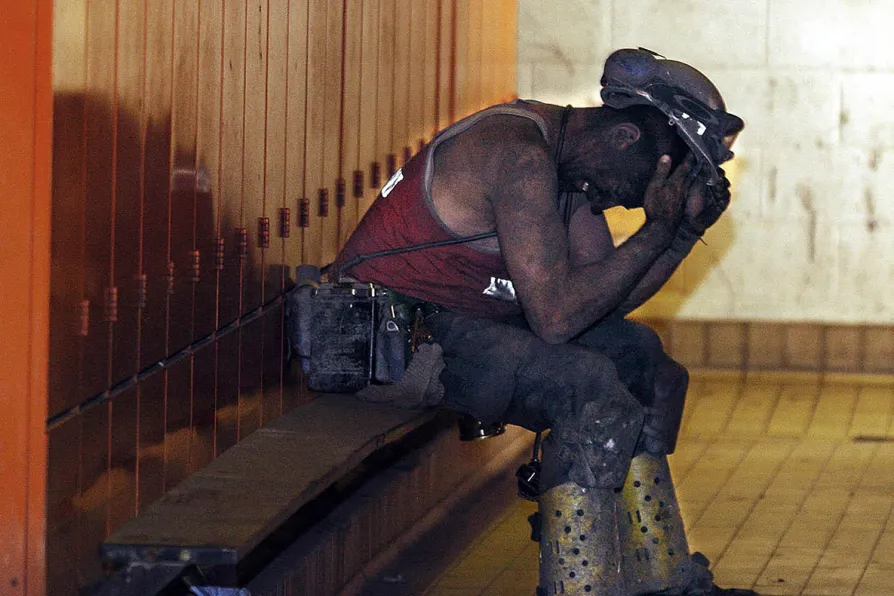 A miner sits in a Stillingfleet Colliery, York, locker room for the last time, July 30, 2004






FORMER heavy industry and mining communities face entrenched disadvantage stretching back 50 years, new research has confirmed.
Looking at areas which suffered the destruction of industries they relied on over in the late 20th century, such as Yorkshire, the North East, Midlands, Wales and Scotland, the Social Mobility Commission (SMC) was able to show not only the damage wrought by rapid deindustrialisation, but that it continues.
Decades on, children in those communities today still have a worse experience than elsewhere, with fewer job opportunities as adults amid more stagnant local economies.
While some positive change was recorded, with more 25 to 29-year-olds moving into professional careers from 36.1 per cent in 2014-16 to 48.2 per cent 2022-24, class remains the key factor.
The SMC’s State of the Nation report, published today found that the gap between young working-class people getting those jobs and their better-off peers had widened.
This was compounded by 22 per cent of young working class people not being in education, employment or training — more than twice the 9 per cent rate for those from professional backgrounds.
Layered on top of the privileges already afforded to wealthier households, the study also confirmed working-class women from poorer backgrounds were even less likely to get higher-paid jobs than middle and upper-class counterparts.
SMC chairman Alun Francis said: “It is part of the cycle of innovation and economic development that opportunities move around. But in our country they have become over-concentrated in specific places.
“Far too many live and grow up in communities where opportunity has become very limited and outcomes are poor.”
Referring to places which the report termed “beacons of hope” for social mobility, he added: “We are seeing signs of positive change, with cities like Bristol, Edinburgh and Manchester showing what is possible, but the pace of change needs to be quicker and the scale much bigger.
“In the meantime, entire communities, often in post-industrial seaside towns have been left behind with deep-rooted disadvantages.
“This is the defining social mobility challenge of our generation and our State of the Nation report captures the issues that we as a nation need to address.”
