


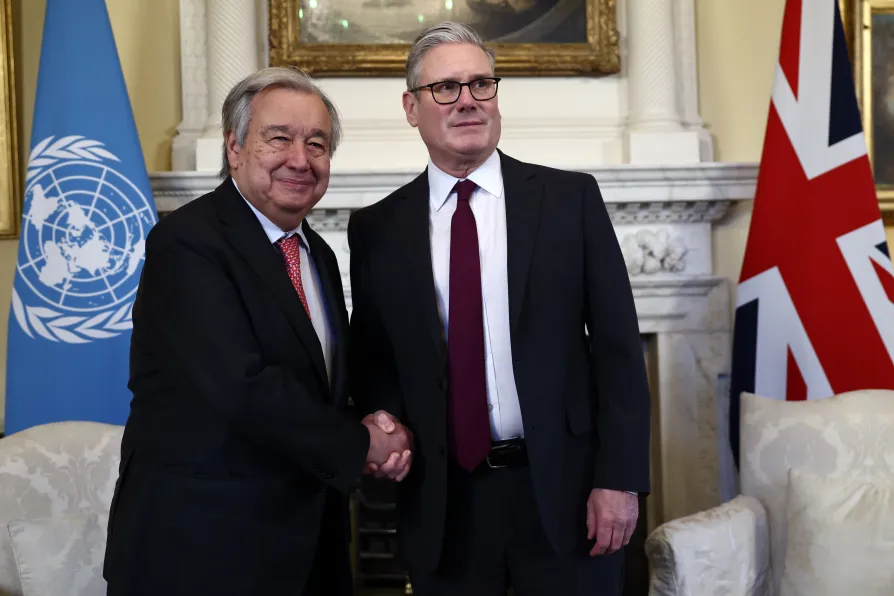
 Prime Minister Keir Starmer with UN Secretary-General Antonio Guterres inside 10 Downing Street, London, ahead of talks, January 16, 2026






THIS weekend the secretary-general of the United Nations, Antonio Guterres, will be visiting Britain. He will be marking the 80th anniversary of the first meeting of the UN general assembly in London in January 1946.
At that first UN general assembly meeting there was only one substantive resolution. It called for the abolition of nuclear weapons. Support came from both Bernard Baruch for the United States and Vyacheslav Molotov for the Soviet Union.
On February 5 2026, the last substantive agreement limiting strategic nuclear weapons, originally signed by both the US and the Soviet Union in early 1991, the Strategic Arms Reduction Treaty (Start), will expire.
Russia called for its renewal in September 2025. As of January 15, President Vladimir Putin’s spokesperson reported that no reply had been received “to what we consider to be a very important issue.”
US President Donald Trump’s main statement on defence this month was to announce a 50 per cent increase in defence spending to $1.5 trillion.
Where will Britain stand? Probably nowhere. When Trump invaded Venezuela, Guterres issued a statement of concern and condemnation. Starmer wanted more information. On Friday when France and Italy issued a statement calling for the resumption of diplomatic relations with Russia, Britain’s Foreign Secretary Yvette Cooper rejected the call.
Under Starmer Britain has steered a perilous course on international relations. Our country’s military bases have been used for repeated acts of aggression by Israel and the US in the Middle East. In the Far East, Britain continues the policies, initiated by Boris Johnson, for the encirclement of China and the militarisation of the Pacific.
In Europe Starmer has been instrumental in the fast rearmament of Nato members and, most recently, in pushing for the involvement of Nato troops in Ukraine. And it was Britain that supplied the necessary logistics for Trump’s armed piracy off the north coast of Scotland.
On Greenland, yes, Britain has made a token gesture. It is contributing a small contingent to the military exercises being undertaken there by its European Nato allies. It could hardly do otherwise and maintain credibility and influence.
Yet overall it would appear that Starmer has no intention of shifting alignment away from the US. US investment firms own the London Stock Exchange and the companies quoted within it. As a financial centre the City depends on US banks. The recent relaxation of banking credit regulations brings us perilously close to the situation before 2008. Britain’s armaments firms are closely interlocked with the US military machine. BAE, whose profits have quadrupled since 2021, gets half its income from the US.
This is a relationship that also poses great danger in terms of both our security and the economy. Ownership by US investment companies starves our industry of the investment needed to drive productivity, growth and employment. The rapid expansion in military expenditure has led to crippling cuts to the welfare state and much local government.
What is to be done? In May the demand “welfare not warfare” needs to be taken into every election campaign. As we face the rapidly expanding rise of the radical right it is the one key slogan that exposes the real reason for the degradation of the public sector, of people’s lives and hopes.
However, as we face the rise of Reform and the far right, more is needed: a movement that directly organises working people. In 1957 the leader of our biggest union marched at the head of the first Aldermaston march for the abolition of nuclear weapons. By the 1970s most union leaders did. Such a movement is needed now to protect the welfare state, communities, jobs and ultimately lives — carrying forward the work started by the UN in 1946.

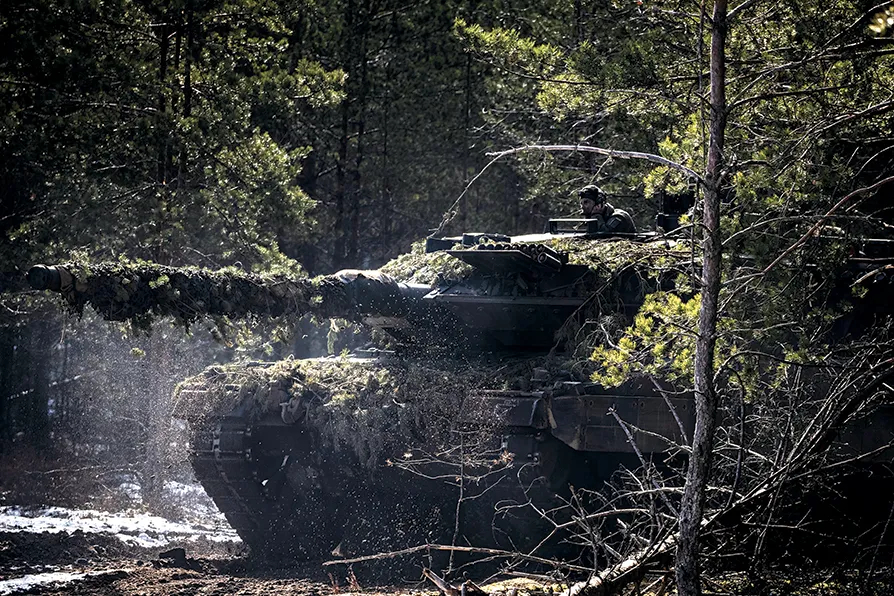
The Baltic state is set to reverse its constitutional prohibition on nuclear weapons and foreign bases as part of accelerated Nato war preparations, warns TOM UNTERRAINER
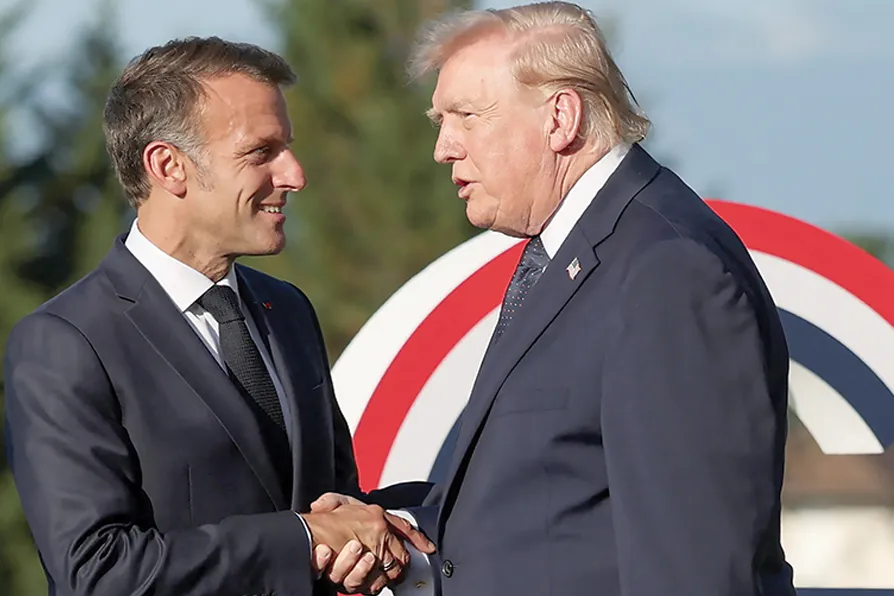
While millions face poverty and public services are squeezed, France is committing billions to defence spending and weapons production, in a dangerous shift towards permanent preparation for war, says CONOR BOLLINS

We need a government that invests in saving lives not destroying them, argues SOPHIE BOLT
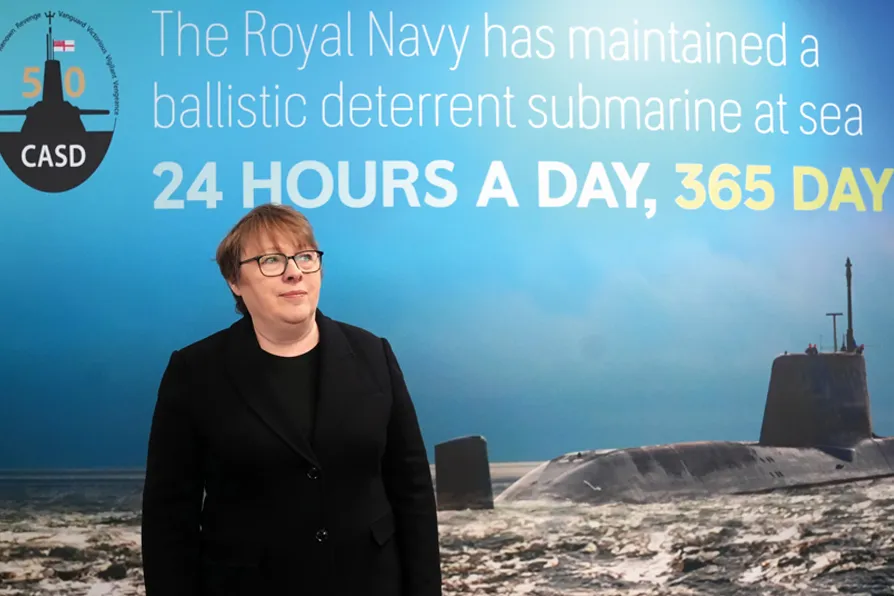
Expanding Britain’s nuclear capability increases the risk of nuclear confrontation. It does not keep us safe – it makes us a target, argues CAROL TURNER