WILL STONE samples the 20th anniversary atmosphere of this eclectic end-of-season indie festival


 Latest editorial
Cinematic jackboot
ANDY HEDGECOCK is disappointed by a survey of George Orwell’s life and literary obsessions that is mesmerised by its own baroque technique
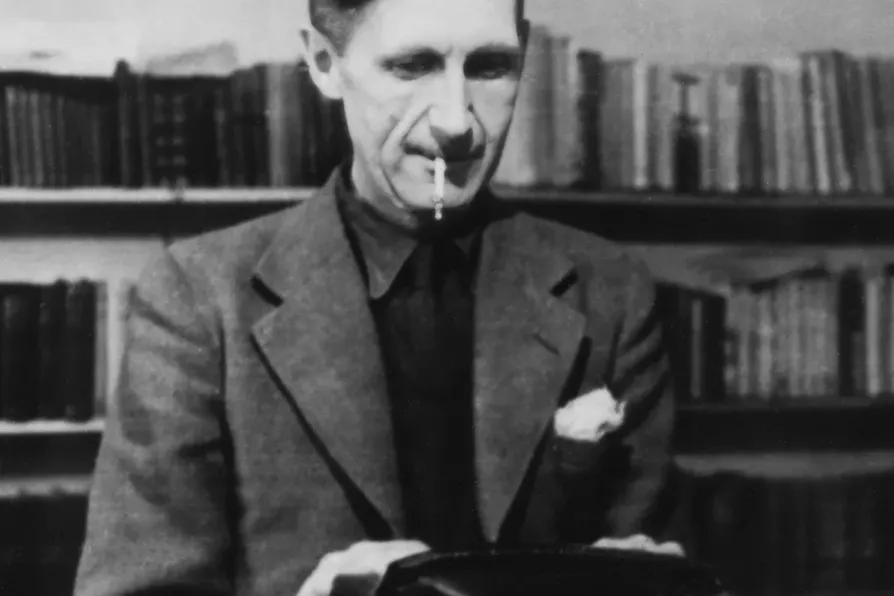 WHITEWASH: George Orwell [Pic: IMDb]

Comics are not just superheroes and spandex – it can be public art, telling public stories, suggests HARRIET EARLE
The bard serenades the Diggers of Wigan and their festive followers
ALEXEI SAYLE speaks to Angus Reid about a lifetime of protest, how to hone political art – and what to do now
ANDY HEDGECOCK, JAMES WALSH, LEO BOIX and MARIA DUARTE review Just An Illusion, Everybody Digs Bill Evans, Blue Film, Oasis: Don’t Look Back in Anger, and Runner
MARIA DUARTE recommends a nerve-wracking reconstruction of the 72 hours before the Normandy landings





Orwell: 2+2=5 (15)
Directed by Raoul Peck
★★☆☆☆
THERE’S an unfortunate irony in the title of Raoul Peck’s latest documentary. As a survey of George Orwell’s life and literary obsessions, it is carefully curated and thorough; but in terms of coherence and impact it’s less than the sum of its parts.
The film shows how Orwell’s writing was informed by early experiences – a colonial family, education at Eton, service as an imperial police officer in Burma – and goes on to explore the contemporary relevance of his work. This is achieved by cross-cutting between extracts from the books, read by Damian Lewis, and extravagant medleys of newsreel, documentary footage and film clips.
Lewis’s husky narration – signifying a throat injury sustained in the Spanish Civil War – is convincing and adds clarity to the film’s cascades of images. Sadly, his contribution doesn’t compensate for poor decisions in selecting and organising material.
Peck’s ambition is laudable. First, there’s his apparent determination to cram into 119 minutes every facet of Orwell’s literature of anxiety – class, poverty, totalitarianism, nationalism, imperialism, history, propaganda, language and truth. Then there’s his baroque technique, consisting of nonlinear narratives, free association of images and sudden leaps in time, theme and form.
Initially, this approach is entrancing, but the stylistic complexity and weight of information become overwhelming. Meaning is sacrificed on the altar of dynamism. For example, false equivalences are created by the presentation of emotionally charged but unanalysed montages: images of bombed communities in Berlin and Tokyo (in 1945) and Mariupol and Gaza (in the 2020s) are deeply affecting but understanding them as Orwellian issues requires a more detailed appreciation of their causes and contexts. Similarly, clips featuring Trump, Meloni and Musk are provocative, but without further commentary they add little to our understanding of despotism or propaganda.
At times Peck appears to be mesmerised by his own technique. Multiple extracts from film and TV versions of 1984 reach the point at which Winston and Julia embrace before segueing through a series of notable cinematic embraces. But why?
The essayistic TV documentaries of Adam Curtis are similarly diverse, digressive and full of manic energy, but cogency is provided by ruthless editing, a sharp thematic focus and detailed explanation.
The film’s biographical strand is its most coherent and compelling – particularly in identifying the provenance of Orwell’s self-criticism, anger at injustice and scepticism – but the focus on the author’s voice means posthumous allegations of duplicity and betrayal cannot be considered.
Disappointing.
In cinemas March 27
