


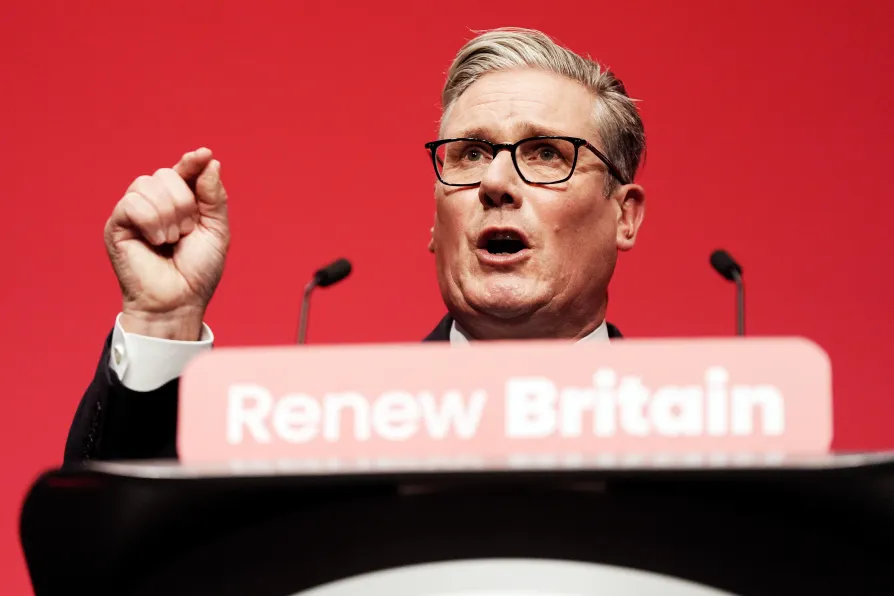
 Prime Minister Keir Starmer delivers his keynote speech during the Labour Party Conference at the ACC Liverpool, September 30, 2025





KEIR STARMER shows no capacity to respond to the ongoing fallout over Peter Mandelson’s appointment to Washington — which has engulfed the whole Labour Together faction key to his own rise to power.
Nor to the demand, put more forcefully than before by a group of affiliated unions (including the biggest of all, Unison and Unite) as well as most of the party’s remaining socialist MPs, that Labour abandon the faction fights and start to act democratically as the political wing of organised labour.
Nor even to world-changing shifts in the global order. His call to raise military spending faster doubles down on existing policy. We cannot expect a meaningful assessment from this government of Marco Rubio’s chilling demand for a new era of colonial expansion and what new conflicts it may embroil us in. It will continue to shuffle along shackled to the United States, mumbling the hypocrisies of the past while obeying the diktats of unrepentant gangsters.
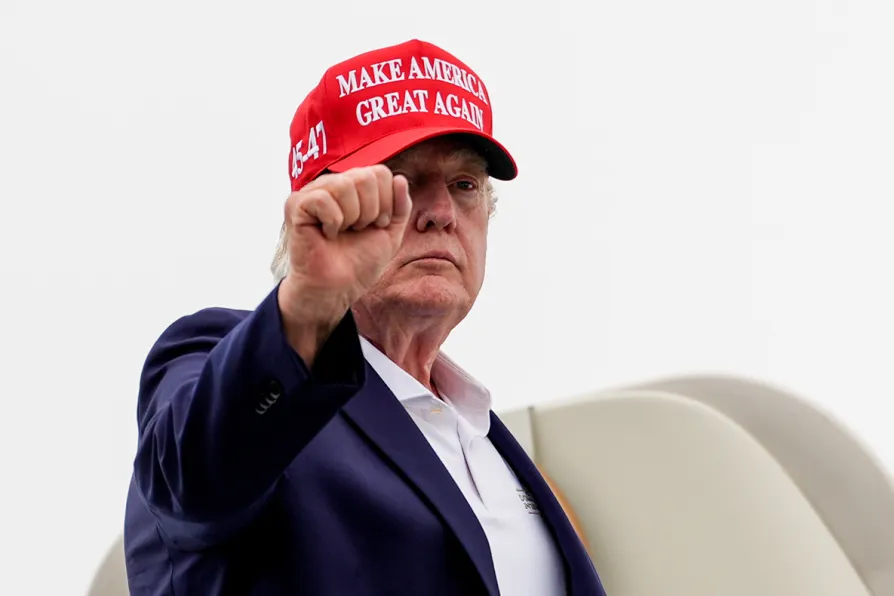
It will raise military spending, not to become more self-reliant — operational capacity will remain totally dependent on US systems — but to place more British resources at the service of Donald Trump’s lawless regime.
None of this will change with Keir Starmer in office, but he is unlikely to last long. The question is whether the overhaul of both policy and political culture demanded by MPs and unions on Sunday is something Labour itself is still capable of.
Many will say it is too late. The bans, expulsions and stitch-ups that began with Jeremy Corbyn’s suspension in the autumn of 2020 did not meet a co-ordinated or decisive pushback from within the party or its affiliated unions.
The party has been hugely hollowed out in consequence, and the Labour Together faction — “spoilt kids drunk on power,” one veteran MP told the Morning Star amid a flurry of constituency stitch-ups in the run-up to the general election — worked to eliminate independent-minded candidates both for Parliament and other elected roles. The parliamentary party has seldom been so dominated by vapid careerists and corporate lobbyists.
Some argue that the institutional sabotage, from within Labour, of the Corbyn movement itself demonstrates that Labour cannot be reclaimed as a vehicle of working-class expression, though these accounts often exaggerate the role of treachery in its electoral defeat and underrate that of political misjudgements, above all over Brexit.
But if Labour’s long dominance of the organised working-class vote is collapsing, nothing else has replaced it.
The Greens are attracting a large left vote, but have no real links to the labour movement or extraparliamentary left campaigns whether against austerity, war or racism. It is not impossible that Your Party will move on from its bitter internal divisions and begin to make its 60,000-strong membership count politically, but its story so far will not give unions or left MPs much confidence.
So Sunday’s call to pull Labour back towards its roots should not be dismissed. Starmer is extremely weak and contenders to succeed him can tell how desperate the need for a new course is from the polls. Co-ordination of demands by unions, especially in conjunction with MPs as here, could shape any contest.
But that does rely on unions themselves recognising the scale of the problem. An assumption that Labour governments are preferable to Tory ones and that those are the only two options is not just dated, it leads to acquiescence in Labour disappointments that now threaten to see a Reform government elected which would prove a ferocious enemy of our whole movement.
The mantra that publicly calling out Labour failings helps the right has to be dropped. It is only by being the loudest voices of an angry people and the most visible campaigners for change that unions have any hope of reclaiming the party they founded, or halting the far-right advance.
