IAN LAVERY MP warns that decades of neoliberal policies have left former industrial communities behind — but a renewed Labour commitment to working people could change the political landscape


Bored with potatoes? how about this nutrient-filled stand in?
MAT COWARD looks at the Hamburg parsley — a species rarely cultivated here but popular, with good reason, in Eastern Europe
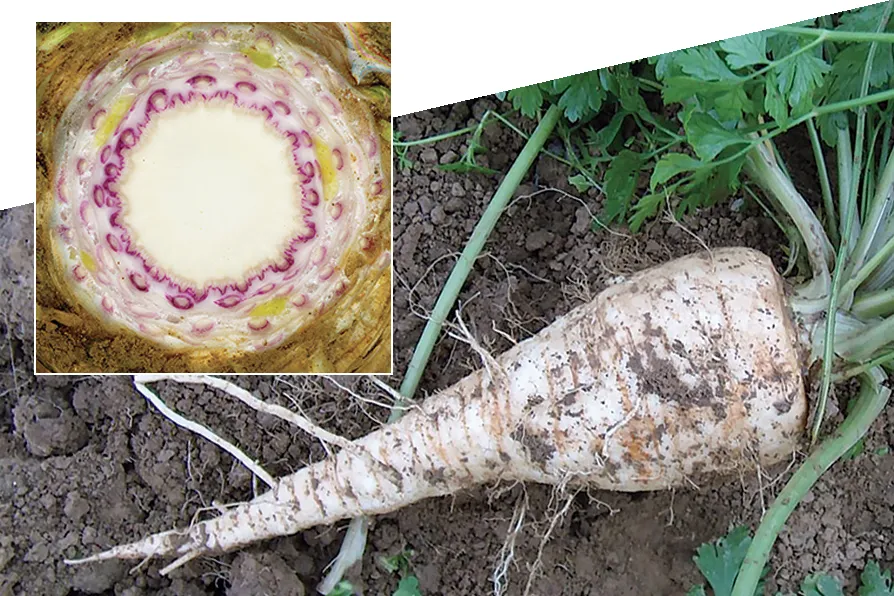
 Hamburg parsley and cross section / Pics (l to R): MarkusHagenlocher/CC; Amada44/CC

PAOLO SANTALUCIA reports on how an Italian region defies US pressure to end a Cuban doctors programme
HENRY FOWLER outlines the GFTU’s new 2026-27 education programme and argues that investing in trade union education is essential to building worker power, developing leaders and strengthening collective action
We need a government that invests in saving lives not destroying them, argues SOPHIE BOLT
More expensive by weight than gold, saffron is surprisingly simple to grow. MAT COWARD explains
The public inquiry is the result of more than a decade of determined campaigning. Now, those who fought for justice want the full story of government involvement and police conduct to be told, says KATE FLANNERY
The Durham Miners’ Gala is a celebration of working-class culture, but also a call to action — to rebuild workers’ collective strength, says KIM JOHNSON MP





HAMBURG parsley is not widely grown in the UK, rarely seen on sale as a vegetable, and doesn’t even appear in most gardening books. The seeds are offered by most seed catalogues, though, so if you fancy something a bit different for your autumn soups or your winter roasts this is well worth a go.
It looks like a small parsnip below ground, and flat-leaved parsley above. Sometimes listed as parsley root, it is essentially used as a root vegetable, though the leaves can also be eaten. Remember though that if you take too much of the foliage you’ll eventually weaken the plant’s growth.
Botanically, Hamburg is the same species as ordinary parsley, but a variety that has been bred over the centuries, mainly in eastern and northern Europe, to provide a carrot-shaped root.
Its flavour is unique — often described as a combination of parsley, parsnip and celery, but with a nutty taste as well.
Hamburg roots tend to be noticeably sweeter than even the sweetest parsnip, and less woody. They are also aromatic and smell lovely while cooking.
March is the best time to sow the seeds, providing it’s a reasonably mild month — if not, wait until early-to-mid April.
They are slow to germinate, often taking a month to appear. You can start them off under cover, in something deep like a root-trainer, but I’ve never found them entirely successful from transplants.
Choose a patch of ground where the soil is nice and open — not stony, or full of clods of earth. Don’t add any manure or fertiliser to the soil. I prefer to sow Hamburgs in a sunny spot, simply because the slightly warmer soil might mean faster germination. But they’ll do well enough in light shade, too.
Be careful not to sow the seeds too deeply; about 1cm, less than half an inch, is right. You can scatter the seed along a drill drawn in the ground, or you can try station-sowing. That involves placing two or three seeds every eight inches (20cm).
Either way, once the seedlings are established thin them out to leave just one every eight inches (20cm).
Hamburg parsley doesn’t react well to even quite short periods of drought, so apart from regular watering it’s an idea to mulch around it with compost. Other than that, the only job between thinning and harvesting is to hoe the row occasionally to prevent too much competition from weeds.
In theory, your Hamburgs will be ready to eat around three months after sowing, when the roots should be somewhere around 5 or 6 inches (13-15cm) long. In practice, they are usually grown as a winter crop which is when they are at their most valuable because they can be left in the ground, through frost and snow, until needed.
Wash or scrub the roots rather than peeling them, if possible — they lose some of their flavour and aroma when the skin comes off.
