After months of uncertainty over printing and distribution, the first Scottish-printed edition of the Morning Star is soon to roll off the presses


 Latest editorial

A blueprint for democratic, fighting unions
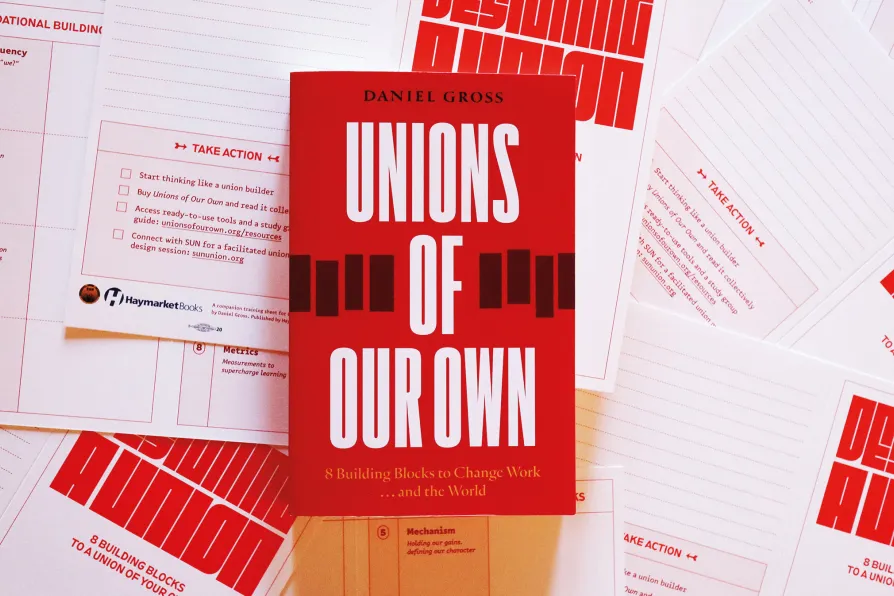
US-based labour and social movements authors and organisers Robert Ovetz and James Tracy interview DANIEL GROSS about his new book, Unions of Our Own: Eight Building Blocks to Change Work and the World
Some thinkers and authors on the right are openly discussing the possibility that the historically successful party of the British ruling class may be exhausted
Class struggle is the motor of history but the direction and detail of change at any time and place is the outcome of many factors, suggests the Marx Memorial Library and Workers’ School
Merseyside’s proud tradition of internationalism is being kept alive through events organised by trade unionists and allies in the region, writes ROBERT MACDONALD
JOHNNIE HUNTER reports from the German Communist Party’s (DKP) weekly Unsere Zeit (Our Newspaper)-organised Peace Days festival in Berlin last weekend
Les Preger was one of Manchester’s first volunteers to volunteer in support of republican Spain, writes his daughter JANEY PREGER
TONY BURKE surveys the shifting political landscape and the challenges Labour needs to address if it is to prevail in the 2028 federal elections





HOW did you get involved with the workers’ movement?
I worked at Borders Books and Music when I was young. The pay, the hours and the disrespectful treatment from some managers aggravated me and I figured the thing to do was reach out to unions, which I did. My coworkers and I started doing meetings but all the while I was fighting with management solo, which of course was a mistake. Borders soon fired me. It gave me my start in unionism. And it planted the seed to become obsessed with what causes victory in union campaigns.
I started working at Starbucks in 2003. I got to take part in the formation of a powerful labour union there, the IWW Starbucks Workers Union, which changed my life and many others. It also helped break new ground in the labour movement in two ways: one, workers organising themselves, and two, the campaign demonstrated that those who had called fast food and retail unorganisable were mistaken. That campaign started a process which continues to this day of connecting with workers from diverse industries and accompanying them on their campaigns.
I also started writing with my late mentor, Staughton Lynd, and later along with the great labour artist Tom Keough, also now departed. And I worked for well over a decade as a founding organiser of Brandworkers, a worker centre of immigrant food manufacturing workers.
Tell us about the building blocks of effective union organising.
Twenty-five years of organising at my own jobs and being in close movement with many others at their jobs helped lead to the lessons and analysis of Unions of Our Own — along with careful study of historical campaigns. Chief among those lessons is that it is coworkers in workplaces and industries who are best positioned to design and refine unions to meet their needs as they define them.
There are the four foundational building blocks. Constituency, which is the scope of coworkers you will organise among as well as secondary constituents who can help you come together and amplify your power when you do. Constituency is one of the fieriest questions in labour history and remains so today.
The problem building block deals with the issues or unmet needs weighing on you the most, on the job and beyond it. Solution is the type of union you’ll build, the affiliation choice you make, and the benefits you’ll create through your solidarity to take on the identified problems. Strategy is the 800-pound gorilla of a union model, the power to win your union solution.
Once you have that foundation, you turn your attention to the four structure and growth building blocks. Mechanism, which is how you hold or codify your gains; it’s a building block with almost unbelievable importance for the character and performance of a labour union, and for social change. Structure is about having a union that coworkers control. Funding, your union needs it and you can get it; how you get it matters a ton for the responsiveness and fighting spirit of your union. Finally, the metrics building block measures what matters most in your model to learn what’s working and to help ensure you’re honouring your union’s values.
What is your analysis of the role of unions in capitalism?
Let me start with the two poles on either end. One is that unions are never able to take on capitalism, they’ll always stabilise it to some extent. The other pole is that unions are always a meaningful check on capitalism. One of the essential points in the book is that there is a back-and-forth relationship between union visions and union models. If you have a liberatory vision, but your model is not in accord with it, the model will drag it down. On the other hand, you can have a model that nourishes and advances a liberatory vision.
What I’ve come to understand about the “structural and material basis” of unions gives me a strong conviction that some types of union models can help achieve a society that is led and operated by workers and communities and that can get us past capitalism. But without intentionality, it’s easy for a union to become an agent of capital — to borrow a phrase from a union staffer who I quote in the book.
What are the fundamental threats and weaknesses to the workers’ movement today?
The oligarchy is piling up more of our resources than ever. As neoliberalism unravels, large capital, led by tech capital and other segments of the capitalist class, is positioning fascism as an alternative that many are finding compelling. AI is sucking up all the knowledge workers have produced and subordinating workers with it. All the while it is piling up more capital for a small number of oligarchs. The main current use of AI is to control, extract, kill, surveil, disinform and disrupt.
Era after era it is workers who come up with union forms that work, not in spite of, but because of challenges in the big picture economic, political, social and technological environment. A weakness in the movement is not having enough space where workers have the opportunity to bring their collective wisdom to the surface and test it through struggle.
What is the main argument about the state of the workers movement in your new book Unions of Our Own?
I’ve surprised some folks when I’ve said I’m optimistic and this is a far greater time for unionism than when I came of age in the economy at Borders around the turn of the century. While uneven, there’s been tremendous working-class activity and a turn towards unionism in the last 10 or so years in the United States. One of the things the book is against is the tendency out there to say there is a method or technique that exists and we just need to execute the hell out of it with great discipline and we can win in every geography and in every industry.
Method and technique is very important and there are some great ones which I do share in the book. But the truth is that there is no cookie-cutter recipe that exists for workers to be able to meet their needs in full, honour their values, and advance their vision of the world in all contexts. It doesn’t make sense on the other hand to start with a blank slate. That cuts you off from other working-class wisdom and denies you a framework to take your insights to the surface and test them.
What needs to be done to reinvigorate the workers’ movement?
More space and support of all kinds for workers are needed to design and refine their own union models. Solidarity Union Network members and community participants have been hard at work on that. There is more union integration with movements and rank-and-file connection like we saw in the successful effort to repel an Ice invasion of Minnesota. More deep integration with each other as a global working class rather than as a national project, like we’re seeing among workers at Amazon, is needed.
For folks in establishment unions, more work of course to organise caucuses and boot out reactionary leaders is needed and is happening. You’ve got to collectively document and then take on the bad parts of the union’s model. Take the UAW reform effort; it didn’t just organise a base and vote in a new leadership, as important as that is. It whittled down the management prerogatives clause a bit to preserve strike rights against plant closure. It changed the union constitution for direct elections of the president. It expanded the scope of autoworkers to seriously organise to include those in the South.
Its 2023 work stoppage innovated on the classic whipsaw strike to great effect. Those are changes to the mechanism, union structure, constituency, and strategy building blocks of the UAW model.
What are the roadblocks in the way of getting this done?
One roadblock is that while many folks are trying to advance a liberatory labour movement there are other forces in labour doing the opposite. Unions that are trying to grow their density via deals that disempower workers, and shore up capitalism. This is happening via legislative or other schemes between top union officials, company executives, and politicians to exchange bargaining rights for the right to strike, the right to choose your union, and the right to democratically govern your union.
Major visionary initiatives are being steamrolled by these efforts and many more will not be able to get off the ground in the first place because of this manoeuvring. Those need to be called out and opposed. They need to be outmanoeuvred and the only way to do it is a deep coworker to coworker solidarity structure in union models that work.
One last thing is that it takes literally, a single worker, sitting down and starting to make a list of their coworkers to start the exploration of a union campaign. Any blockage, friction or missing link for that worker to get started and get started with confidence is a roadblock.

Similar stories
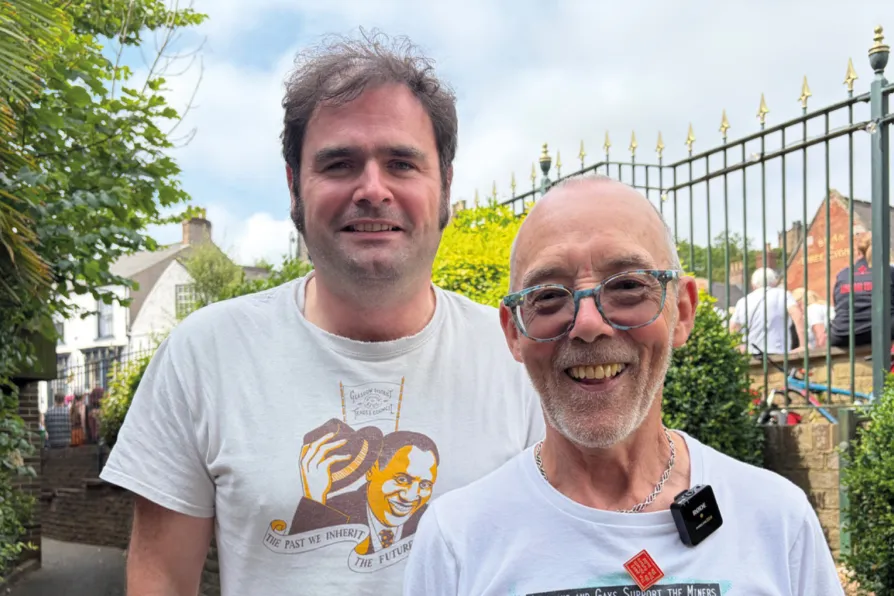
Lesbians and Gays Support the Miners co-founder MIKE JACKSON talks to Matt Kerr about the enduring power of Pride, protest and trade unionism
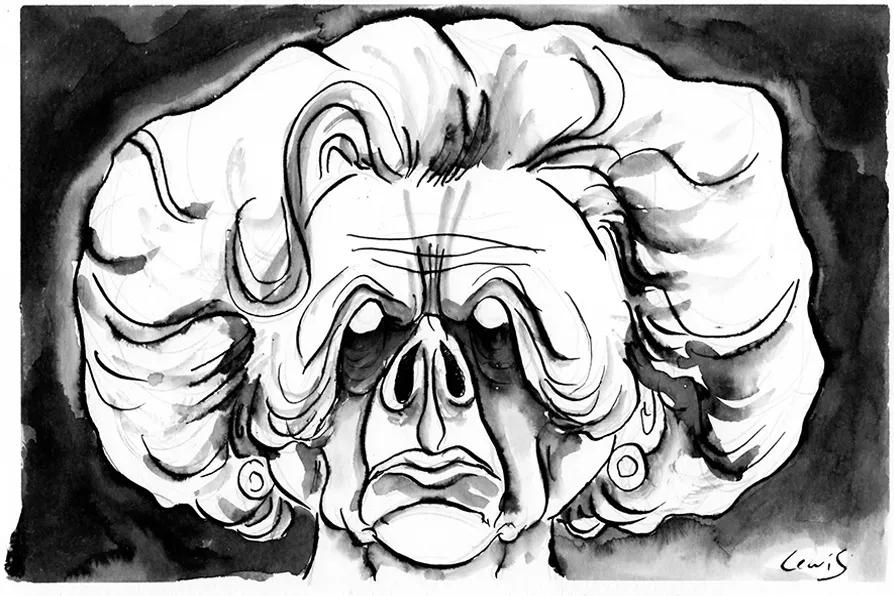
Ron's rages are sincere and — according to his wife — healthily cathartic. But can these splenetic outbursts loosen the grip of capitalism at its most monstrous?

As the US marks 250 years since the Declaration of Independence, the People’s World Editorial Collective argues that the real legacy of 1776 lies not in official celebrations but in centuries of popular struggles to make democracy a reality for all

Commiserations if you failed this year, MAT COWARD offers six points which, if followed religiously, will ensure you succeed next year