
PETER MASON applauds the revival, 39 years later with the same team and cast, of Manfred Karge’s version of Brecht’s 100-year-old play, Mann Ist Mann

Black Marxism: How race is used to divide the working class
SETH SANDRONSKY recommends a Marxist critique of the ‘race-first’ views of the influential black US theorist Cedric Robinson

 EVERY SKIN COLOUR: Black Lives Matter anti-racism rally at Vancouver Art Gallery, 2020 [Pic: GoToVan/CC]

MAYER WAKEFIELD applauds a fearless attempt to bring to the stage the 1984 toxic gas disaster in Bhopal, India
ALEX HALL applauds the account of a dogged, traumatic and punishing campaign for justice that has lasted from 1998 to the present day
NICK WRIGHT laments the political bias of an epic attempt to tell the history of the liberation of France from the Nazis, that excludes both the decisive contribution of the Soviet Red Army, and of the French communist party itself
JOE GILL traces the ideology and method of contemporary imperialism back to the greed, hubris and violence of the late 15th century Portuguese





Black Marxism: A Marxist Critique
by August Nimtz, Monthly Review Press, £74
IN 1983, Cedric Robinson published Black Marxism: The Making of the Black Radical Tradition. A year later, August H Nimtz published a review of Robinson’s book titled Marxism and the Black Struggle: The ‘Class v Race’ Debate Revisited. This current collection by August Nimtz unpacks Robinson’s misunderstanding of historical and material theory and practice in the writings of Marx and Engels.
The Nimtz collection consists of a preface, biography, his 1984 review of Robinson’s 1983 book, and three wide-ranging essays expanding on the rejection of historical materialism in favour of a race-first approach. A close reading of Marx and Engels’ writings on the ideological and material factors dividing English and Irish workers, and African-Americans and whites in the US, is a central plank of the critique that Nimtz delivers.
Recall that at the dawn of British capitalism, conventional wisdom held that the Irish were an inferior race, despite a white skin similarity to British proletarians. Race is not a biological category. Further, Ireland was Britain’s first colony, producing an imperial ideology that dehumanised the colonised. Ending the division between British and Irish workers was central, not peripheral, to their collective liberation from class domination under capitalism.
A corollary across the Atlantic was the division between black and white labour. To wit: Nimtz details Robinson’s misreading of Marx and Engels. For instance, Marx’s journalism during the US civil war shows his understanding of the importance of ending chattel slavery to liberating enslaved blacks and white workers from their domination under the regime of private property that reproduced labor’s subordination as it created an economic surplus. As we know, private property weathered the storm of reconstruction, destroying both it, and the promise of a society based on substantive equality.
Black radical thinkers such as WEB Du Bois in the 20th century, who read Marx and Engels closely, deepened analysis of racial divisions between white and black workers.
Du Bois saw “a public and psychological wage” payoff underpinning the white supremacy ideology as a force to contend with in the emancipation of the working majority.
The mass 2020 black-led uprising, after the police killing of George Floyd that attracted scores of white workers, points to the emancipatory potential latent in labour to unite and fight for a better world, according to Nimtz. On that note of working-class unity, one can make a case for this factor explaining the policy victories of movement politics in the 1930s and 1960s.
Historical materialism, in brief, analyses how working people’s daily labour in and out of the household, paid and unpaid, reproduces their world. Given that capitalism is a global system of class control, understanding how it operates and why is critical.
The US two-party duopoly opposes such an analysis in its centrist and right-wing formations. The rising popularity of democratic socialism in the US is a reflection of labour, especially young Americans experiencing downward mobility in real time, seeking alternative ways of living and working. Recent changes in US electoral politics with the rise of the Democratic Socialists of America is a case in point.
For example, the current affordability crisis in food, healthcare and housing is a baked-in feature of capitalism. In other words, wages failing to keep up with rising prices is a normal trend within a capitalist economy, like recurring contractions and expansions.
This disproportionately hits black workers, as the last hired and first fired, a legacy of slavery and Jim Crow.
This dynamic reflects the class and race structure of a segmented labour market that operates to suck an economic surplus from workers of every skin colour. Class and race matter.
In an era of cascading crises, from the ecology to the economy and polity, building a broad working-class consciousness of the system’s operating feature of dividing labor to maintain control is essential, according to Nimtz. With that political consciousness, another world is possible. His book is a step in that direction.
Seth Sandronsky is a Sacramento journalist and member of the freelancers unit of the Pacific Media Workers Guild. Email sethsandronsky@gmail.com.

Similar stories

Internationalism is deeply embedded in socialist theory and practice. Examination illuminates its complexity asserts the Marx Memorial Library and Workers’ School
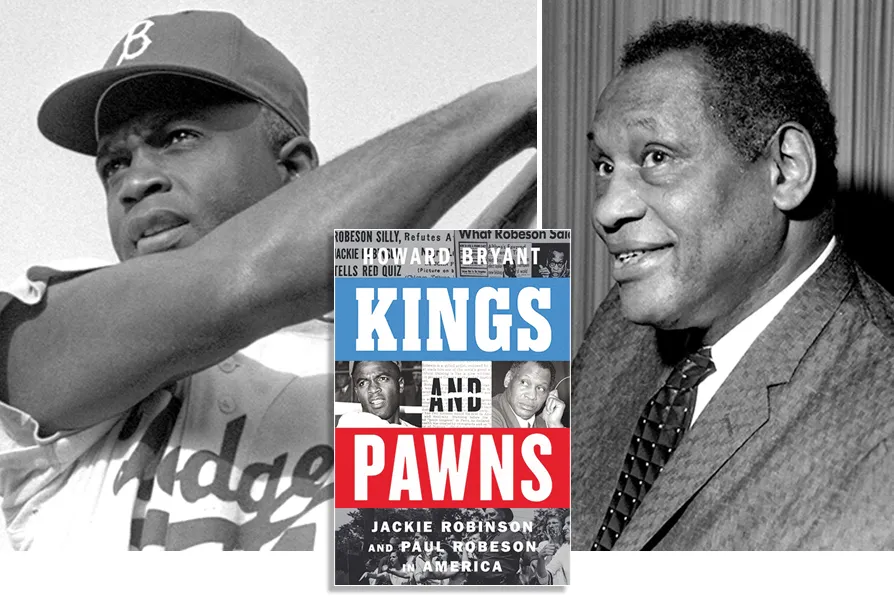
RON JACOBS recommends a book that charts the disparate circumstances that defined the lives of two prominent black Afro-Americans — one a communist, the other an anti-communist

SETH SANDRONSKY recommends a production that looks back at the political Tinseltown in the mid-1970s when US cinema ‘didn’t pander to trends’

The selection, analysis and interpretation of historical ‘facts’ always takes place within a paradigm, a model of how the world works. That’s why history is always a battleground, declares the Marx Memorial Library