KEN COCKBURN traces the one original language – that of the Yamnaya pastoral nomads – from which all European and Indian languages derive


 Latest editorial
Beuys being Beuys
JAN WOOLF ponders the works and contested reputation of the West German sculptor and provocateur, who believed that everybody is potentially an artist
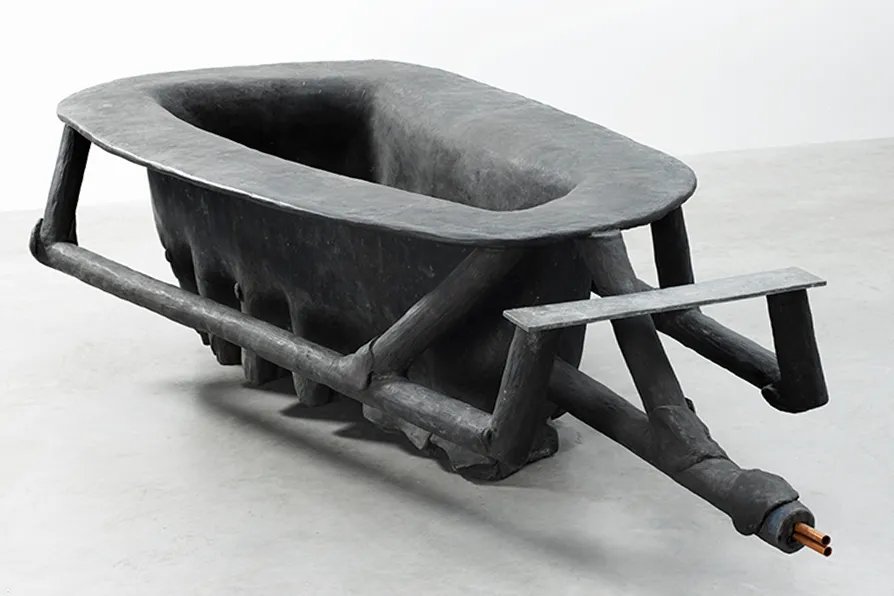 TO DUNK OR NOT TO DUNK: Badewanne (Bathtub), 1961-1987 Bronze, lead, copper, double-walled cast, ca. 1000 kg [Pic: Ulrich Ghezzi]

PAUL DONOVAN is fascinated by the debunking of the iconic British war hero
ALEX HALL recommends a searing panorama of our global predicament
Comics are not just superheroes and spandex – it can be public art, telling public stories, suggests HARRIET EARLE
ALEXEI SAYLE speaks to Angus Reid about a lifetime of protest, how to hone political art – and what to do now
The bard serenades the Diggers of Wigan and their festive followers





Joseph Beuys: Bathtub for a Heroine
Thaddaeus Ropac Gallery, London
★★★★★
JOSEPH BEUYS was – IS – one of the world’s most significant artists.
Born in Dusseldorf in 1921 he was ripe for Hitler youth and so joined a year earlier than call up to have some control over the process. At art school he was taught by one of Hitler’s “divinely gifted” teachers later rejecting all that fascistic art bollocks, and in due course drafted.
Allegedly shot down in 1944 over the Soviet Union, with local Tartars gathering up his body, treating his wounds with fat and wrapping him in felt, he survived and came over all spiritual.
Is that true? Does it matter? Is spirituality the domain of fascists and the religious?
If we can agree that spirituality is “that which is not matter,” like feeling, emotion, warmth, we can get beyond this. Warmth is what Beuys the artist is all about; that an art work’s material could be an active agent – a conductor of heat, energy and imagination.
John Berger, in his volume of essays, The Shape of a Pocket, wrote: “In matters of seeing, Joseph Beuys was the great prophet of the second half of our century. Believing that everybody is potentially an artist, he took objects and arranged them in such a way that they beg the spectator to collaborate with them … by listening to what their eyes tell them and remembering.” Note the fusion of different senses here.
Prophet yes – and shaman too.
So, before we get into the Bath as it were, let’s clip these words to profit and sham, addressing the political controversy around Joseph Beuys.
Just after WWII, artists were deployed by the Western anti-communist shape-shifters to denounce, deny and ridicule art that smacked of socialist realism – suggesting that it was akin to Hitler’s promotion of the Aryan form – in order to get the new “free” art out there to show how “free” we were in the west. The CIA backing of abstract expressionism in the USA is a well-known example.
A West German artist (Beuys) juxtaposed with those of East Germany who were churning out so-called “Soviet-style” socialist realist works was just the ticket. Yet, Beuys will be Beuys.
His work and ideas hit the emotional mark for many, attempting to heal collective wounds; nourishing eco-politics, and he was one of the founding members of the German Green Party, biting the hand that fed him. He died of heart failure in 1986, so we’ll never know about his alignment — or not — with current Green policies on war and economics.
His sculptures and installations resonate with people – such as “The Pack,” the VW van out of which pour 50 snow sleds with lamps, blankets and torches, like a pack of dogs — and his performance piece in New York where he shares space with a coyote.
His work is about survival. And the female (I don’t mean feminine)! Quoting from the show’s press release: “For Beuys, women embody the capacity for intuitive action, change and transformation…”. Note the word transformation – NOT transportation (pause for thought) which Hitler’s “divinely gifted” art teachers, exempted from military duties, strove for with their idealised Aryan forms.
The exhibition Bathtub for a Heroine at Thaddaeus Ropac gallery in London’s posh quarter is all about warmth, the emotion of warmth and the female. The framed drawings on the walls are as true as any prehistoric cave art and as delicate as any from renaissance masters.
The Bathtub is the sculptural centrepiece resembling a vulva shaped bath, with an internal heating circuit concealed within the tub’s double walls, and designed to be connected to a conventional household heating system. Beuys even played with the idea of patenting the object.
There are small bathtubs too – one encasing a mammoth tooth, another with its own plug-in immersion heater, and an intriguing 1950 metaphysical sculpture — Bed — where a female form is suspended in a mechanical screw clamp.
The show’s “mission statement” is written by Joseph Beuys himself: “Wherever alienation has settled between people – one could almost call it a sculpture of coldness – there the warmth-sculpture must enter. It is there that interpersonal warmth has to be generated. That is love.”
In another word, agape – the Ancient Greek word for societal love, which is also the basis of Marxism.
Beuys maintained that art should be an intimate collaboration of the artist, the work and the viewer: “The work of art enters into the person and the person internalises the work of art… it has to be possible that these two completely sink into each other.”
The ancients of the Lascaux caves understood this very well. Go take a bath.
Runs until March 21. For more information see: ropac.net

Similar stories
SIMON DUFF is thrilled by a visceral, no-holds-barred exploration of the expressive powers of raw material
JAN WOOLF invigilates images that meditate on Palestine, and the people who witness them
JAN WOOLF examines work that aims to give viewers a material experience of the environments in the polar north and Britain equally affected by the climate crisis
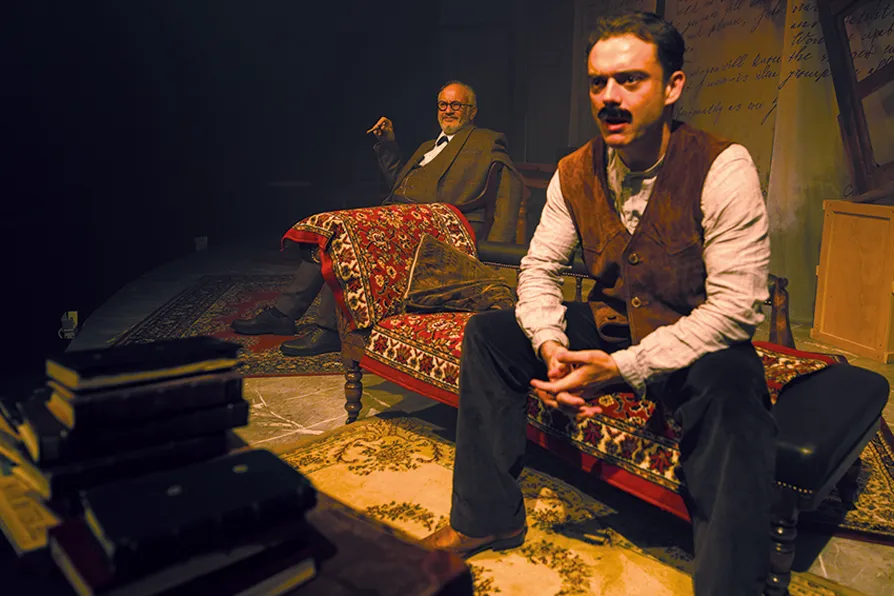
JAN WOOLF is beguiled by the tempting notion that Freud psychoanalysed Hitler in a comedy that explores the vulnerability of a damaged individual