

 Latest editorial
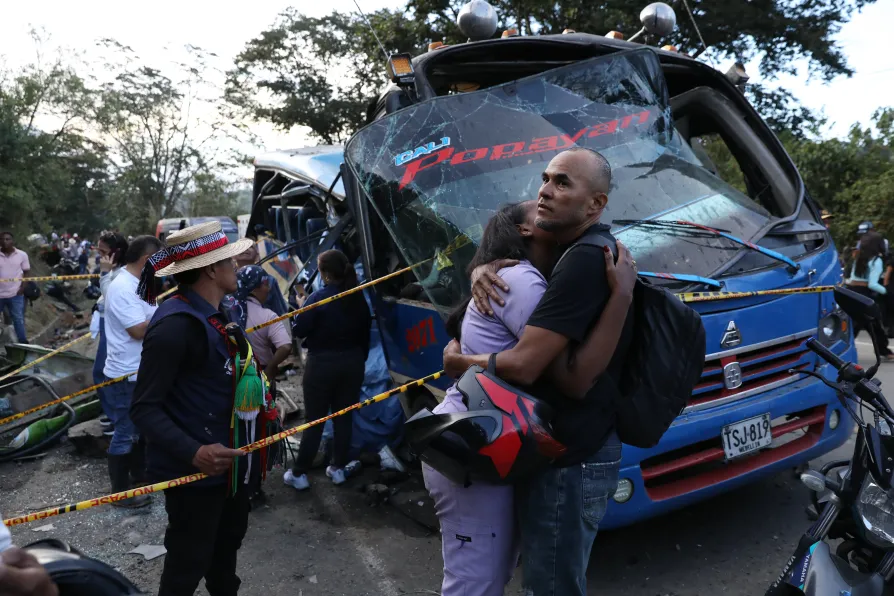 Relatives of victims embrace in front of a bus hit by an explosive device on the Pan-American Highway in Cajibio, Colombia, April 25, 2026, after an attack blamed by authorities on dissident groups of the former FARC rebels killed at least a dozen people





THE impact of armed conflict on civilians in Colombia is at its worst in a decade as the security situation deteriorates, the International Committee of the Red Cross (ICRC) said on Tuesday.
The ICRC’s annual report found the number of people displaced, as criminal gangs and rebels fight the Colombian state and each other, doubled in 2025, reaching 235,000 people.
The number of people who had to endure lockdowns imposed by rebel groups in small towns and villages also increased by 99 per cent last year.
For decades rebel groups and drug traffickers have been fighting the Colombian government for control of rural areas.
A 2016 peace deal between the Colombian government and the nation’s largest rebel group, the Revolutionary Armed Forces of Colombia (Farc), helped to reduce rural violence. But ICRC’s chief of mission in Colombia Olivier Dubois said that since then “the humanitarian situation in 2025, is the result of a progressive deterioration.”
The ICRC also noted that in 2025 there were 965 people killed or injured by explosive devices, including landmines and drones, 33 per cent more cases than the previous year.
The NGO urged the parties in Colombia’s armed conflict to respect the rights of civilians and protect those who no longer wish to take part in hostilities.
