CATHERINE STEEL relishes a compelling novel about Augustus’s right hand man, but misses the politics, the cultural shifts, and more detail about his restoration of Rome


 Latest editorial

Into the abyss we go?
ANGUS REID appreciates the political candour expressed in Bansky’s latest and brilliant work of public art
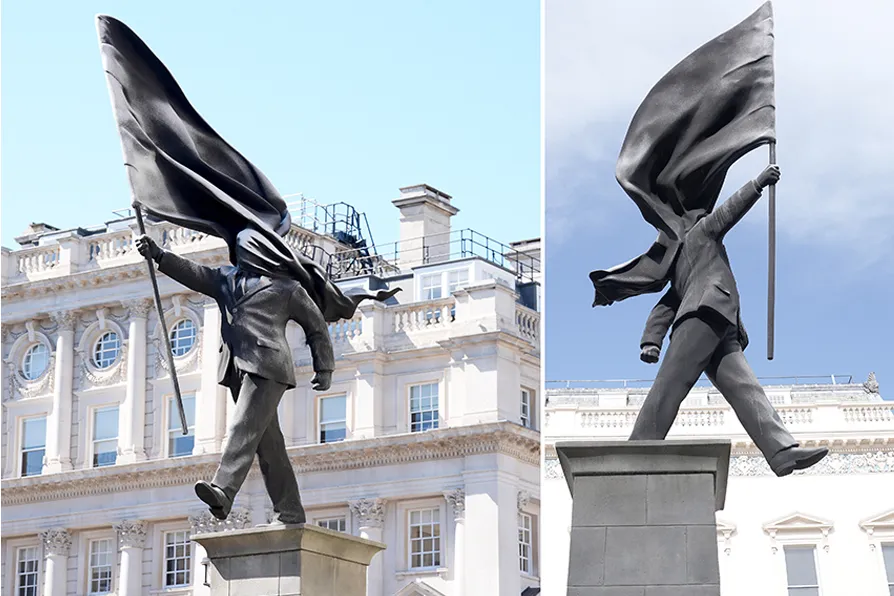 CAUTIONARY TALE: Banksy's Man with Flag
TONY BURKE speaks to JOEL McIVER, co-author of the biography of bluesman John Mayall
A misfit couple unhappily ever after, a dead man walking, dodgy journos, and trench art trucking
New releases from Javon Jackson, IZE Trio, and Mal Waldron Trio
PAUL DONOVAN applauds an intriguing multi-layered depiction, dominated by a stunning impersonation of Marilyn herself
EWAN CAMERON marvels at the impossible ambition, realised with dreamlike finesse of translating Italo Calvino to the stage





THE genius of Banksy’s new intervention in central London is not just the image, but the timing of it.
Just see how it subverts the generic public statue: they are static and grounded, where this one steps directly into the abyss. And why? Because the man cannot see, blinded as he is by the stuff of his own ideology, his flag.
That draped face carries the surrealistic DNA of Magritte’s iconic image, The Kiss.
The stance, marching forwards with determination, echoes the “resolved will” of many a self-centred British imperialist, except for the comedy — it is funny because it is a disaster waiting to happen, a snapshot of the microsecond before catastrophe. This is hubris, and pratfall. It mocks the besuited ideologue. It is both deeply serious, and ridiculous, the twin poles of Banksy’s art.
But then consider the timing, which is even more exquisite. This figure, intoxicated by an ideology that is leading to its own downfall, appears on our streets a few days before the local and regional elections, and the first in which the far right, with their billionaire bigotry, racism and crude nationalism, threaten to blindfold the working class and walk them off the cliff.
Public art, and public statues are a tool of the ruling status quo. They are there to embody us, and to be identified with. This work is, therefore, both a warning, and a genuine mirror held up to the British people.
This is a Banksy that deserves to last, even if it belongs specifically to this weekend. It states something that we all know to be true, but which cannot be stated explicitly in public discourse. To keep it would be to preserve the Brechtian message: that thought and foresight must precede political choice. That we cannot be “blind” followers.
We are fortunate indeed to have such an enterprising and subversive artist in our midst.
The statue is situated in Waterloo Place in the St James’s area of Westminster for an undetermined period of time

Similar stories

The artist, who has just died, is embedded in the subconscious of the Palestinian people

MATTHEW HAWKINS looks at some of the Edinburgh Festival dance offerings
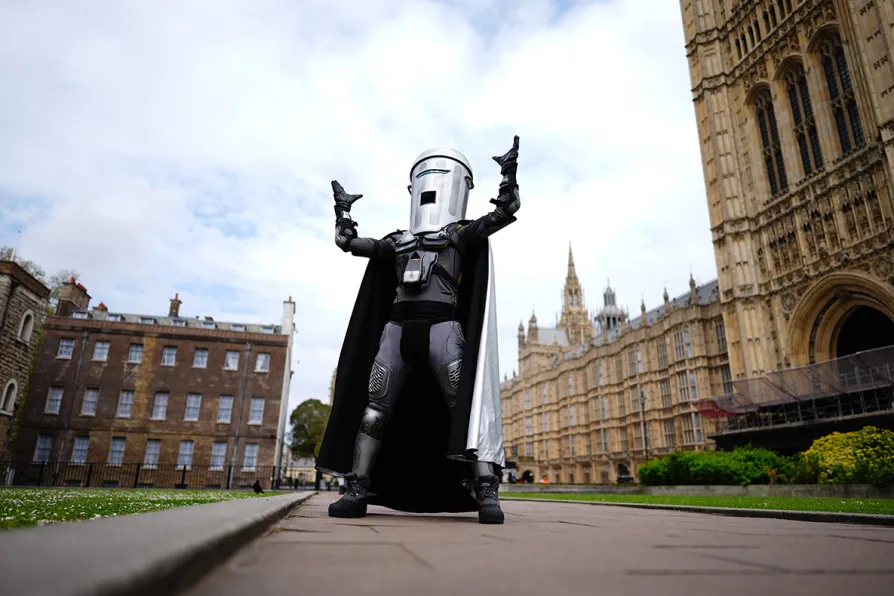
Treating the Clacton by-election as a joke risks reinforcing the Reform leader’s claim to be the victim of an out-of-touch Establishment, argues JOHN McINALLY
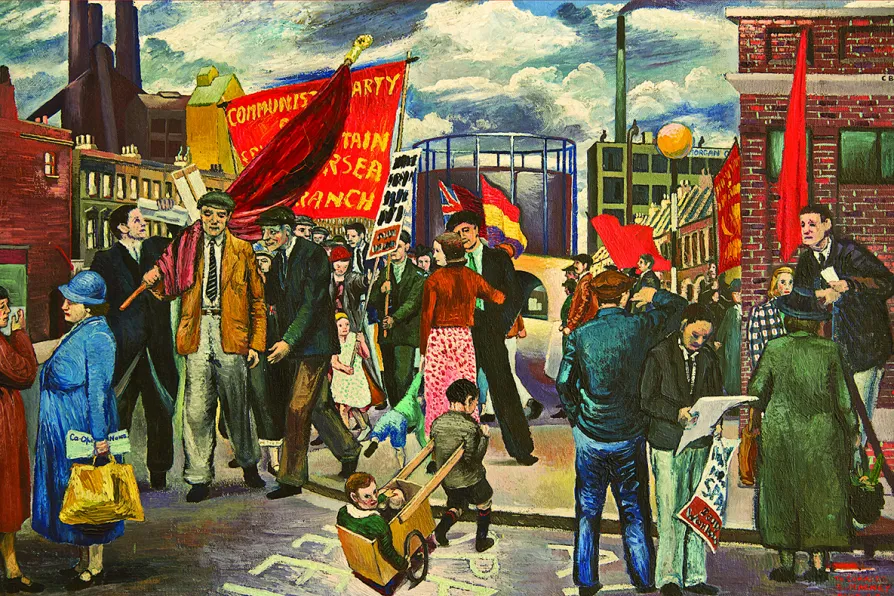
JIM JUMP describes how artists in Britain rallied to the anti-fascist cause