
The US administration is endangering lives by reversing environmental protection laws, CHAUNCEY K ROBINSON argues

Let’s replace the politics of division and fear with a new economic and social alternative
It’s time to stop retreating and go on the offensive to promote working-class interests, argues DOUG NICHOLLS
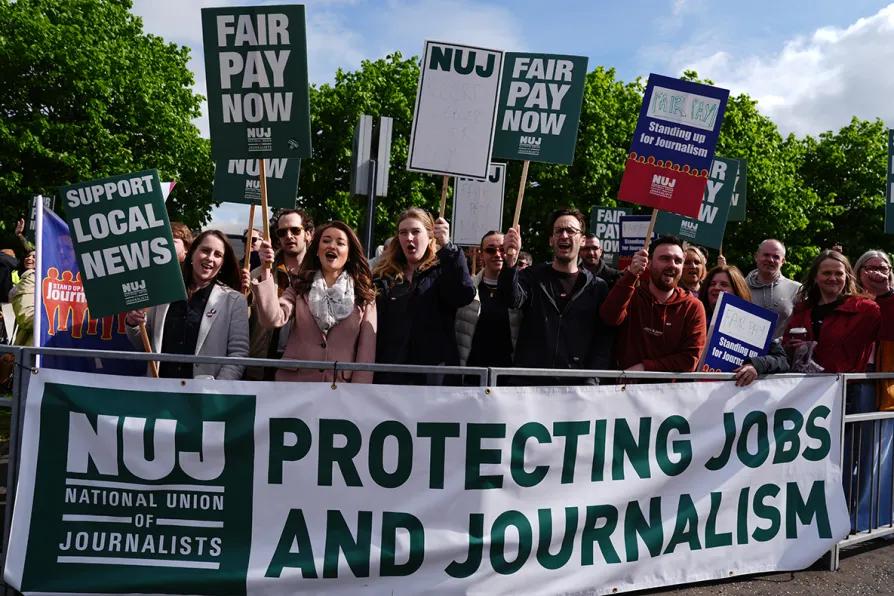
 Members of the National Union of Journalists (NUJ) and Bectu who work at STV on the picket line outside their offices in Glasgow. Members of the National Union of Journalists (NUJ) and Bectu who work at STV on the picket line outside their offices in Glas
Marco Rubio wants to defeat socialism in Nicaragua, not restore ‘democracy,’ writes JOHN PERRY
Believe it or not, there was a time when the US government built beautiful homes for working‑class Americans to deal with a housing shortage, writes ERAN BEN-JOSEPH
DIANE ABBOTT provides an analysis of the reasons for EU and British voters’ dramatic swing to the right
Train drivers’ union Aslef general secretary DAVE CALFE speaks to Ben Chacko about his hopes that Burnham’s devolution agenda will include the importance of the railway





THOSE of us who are from a certain generation remember when the threat of imminent nuclear extinction was regularly used to scare us.
Compulsory school assemblies showed films of H-bombs incinerating cities and advised us that if one went off near Margate that we should hide under our desks, even if we lived hundreds of miles away.
No matter how impoverished our families were, it was better to be underfed than dead was the real message behind the scaremongering.
We also had the Daleks to contend with every Saturday with their spine-chilling “Exterminate! Exterminate!”
Since then images and messages of annihilation have multiplied to the point where practically every media utterance, whether social or official, is a mini horror film with the subliminal purpose of scaring us to death and less likely to complain and seek solidarity with others.
The world is depicted as being full of zombies and monsters and other human beings are continually presented in their very worst light and dangerously untrustworthy. Critical race theory buys into this very divisively.
Once upon a time, it was the News of the World and The Sun that revelled in the salacious and despicable side of life, but now everyone is at it and the anti-social media enables countless individuals to disproportionately amplify their warped views of the world and despairing opinions of an infinitely divided human race.
Vicious opinions are exchanged in the social media with impunity. In face to face exchange you can get a smack in the face for being opinionated, on social media you can dodge.
Highlighting the miseries and terrors of life becomes a form of sadism and coming consistently into contact with the traumas of the world is traumatising.
Even the most lucrative games of the most lucrative part of the “entertainment” industry are war games. Many of these get the approval of the Pentagon to glorify blowing people to smithereens with a US soldier behind the gun.
Obsessively and nervously flicking through the overwhelming, relentless torrents of social media posts and reels is rightly called “doom scrolling.” It is like being bombarded continually by the latest stories of mass murderers, psychopaths, genocides, environmental catastrophes, sad glimpses of the last specimens of fauna or flora, and bonkers conspiracy theories.
No wonder there has been for years a pandemic of depression and anxiety, especially amongst the young. It’s the characteristic neoliberal disease.
Add to this mix the nasty modern equivalent of the Daleks in the cancel culture of woke intolerance and we have witnessed the growth of a culture of pre-Enlightenment, primitive bigotries and violence.
The Enlightenment gave humanity the powerful idea that we are defined by our common ability to reason and find collective solutions: “I think, therefore I am,” was the motto.
This has been replaced by something much more dangerous, backward looking and divisive in our times. The philosophy of some now is: “I am therefore I am right, so no-one better disagree with me.”
Individuals claim because of their genes or assumed identity they that have a personal right to assert themselves above all others and treat everyone else as their opponents. It is separatism that dominates, not reasoned argument and debate to find common ground.
The trade unions gave our greatest real lived experience of human solidarity and democracy, of settling differences and disagreements to further a common class purpose and welcoming all members as equals as long as they didn’t betray the union.
The decline of union power and membership has meant individual rights have tended to displace collective rights in everyday thinking.
There is so much else in political discourse is designed to make us anxious, divided and fearful.
Exaggeration and hyperbole abound. The planet is about to burn up and disappear, AI is about to steal all our jobs, poverty is about to crush us in starvation, bigotry is going to take over, modern-day Nazis are waiting in the wings, drinking water will all soon be sewerage, war is never ending, the Russians are going to invade.
To cap it all the government is now advising that we all to fill up our storage cupboards with tins of food, water and toilet rolls to survive the coming Armageddon.
A famous phrase from the midst of the American Depression in 1933 comes to mind when the newly elected President Roosevelt said: “The only thing we have to fear is fear itself — nameless, unreasoning, unjustified terror which paralyses needed efforts to convert retreat into advance.”
Breaking out of the mental and organisational paralysis of the past 50 years of neoliberal economics and culture will take some doing.
Union power
A significant component of this will be empowering unions and community organisations with the confidence and understanding that an alternative economic and social strategy can be achieved. Hence the vital role of political education in the coming period.
Part of the paralysis is having been on the constant defensive against seemingly overwhelming odds and the hidden hands of market forces led by the banks which rule our lives, but seem immune to democratic control.
We have got used to fighting problems one by one and looking at symptoms rather than causes.
We have got used to asking for more government spending on this, that and the other without answering how the country will pay for it.
We have got used to campaigning on a thousand and one separate causes rather than assertively arguing for one comprehensive and ambitious strategy as Unite, RMT and others rightly called for at the TUC.
We have been divided and ruled and compelled to see things in terms of sectional interests not collective power.
Above all, the hollowing out of the sense of working-class history and agency has continually led the movement to try and rely on other great minds to save us.
First it was market forces, then the EU, and now despite their regular collapses, the banks.
But the culture of dependency and relying on others never works. Permanent defence means permanent subjugation. We have to take responsibility and go on the offensive.
The “unjustified terror” of our times has been for us in Britain the politics of neoliberalism and the previous powers exerted over us of the unelected commissioners of the European Union.
At this year’s TUC and in some powerful fringe meetings, we saw the first deep recognition that our movement must rise together to inspire the country with our own fearless, comprehensive strategy to take back political control and ownership of the nation’s assets, reindustrialise the economy and share our wealth.
We must transform 50 years of retreat into a new way to advance.

Similar stories
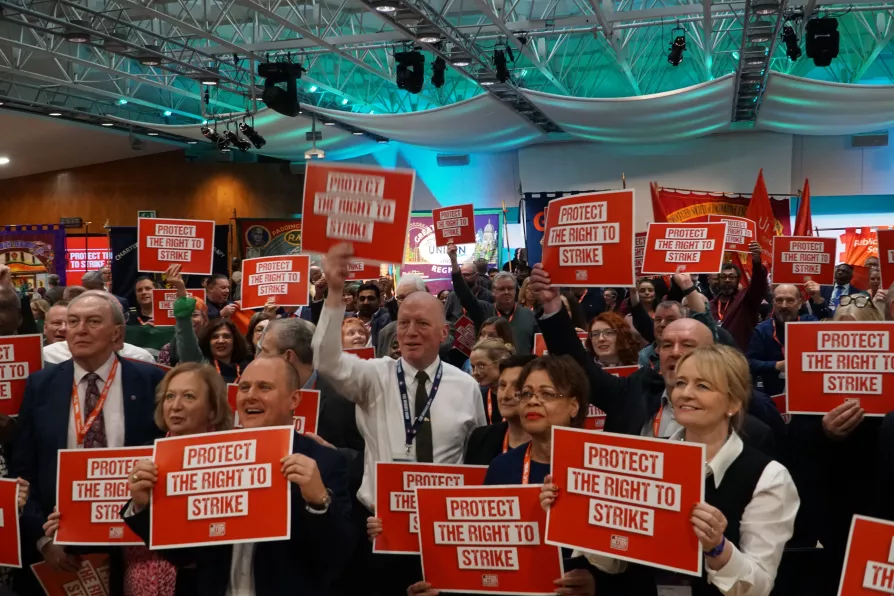

DOUG NICHOLLS welcomes a turning point at this year’s Congress, where many motions call for a co-ordinated plan to revive British industry, a perspective outlined in his new book
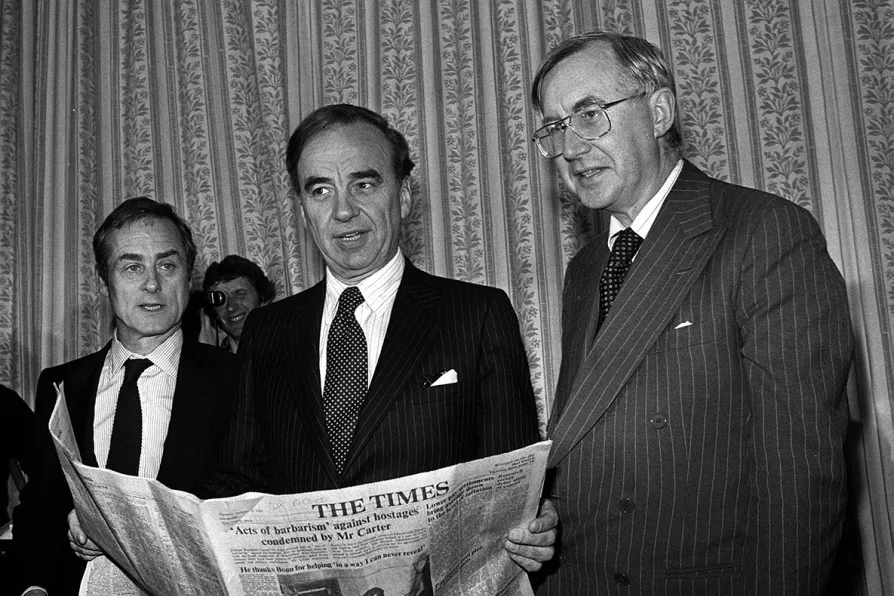
Four decades on, the Wapping dispute stands as both a heroic act of resistance and a decisive moment in the long campaign to break trade union power. Lord JOHN HENDY KC looks back on the events of 1986
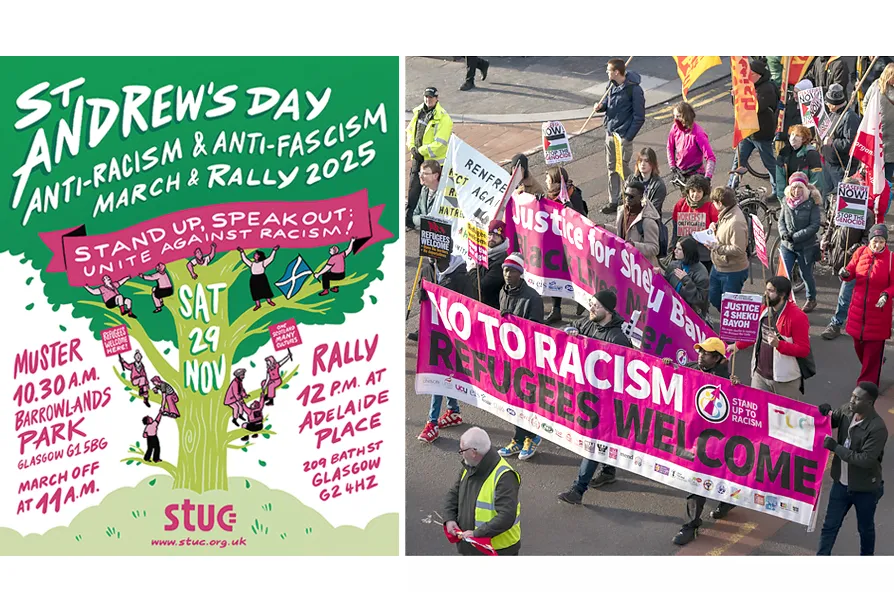
ROZ FOYER explains the significance and tradition of today’s St Andrew’s Day March and Rally