Latest editorial
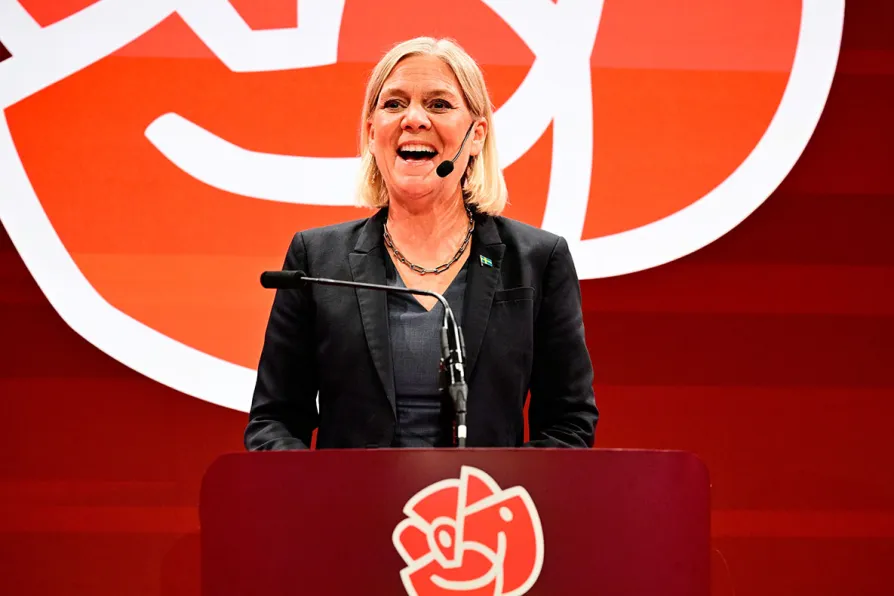 Social Democrats party leader Magdalena Andersson speaks during an election night watch party, Stockholm, September 13, 2026






SWEDEN’S next government remained uncertain today as the national election inched toward a final result, with a thin lead for the left-wing opposition and an underwhelming performance by a far-right anti-immigration party.
Preliminary results showed a narrow advantage for the opposition and former Prime Minister Magdalena Andersson’s bid to return to office at the head of a left-wing coalition, even though her own Social Democrats lost support.
Ms Andersson’s Social Democrats emerged as the biggest single party with a bit over 28 per cent of the vote but lost support compared with the last election in 2022.
The Swedish Election Authority reported that the four opposition parties were heading for 176 seats in the 349-seat parliament in Stockholm, the Riksdag, with 173 seats going to the four parties that make up or support the outgoing government.
Part of the left coalition, The Left Party, won huge support for its platform of taxing billionaires, capping food and rent prices, increasing pensions, reducing the working week to 30 hours a week, massively building public housing and making education, healthcare and elderly residences 100 per cent public.
But even if the left does win a majority of seats, Ms Andersson faces a complicated task to translate that into a government, and right-wing Prime Minister Ulf Kristersson said he would explore “possibilities” given the close result.
The outcome may not be decided until Wednesday, when local election boards count early votes that did not make it to the polling stations by election day.
Mr Kristersson has led Sweden since 2022 with a three-party right-wing coalition. It relied on outside support from the Sweden Democrats, an anti-immigration party that has far-right roots.
The Sweden Democrats had been promised cabinet posts this time if the governing coalition was returned to office.

By-election poll puts Starmer's future on a knife-edge

From Reform UK to Trump, Orban and beyond, the far right is organised across borders and growing. Waiting for it to collapse is a fatal error – building an international, locally rooted left alternative is now an urgent necessity., argues ROGER McKENZIE