
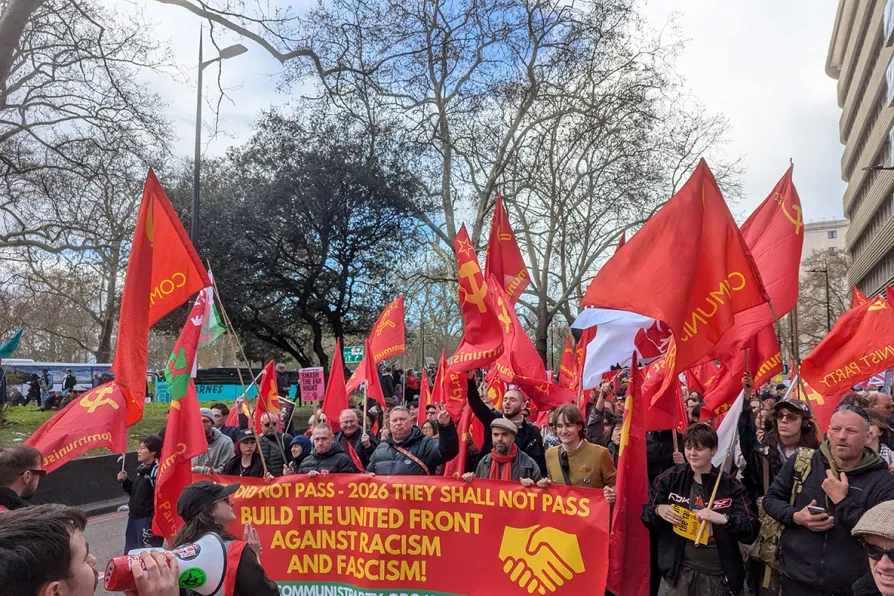
Working people across Britain are fighting back against austerity, war, repression and exploitation. The challenge now is to unite those struggles, says Communist Party of Britain assistant general secretary JOHNNIE HUNTER

The battle of the bended knee
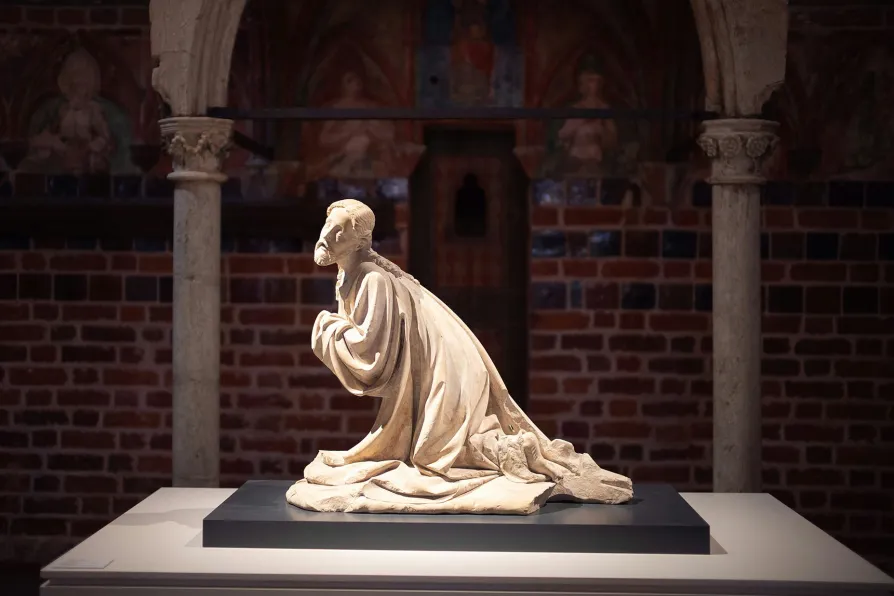
MAT COWARD explains how in the 17th century a row over whether to kneel at communion became a battle over religion, class and royal power

Train drivers’ union Aslef general secretary DAVE CALFE speaks to Ben Chacko about his hopes that Burnham’s devolution agenda will include the importance of the railway
DIANE ABBOTT provides an analysis of the reasons for EU and British voters’ dramatic swing to the right
Some of the review’s proposals could make the benefits system less cruel and dehumanising. But its vague plans for services and non-cash support revive the threat that disabled people will lose control over the money we need to survive, writes DYLAN MURPHY
Believe it or not, there was a time when the US government built beautiful homes for working‑class Americans to deal with a housing shortage, writes ERAN BEN-JOSEPH
MAT COWARD has heaps of good advice on recycling garden and household waste over the winter





WE IN Britain have rebelled against many things over the centuries: taxes, conscription, unpopular rulers. How about kneeling?
When King James VI of Scotland became also King James I of England in 1603, it was his ambition to join his kingdoms into a new, unified state. To this end he styled himself “King of Great Britain.” Unfortunately for him, the parliaments of both Scotland and England were unenthusiastic, and Great Britain was not born during his lifetime.
So, James took his victories where he could get them. Throughout his life he was deeply involved with scriptural and theological matters, and indeed was considered in his time to be one of the most learned Protestant theologians in Europe.
What became known as The Five Articles of Perth (great name for a boy band, surely) was the king’s attempt to bring Scottish church practices into line with those in England. His logic must have been that a unified religion was a big step towards a unified nation.
Under the new rules, the church in Scotland would adopt five policies which were already standard down south: legalisation of private baptism for sickly babies; private communion for the ill and dying; confirmation of children by a bishop; celebration by Christians of holy days, including Christmas; and kneeling to receive communion (the bread and wine).
None of this was popular among Scots Presbyterians. All of it sounded to many of them like a lurch back towards Catholicism: private rites, bishops … Christmas! (Christmas Day finally became a public holiday in Scotland in 1958). But it was the kneeling thing that really got people growling.
The theological argument against kneeling during communion was this, if you’ll forgive the oversimplifications of an unchurched writer: to kneel is to show obeisance or adoration. Kneeling to receive the symbolic bread and wine suggested that you were worshipping the physical elements of communion — and that was more-or-less idolatry.
Just as importantly, the disciples at the Last Supper, which communion re-enacts, sat around a table with Jesus; therefore sitting, not kneeling, was the scripturally accurate stance.
Pro-kneelers, on the other hand, like Bishop Buckeridge of Rochester, argued that his opponents “have sworn and vowed that they will not kneel to God, and his Christ.” Such dissidents, he said, were “elephanti,” who had “no joints in their knees,” referring to an ancient belief that elephants were stiff-legged and, once fallen, could never get up again.
The king himself attacked non-kneelers as those who “love to sit Jack-fellow like with Christ at the Lord’s Table, as his brethren and comrades.” God and Jesus, in other words, like the earthly monarchs who were directly appointed by God, were to be feared, obeyed and revered — they weren’t your equals that you might sit chummily next to at dinner.
In the 21st century this all sounds quite mad, but if we view the 17th century struggle between Catholicism and Protestantism in part as a proxy war between the monarchy and the rising capitalist class, it makes a bit more sense. The “to kneel or not to kneel” controversy was religion, but it was also class politics expressed through religion.
Church leaders in Scotland resisted the new rules as long as they could, to the fury of the king who told his advisers that he would “let the Kirk of Scotland know what it is to have ado with an old king.”
Eventually, the kirk’s general assembly in Perth on August 25 1621 accepted the five articles, if reluctantly. The government surrounded the meeting with armed guards, and each individual’s vote was recorded and reported to James.
One archbishop admitted that he would have preferred to vote No, but felt that disobedience to the monarch would have been a greater sin. Some historians see this moment as central to the formulation of the doctrine of the divine right of kings, and therefore a brick in the road that led to the civil wars and eventually to the execution of James’s son, Charles I.
You’ve waited patiently for the rebels to appear, so here they are. Many devout protestants — mostly in Scotland, but also to an extent in England, where opposition to kneeling had long simmered — refused for years to adopt kneeling. Some boycotted services, or set up their own illegal churches, or attended services but openly stood or sat during communion. The penalties for such dissent could be fines or even imprisonment. Resistance was widespread for at least a generation.
Moderates — who wanted to be true to their beliefs, but also not to disobey the king or get into trouble — provided the most comical spectacle, twisting themselves into yoga-like positions.
A contemporary account recalls how one elderly minister in Edinburgh “bowed the one leg, had the sole of his other foot upon the ground,” while still managing to sit on his bench.
Mat Coward blogs at www.rebelbrit.substack.com. An e-book collecting the first 100 Rebel Britannia columns is now available at £10 or US$13-50, at books2read.com/u/bWV98G.

Similar stories
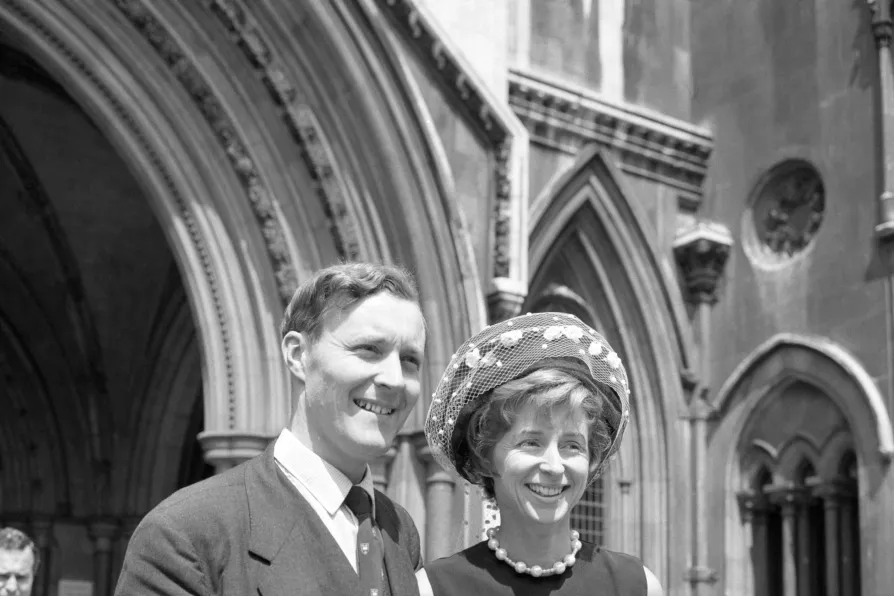
Tony Benn’s constituents chose him by an overwhelming majority — but because he had inherited a peerage, parliamentary rules declared their choice invalid, writes MAT COWARD
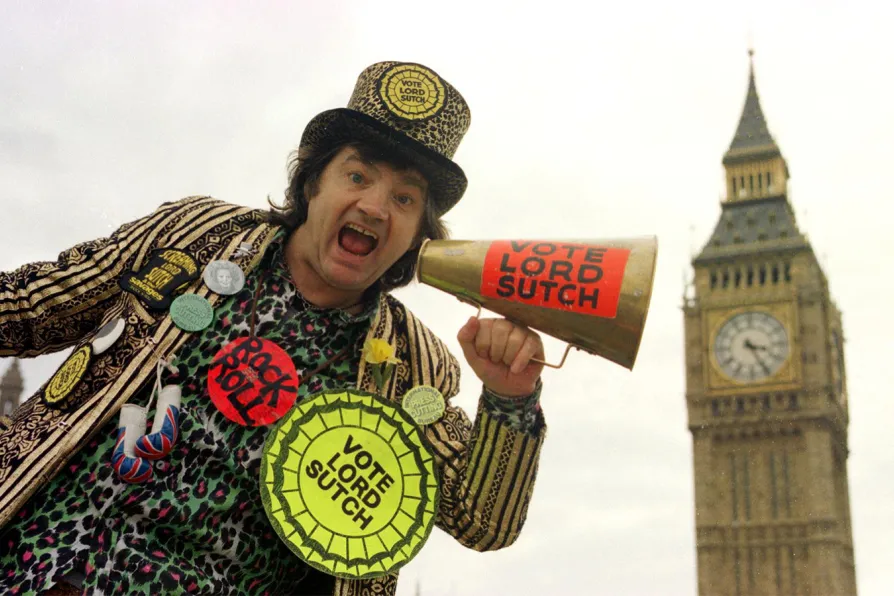
MAT COWARD introduces some of the electoral oddballs of the political fringe who remain one of the liveliest features of British democracy, despite efforts to abolish them

A WWI hero, renowned ornithologist, medical doctor, trade union organiser and founder member of the Communist Party of Great Britain all rolled in one. MAT COWARD tells the story of a life so improbable it was once dismissed as fiction

MAT COWARD tells the story of the eccentric founder of a short-lived but striking experiment in ‘vital democracy,’ who became best known for giving away his estate to the nation