
Working people across Britain are fighting back against austerity, war, repression and exploitation. The challenge now is to unite those struggles, says Communist Party of Britain assistant general secretary JOHNNIE HUNTER

Great expectations from the ragged-trousered economists contrast with the reality of wealth and power
Renewed illusions in social democratic reformism are sprouting as a result of Andy Burnham’s rhetoric, but material conditions are already intruding into the debate, argues NICK WRIGHT
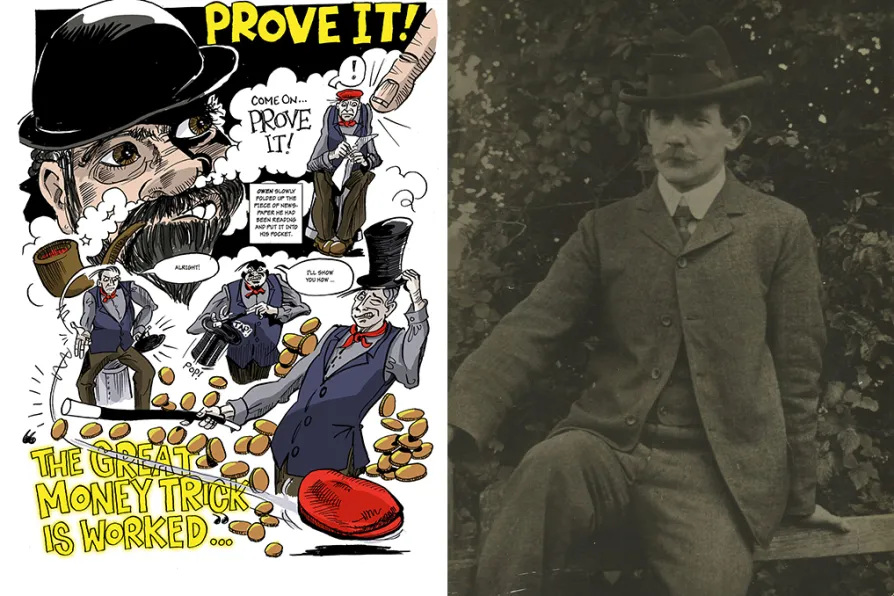
 The Great Money Trick cartoon by Andy Vine and (right) author Robert Tressel in 1908
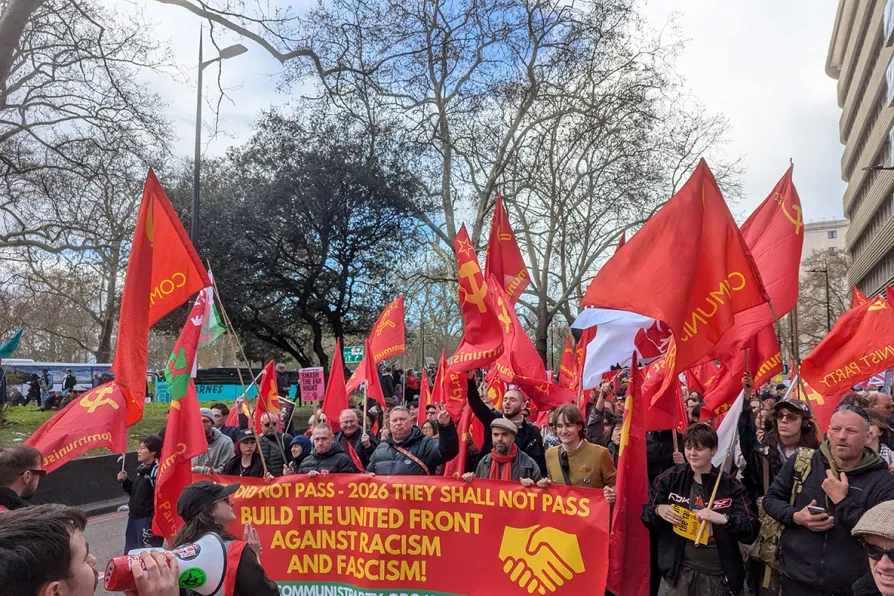
Train drivers’ union Aslef general secretary DAVE CALFE speaks to Ben Chacko about his hopes that Burnham’s devolution agenda will include the importance of the railway
DIANE ABBOTT provides an analysis of the reasons for EU and British voters’ dramatic swing to the right
Some of the review’s proposals could make the benefits system less cruel and dehumanising. But its vague plans for services and non-cash support revive the threat that disabled people will lose control over the money we need to survive, writes DYLAN MURPHY
Believe it or not, there was a time when the US government built beautiful homes for working‑class Americans to deal with a housing shortage, writes ERAN BEN-JOSEPH
MAT COWARD has heaps of good advice on recycling garden and household waste over the winter





WHEN my grandfather spoke of “the social democracy” it was as if it was both a thing, an institution, but also a state of being. And he lived it as a set of values.
There was the temperance thing. Coming from an extensive Scottish family with his brothers addicted to and dying of alcoholism, he had a sense of the pub trade as a plot by the capitalist class to dull the imagination of the workers coupled with a notion of avaricious Tory brewers addicted to profit.
Although a highly skilled cabinet-maker and, on 1900 standards, a high wage-earner, he steadfastly resisted pressure to buy a house. He argued that property ownership bred capitalist ideas and that, until the arrival of socialism, it was better to recognise the reality of exploitation. Rent, interest and profit were the foundation of capitalist exploitation and that these should be openly confronted by both the individual worker and the class as a whole. For him, Robert Tressell’s “The Ragged Trousered Philanthropists” was a lived reality and I was given the book as a rite of passage.
Today this sense of the working class constituted as the antithesis of the capitalist system and constantly engaged in both practical and ideological struggle seems almost quaint, when measured against the way actual contemporary social democrats present themselves and their ideas.
Andy Burnham’s coronation as leader of the Labour Party has stimulated — like small plants springing up when a shower follows a drought — a small growth in ideas that the system is both manageable and reformable.
This illusion occupies a permanent place in the recurrent strains of idealist thought that are constantly generated in Labour circles and especially among trade union functionaries.
A few years ago, the London School of Economics — Britain’s ideas factory for reformism — felt it could still present one of its podcasts in its Ralph Miliband lecture series as a celebration of a century of European social democracy, “revealing its finest triumphs to have been when it ensured a pluralism and political inclusiveness more extensive than anything that could otherwise be provided in capitalist societies.”
“This essentially liberal achievement, rather than state control, should therefore be seen as its hallmark.”
The LSE went on to argue that this perspective provides the basis for an optimistic appraisal of social democracy’s future. These it qualified pointing out “inhospitable elements in the current and future social environment that have to be confronted and challenged: growing inequality and corporate political power, the decline of trade unions, and the growing irrelevance of the nation state framework within which social democracy built its citizenship.”
This abandonment of the raison d’etre of the post-war Labour government had the transparent purpose to buttress the idea of a “social Europe” in which the federal superstate would regulate conflict between capitalists and workers in an economy in which the role of the nation state would be diminished by the privatisation of the commons.
Equality undermined
In 2012, of course, we had the coalition government of David Cameron’s Tories and Nick Clegg’s Liberal Democrats. In its assessment of these years, the Equality Trust said that as austerity belts tightened, income inequality was an issue on which the two government parties — and the opposition — would be judged. It sent a warning signal to all parties to pay close attention to voters’ anger and to set out effective policies that will have a real and lasting impact on Britain’s levels of vast income inequality.
Since then, we have had a succession of Tory administrations competent neither in administering the capitalist state nor managing the economy either for the people or, very successfully, for the bourgeoisie.
Whereas an emerging majority saw in Corbyn Labour’s 2017 manifesto a reasonable facsimile of a social democratic programme, Keir Starmer took the Labour leadership on a cynically false prospectus and resumed the New Labour approach.
Burnham is enough of a social democrat to see the operation of the market in housing as a key political problem, although he has already rowed back on his earlier commitment to vastly expand municipal housing at affordable rents and he says that every person sleeping rough will be offered a route off the streets this winter if they need it.
According to Shelter, last Christmas 350,480 people were homeless in temporary accommodation, mostly families with children. This was the highest number since records began.
According to the OECD, Britain has very high income inequality even compared to other developed countries. The Office of National Statistics reports that the top fifth of the population own two-thirds of the wealth (38 per cent of the UK’s income), while the bottom fifth own 0.5 per cent or 9 per cent of the UK’s income.
Daron Acemoglu won the 2024 Nobel Prize for economics. His latest book, What Happened to Liberal Democracy, casts, in US terms, a kind of toothless New Deal for modern times. This he calls “working-class liberalism.”
He bundles into this concept the full compendium of social democracy’s watchwords: redistributive economic measures, full employment, freedom of speech and association, constraints on the excessive power of state and employers. To these he adds the less concrete values of community cohesion and mutual trust.
Tagged as “Remaking a politics of shared prosperity,” it is exhaustive in its description and analysis of the traditional and new features of capitalism that offend against liberal values.
Central to his proposals is the foregrounding of these values, most especially freedom, which he argues is as much about democratic politics as it is about markets.
Acemoglu is an authority on the role of technology in the transformation of the capitalist formation. He raises concerns which are widely shared on the political left and centre on both sides of the Atlantic. The seeming rise to hegemony of the tech sector’s moguls in US government circles and the massive economic, cultural and social power exercised through its monopoly domination of information exchange and social media.
Without idealising either Franklin Roosevelt’s New Deal or Britain’s post-war extension of state ownership and control — both were effective measures to mitigate capitalism’s tendency to crisis and to meet the challenge of working-class power then fast developing in the Soviet Union and in Europe.
Acemoglu proposes no such concrete measures. Instead, he proposes the political equivalent of the “hopes and prayers” that signify impotence whenever they are advanced.
Instead of concrete measure to socialise the economy, extend state control of investment and management, control capital flows and tax the rich — the very minimum in reforms necessary to limit the power of capital — he proposes a series of ideological and cultural initiatives.
This noble-sounding compendium includes a new understanding of the value of community as the nexus of self-government, experimentation and the sharing of information; return to liberalism’s foundational values, the development of a “unifying narrative that highlights the common ground among diverse communities” and “an agenda for regenerating shared prosperity and a commitment to provide broadly available, effective public services.”
Much of this is cast as a necessary response to the Trump ascendancy in US politics and the political and social power mobilised by the tech monopolists.
The ruling class in the US may be divided over the best way to resolve its recurrent crises, but to say that this prospectus lacks the kind of resolve that might strike terror among the US’s ruling class is an understatement.
Martin Wolf, the Financial Times chief economics commentator — best understood as the sage of capitalist realism — is unconvinced. He queries: “The biggest question this important book fails to answer is how, even if it is indeed desirable, the political forces needed to bring about the restoration of mid-20th century liberalism are to emerge.”
Burnham has the problem that to meet the expectations placed in him by workers (and wider strata) he needs to mobilise a popular majority to challenge the power of the bankers, big business and indeed the bureaucratic bourgeoisie who dominate the state apparatus.
The more he compromises, as he has over the provision of council housing, the more difficult it will be to meet these expectations.
The Great Money Trick, illustrated by Andy Vine and with an essay by Jenny Farrell is adapted from Robert Tressell’s The Ragged Trousered Philanthropists, published by Manifesto Press.

Similar stories
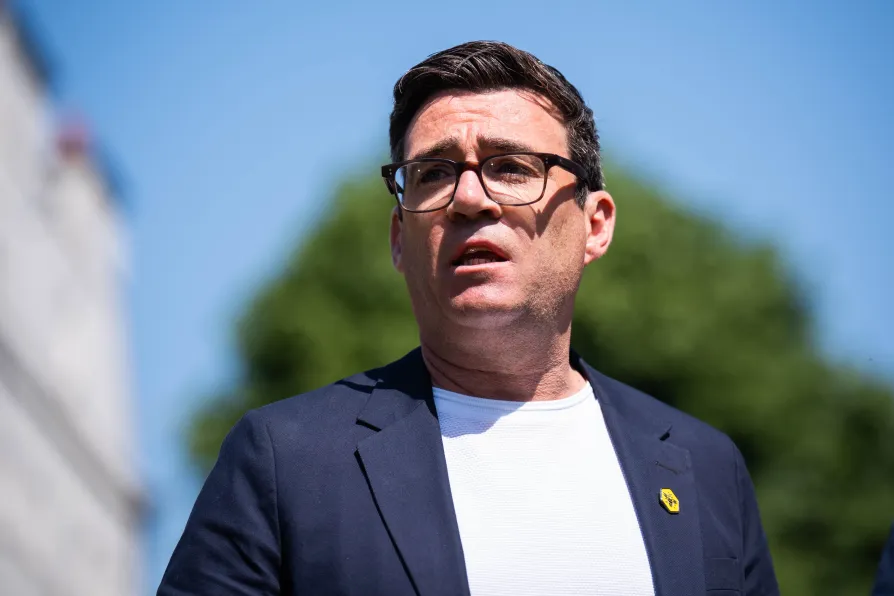
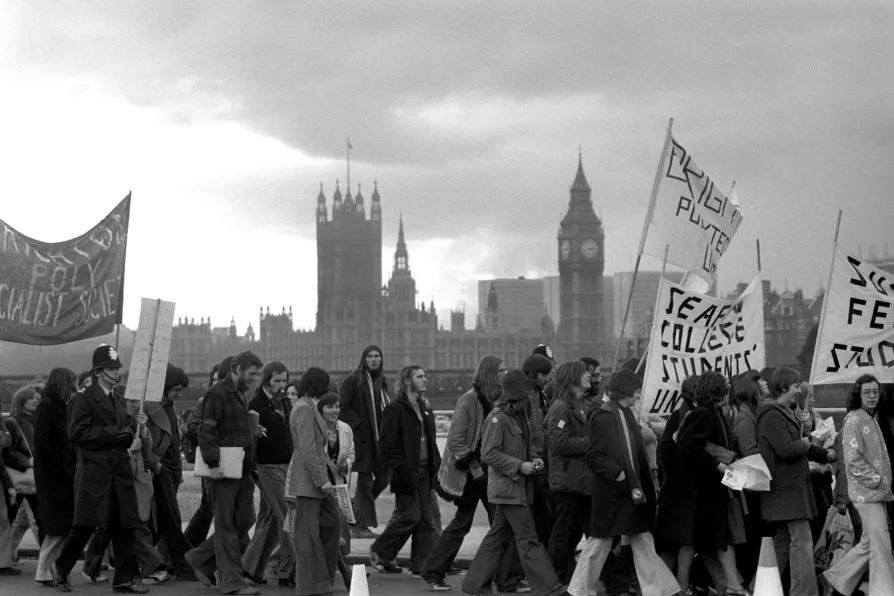
Despite the screeching from the right-wing media, Burnham’s speech chimed with the public mood - and socialists should take advantage, says Morning Star editor BEN CHACKO
Can Andy Burnham’s programme deliver a productive economy – or merely a softer version of capitalism, asks VINCE MILLS
After Zohran Mamdani’s electoral win, BHABANI SHANKAR NAYAK points to the forgotten role of US communists in New York’s radical politics