
Working people across Britain are fighting back against austerity, war, repression and exploitation. The challenge now is to unite those struggles, says Communist Party of Britain assistant general secretary JOHNNIE HUNTER

Electoral absurdity and the case of the Persistent Commoner
Tony Benn’s constituents chose him by an overwhelming majority — but because he had inherited a peerage, parliamentary rules declared their choice invalid, writes MAT COWARD
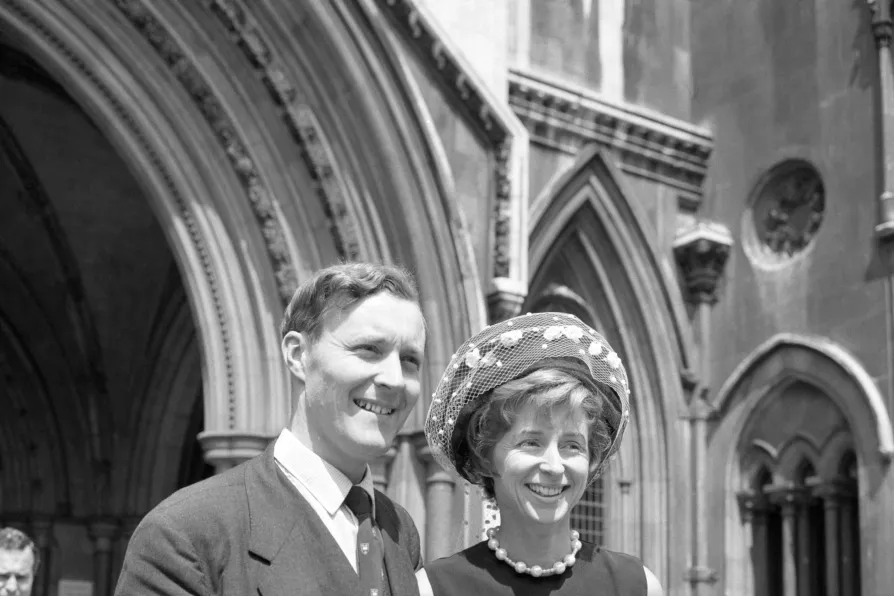
 Anthony Wedgwood Benn with his wife Caroline after the Election Court sitting at the Law Courts, which decided that Benn has succeeded to the title of Lord Stansgate and is therefore disqualified from the House of Commons in 1961
Train drivers’ union Aslef general secretary DAVE CALFE speaks to Ben Chacko about his hopes that Burnham’s devolution agenda will include the importance of the railway
DIANE ABBOTT provides an analysis of the reasons for EU and British voters’ dramatic swing to the right
Some of the review’s proposals could make the benefits system less cruel and dehumanising. But its vague plans for services and non-cash support revive the threat that disabled people will lose control over the money we need to survive, writes DYLAN MURPHY
Believe it or not, there was a time when the US government built beautiful homes for working‑class Americans to deal with a housing shortage, writes ERAN BEN-JOSEPH
MAT COWARD has heaps of good advice on recycling garden and household waste over the winter





ONLY the voters in a constituency should decide who represents them in Parliament — not the government or any other external authority. That principle has had to be fought for numerous times, and the most famous example in the mid-20th century was the Ridiculous Case of the Reluctant Peer.
Tony Benn had been the Labour MP for Bristol South East for a decade when, on the death of his father in 1960, he inherited the title of Viscount Stansgate and a seat in the House of Lords. You can’t sit in both houses of Parliament at the same time, so that meant Benn was no longer eligible to be an MP.
Why didn’t he give up his Lords seat so as to keep his Commons seat? Because it was legally impossible to do so. Being a lord was a job you couldn’t apply for, and couldn’t turn down.
Life peerages hadn’t been invented yet, which meant all peers were hereditary peers. Tony Benn’s father, William Wedgwood Benn, was a radical MP, initially Liberal and subsequently Labour. When he retired from the Commons he was named First Viscount Stansgate and continued to serve the party in the Lords.
(“Continuing to serve” was a bit of a theme in his life; for instance, having won the Distinguished Flying Cross in the first world war, he returned to flying in WWII, operating as a gunner in bomber missions at the age of 67.)
Tony Benn made it clear from the start that he was renouncing the peerage and that he would never attend the House of Lords. In fact, anticipating the problem, he had been working for years to reform the law so that those who inherited peerages could choose not to accept them. All he’d achieved was soft promises from government sources that the matter would eventually be looked at.
But the parliamentary authorities were clear in their view: Benn was no longer an MP and could not sit in the Commons, except in the public gallery, or address it to plead his case. Parliamentary staff from the moment of his dad’s death addressed him as my lord. His salary was stopped — his diaries candidly discuss what a great worry this was for him — and he even lost his free train travel warrant. There would be a by-election in Bristol to replace him.
Depressed and grieving (he “felt very lonely that the one man who could advise me wasn’t there to advise me”) he decided to fight on, though plagued with doubts about whether he was doing the sensible thing. He felt that no-one in the Establishment really expected him to go through with it. He’d spent years trying to avoid this situation, he’d failed, so surely now he would make a token protest and then go quietly?
His own party, at national level (“the machine” as Benn the diarist called it), was reluctant to back him. Reasonably, perhaps; the priority was to make sure that his constituency remained Labour, not to make sure that Benn remained an MP. He did have plenty of celebrity support, some of it from surprising sources for a man who went on in later life to become the leader of the Labour left. Winston Churchill donated a tenner to Benn’s election fund.
The press was broadly sympathetic, from a modernising and common sense point of view — though Benn did tell reporters “I wished they wouldn’t describe me as ‘The Reluctant Peer,’ which suggested a bored young aristocrat who asked to be excused from public duties, but ‘The Persistent Commoner,’ which suggested a rather aggressive, awkward chap who couldn’t be put down.”
In the end, and inevitably, it was the people of Bristol who decided the matter. Anger was widespread at the idea that fusty officials far away could use what Benn described as “protocol and rubbish” to tell them they couldn’t have the MP they’d chosen — as was incredulity at the plainly mad idea that a man offered a peerage could not simply say “No thanks.” Ten thousand of Benn’s constituents signed a petition demanding a change in the archaic law.
The local party ignored the machine and insisted on running Tony Benn as the Labour candidate in the by-election. He won with a huge swing in his favour, taking almost 70 per cent of the vote. And, predictably, an election court (an ad hoc tribunal which decides disputed elections) declared the heavily defeated Conservative candidate the duly elected member for Bristol South East. (That man was, incidentally, only one death away from inheriting a title himself — something Benn had fun with during the election campaign).
The whole business was becoming an embarrassment to the government, added to which many Conservative MPs were aware that they might soon be facing a leadership election for which some prominent candidates were currently sitting in the Lords. An act allowing the renunciation of peerages was passed, and came into force on July 31 1963.
Tony Benn was first in the queue. When he arrived at the appropriate office to resign from the Lords he was greeted with “Good afternoon, my lord.” When he left a few minutes later, it was “Goodbye, sir.”
Beforehand he had arranged for a doctor to take a sample of his blood which he kept for the rest of his life as a souvenir to ridicule the idea that “my blood had changed colour” (from commoner red to aristocrat blue), necessitating his expulsion from the Commons. During his campaigning he had pointed out that the rule used to kick him out was based on “the opinion of Mr Justice Doddridge in 1626 that a peerage is ‘a personal dignity annexed to posterity and fixed in the blood’.”
(Humour was always one of his key weapons, as in his famous quote that “The Civil Service do a deal with incoming ministers. The deal is this: ‘Secretary of state, if you do what we want you to do, we will help you to pretend you’re doing what you said you wanted to do’.”)
The Conservative who’d been given Benn’s seat honourably resigned from the Commons, causing another by-election which Benn again won easily. He went on to hold Bristol South East until it was abolished by boundary changes 20 years later.
This wasn’t the last time the law had to be changed to respect the wishes of the electorate. David Cairns, a former clergyman, became Labour MP for Greenock and Inverclyde in 2001 — but only after a hastily passed amendment to a law of 1801 which banned anyone who was or had ever been a Catholic priest from sitting in the Commons.
You can sign up for Mat Coward’s Rebel Britannia Substack at www.rebelbrit.substack.com for more strange strikes, peculiar protests, bizarre boycotts, unusual uprisings and different demos.

Similar stories
MAT COWARD writes on Ghost Runner John Tarrant
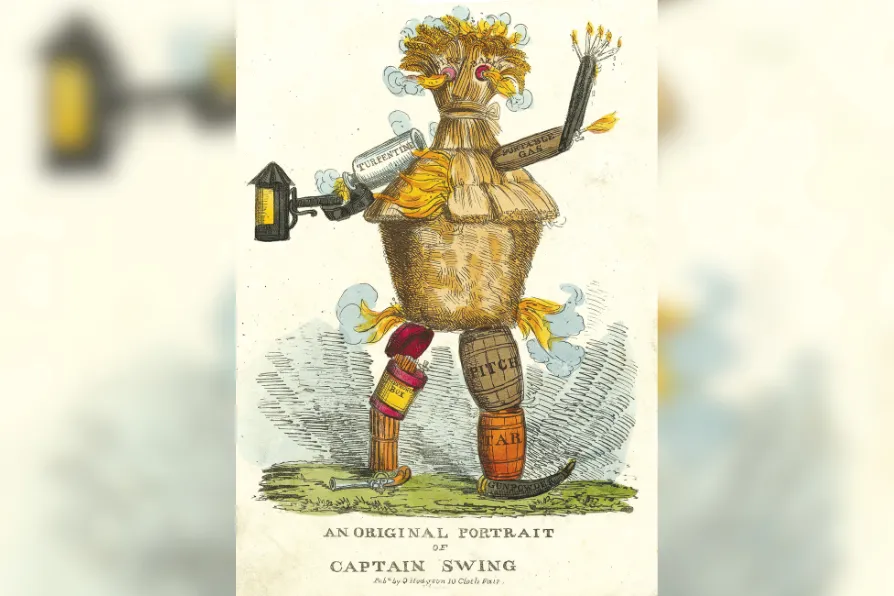
Long before modern labour movements, England’s farmworkers fought back against their oppression – and for some, like Elizabeth Studham, the price was exile to Australia. MAT COWARD tells the story

A WWI hero, renowned ornithologist, medical doctor, trade union organiser and founder member of the Communist Party of Great Britain all rolled in one. MAT COWARD tells the story of a life so improbable it was once dismissed as fiction

MAT COWARD tells the story of the eccentric founder of a short-lived but striking experiment in ‘vital democracy,’ who became best known for giving away his estate to the nation