ROB WARZYNIAK wades knee deep through a pile of ‘dead canaries’ of Trumpist policies which exacerbated the horrors of US capitalism domestically


 Latest editorial

Fire and sword: the farmworker revolt that shook England
Long before modern labour movements, England’s farmworkers fought back against their oppression – and for some, like Elizabeth Studham, the price was exile to Australia. MAT COWARD tells the story
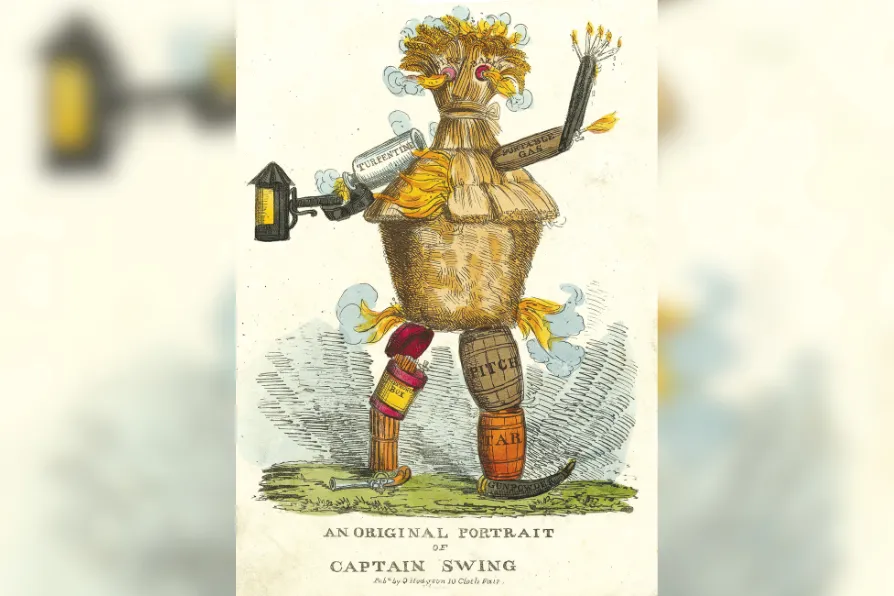 An original cartoon portrait of Captain Swing depicting him as figure made up of materials required for setting fires, 1830. Pic: British Museum/CC
Without evidence or Nato consultations Berlin’s answer to the Leipzig incident is a rupture of relations. SEVIM DAGDELEN examines why
FRANCISCO DOMINGUEZ introduces the background to a conference on defending Latin America’s sovereignty
The glacier collapse in Nepal is yet another warning that a warming planet is making Himalayan disasters more frequent and destructive – but the countries facing the greatest risks are often those least responsible, says LI YANG
Nick Blair is set to benefit from a hugely lucrative contract to ‘virtually’ train the British army for its next war. Like father, like son, writes SOLOMON HUGHES
Even when tragedy strikes, Western media cannot resist the opportunity to turn it into a sordid propaganda opportunity, as the Nepal-China border tragedy shows, writes CARLOS MARTINEZ
Trade unions should be at the heart of the anti-racist push for reparations for the historic legacy and continuing impact of slavery, writes ROGER McKENZIE





IT WAS “a crime which is visited in law with the punishment of DEATH,” as the newspapers of the day were keen to point out with upper-case drama, though in the event most people convicted of offences during the Captain Swing riots had their capital sentences commuted: around 20 were executed, while more than a thousand were either jailed or transported to Australia, or both.
Elizabeth Studham was one of those who ended up down under. Baptised on April 5 1811 in the Thanet district of Kent, she was 19 when she was arrested for an arson attack on a local workhouse. After a spell in Maidstone jail she was put on a ship for Australia, and never saw her home country again.
Captain Swing is one of the most noble chapters in our island’s long history of rebellion. The highly self-disciplined militants who rallied behind the mythical figure of the captain were careful to avoid harming humans — and, for the most part, livestock — during their nocturnal raids. But when it came to attacking property, they were ruthless.
By 1830, when the Swing campaign began, unemployment was high in many rural areas of England. As always there were several reasons for this, including a mass return of demobbed servicemen from the Napoleonic wars and immigration caused by hunger in Ireland. But the Swingers were politically sophisticated: instead of blaming their fellow workers for the falling wages and lack of jobs, they turned their anger on more deserving targets — the greed of the employers and new technology.
Machines that did the work of farm labourers were being introduced in places like Kent and East Anglia in great numbers. Many agricultural workers were in a desperate condition, unable to feed their children. With no welfare state or democratic political system, nothing other than mass physical violence could change their situation — as even well-off contemporary diarists, despite their fears, acknowledged, the workers had no alternative if they were to survive.
The name Captain Swing began to appear in about August 1830 as a signature on threatening letters sent to landowners, warning them that unless they abandoned their plans to replace men with machines, their barns and crops would be burned down. Threshing machines were destroyed, and hayricks set alight. (Threshing machines were especially resented because the threshing of cereal crops had previously been the main type of winter employment).
“Sir, Your Name is Down amongst the Black Hearts in the Black Book,” said one letter, “and if you dont set your Men to Work and let them have 2s 6d a Day and Behave to them as you Ought to and if you dont Change and Act Quite Different to what you have Done in the Last 6 Months to your Men… if you dont Do this you shall have Such a Fire as you never see in your Life and your House and Barns and All shall be Burned to the Ground.”
The letters (sometimes finished with the motto “Fire and Sword”) were often highly effective, with many landowners destroying their own machines or just leaving them out at night for Swing to take care of. Others kept guard over their property all night — though according to one newspaper at the time, this was no guarantee of safety because Captain Swing had in his devilish armoury “a chemical preparation, made into a hard ball, which can be thrown into a stack from a considerable distance, and ignites after the lapse of four or five hours.”
As the rebellion spread, the ruling class, in town and country, believed it was facing nothing less than a revolution. Magistrates and rich clergy, along with the workhouses in which the destitute were imprisoned, were also targeted.
Most of those tried for Swing-related offences were men — but not all. In November 1830 Elizabeth Studham set fire to a thatched outbuilding at Birchington workhouse, “with an intent to burn down” the main house itself.
In the same batch of Swing defendants at Maidstone — “unhappy and misguided individuals,” as the papers called them — were two young men charged with burning a barn. The jury found them guilty, but with a recommendation to mercy. Mr Justice Bosanquet noted the recommendation, and sentenced the boys to death; their crime was “of the deepest enormity,” he told them and they must expect “no mercy in this world.” Another man was found Not Guilty, immediately rearrested on another charge, and when found guilty of that one was sentenced to transportation for life.
Young Elizabeth was put aboard the Mary III in June 1831. The ship finally arrived in Van Diemen’s Land (now known as lutruwita or Tasmania) in October. Convict Number SO217 lived the hard convict life — required to labour without wages for the colonists, receiving only bed and board — until a conditional pardon in 1845 meant she could at last seek lodgings and employment in her own right.
She married and her later years were, we can hope, somewhat happier, as her brothers emigrated to Australia with their wives and children. She died at Collingwood in her sixties. She sounds like someone who wouldn’t be easy to break; during her convict years she was found guilty of 10 crimes — including theft and using bad language — and served two terms of hard labour.
You can sign up for Mat Coward’s Rebel Britannia Substack at www.rebelbrit.substack.com for more strange strikes, peculiar protests, bizarre boycotts, unusual uprisings and different demos.

Similar stories
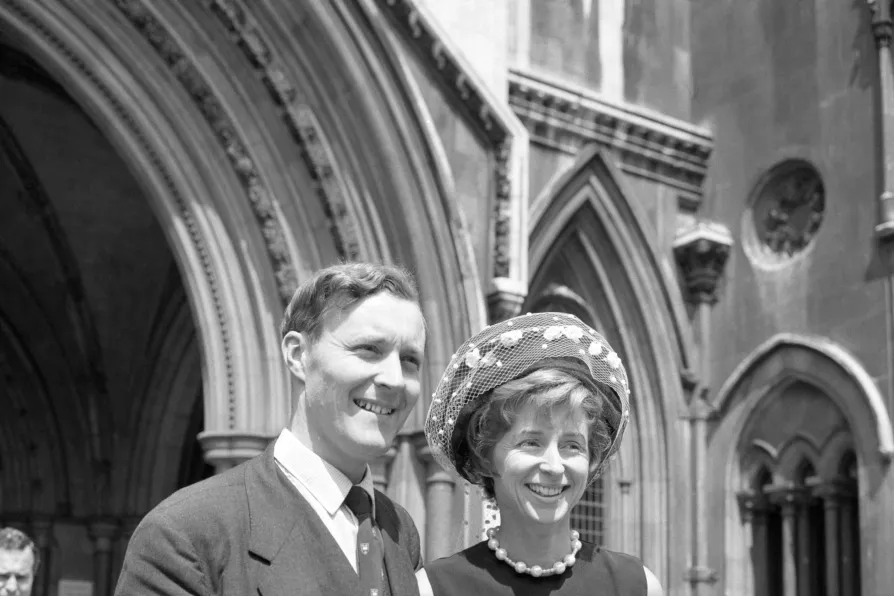
Tony Benn’s constituents chose him by an overwhelming majority — but because he had inherited a peerage, parliamentary rules declared their choice invalid, writes MAT COWARD
MAT COWARD writes on Ghost Runner John Tarrant

A WWI hero, renowned ornithologist, medical doctor, trade union organiser and founder member of the Communist Party of Great Britain all rolled in one. MAT COWARD tells the story of a life so improbable it was once dismissed as fiction

MAT COWARD tells the story of the eccentric founder of a short-lived but striking experiment in ‘vital democracy,’ who became best known for giving away his estate to the nation