A California union’s decision to host a meeting about US policy towards Cuba has prompted a congressional probe and renewed attacks on international solidarity, writes CAMERON HARRISON



Guns or growth? Getting our priorities right
Burnham’s billions for defence while councils and local services struggle will not deliver the change that Britain’s working-class communities need, says MICAELA TRACEY-RAMOS
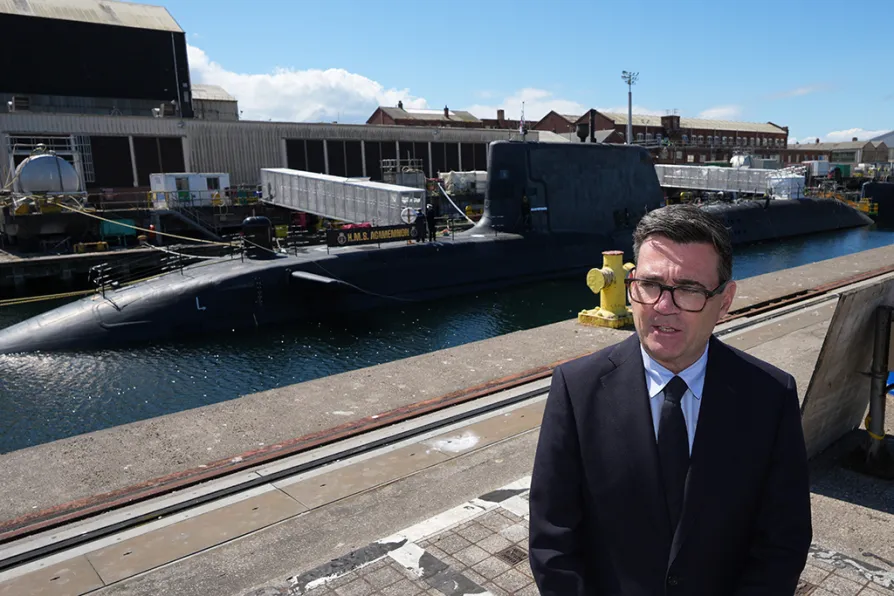
 Andy Burnham poses with a nuclear submarine

The Baltic state is set to reverse its constitutional prohibition on nuclear weapons and foreign bases as part of accelerated Nato war preparations, warns TOM UNTERRAINER
Long-term underfunding and state neglect, while simultaneously probation services have been undermined, have intensified the prison crises, argues SOLOMON HUGHES
Holyrood incompetence has cost jobs and put the future of Clydeside’s Ferguson Marine shipyard into jeopardy. Its future should have been assured, argues KENNY MACASKILL
With the agitated debate now raging in the media about the early release schemes, Prison Officers Association general secretary STEVE GILLAN gives the view of those who work in the sector
The hounding of the late Jason Arday is an all too familiar experience for many black people. ROGER McKENZIE calls for collective action to combat what can feel like personal isolation





SPEAKING to the secretary-general of Nato, Andy Burnham made it clear in his own words that the appointment of former defence secretary John Healey to the position of chancellor was a “signal of his intent.”
Newly appointed Defence Minister Wes Streeting has also made it abundantly clear that Burnham’s government will prioritise military spending over any other spending.
He has also proclaimed that he will resign if Britain does not meet its defence spending pledge.
It is difficult then to marry up Burnham’s talk of investment in young people and public services with his commitment to fund the seemingly never-ending pot of money for so-called “defence.”
For all the rhetoric around change, a No 10 in the north and Manchester-style cheap buses, his actions since becoming Prime Minister show there is an immense contradiction at the heart of his programme.
Without a second thought, Burnham continued with Starmer’s disastrous policy of agreeing the use of British bases for the US bombing missions in the illegal war in Iran.
While the British government is continuing to use the lie that the bases are only used for defensive operations, the reality is that could not be further from the truth.
This is a war waged on Iranian people, with RAF Fairford hosting B-1 and B-52 bombers and the Gloucestershire base being used for direct bombing missions.
These bombing raids have hit civilian infrastructure in Iran and killed many thousands of Iranians — all of which is illegal under international law.
By allowing the use of British bases for these missions, Britain is choosing to facilitate this illegal war, which not only has had devastating consequences for the people of Iran but has pushed us into a major international economic crisis.
After the Labour government’s complicity in the genocide in Gaza, and the subsequent recognition by Burnham that the Labour government had got its policy wrong, you would have thought he would think more carefully about committing this government to complicity in more war crimes.
These actions, alongside the government’s commitment to meeting US targets for defence spending, suggest that Burnham is not going to break Britain’s subservience to the US any time soon.
As well as being a moral and political failing of this Labour government, the drive to increased war spending can only mean one thing: it will be us, working-class people who have already been at the sharp end of cuts, expected to front more for the mythical security threat.
The consequences of this are extensive. Unison’s report, Less Fit for the Future, showed that NHS Providers ran up a combined deficit of more than £1.1 billion last year; our councils face an £8.45bn cumulative funding gap and the higher education sector is in complete crisis with an estimate of 24 higher education institutions in danger of entering insolvency in the next 12 months, with a further 26 possible in the next three years.
The cumulative crisis across our public services not only has a profound impact on Unison members and those working in the services but our communities that rely on them. In the context of this, Streeting’s remarks that the government will prioritise defence spending over any other spending is even more jarring.
Earlier this year, the Milburn report reported that there were over one million young people who were not in education, employment or training (Neet). The years of lack of job opportunities, education or training opportunities for working-class young people has meant that an entire generation is paying the price.
In Burnham’s speech to the country when becoming Prime Minister, he vowed to break with the neoliberal policies of Thatcher, reindustrialise Britain and provide real job opportunities for working-class people. How is it then he intends to do this?
An announcement made on July 30 outlined the government’s plans to invest in nuclear submarines to “protect Britain for decades to come,” but also support 47,000 jobs including 22,000 apprenticeships. This spending, which was already included in the Defence Investment Plan, outlines £63.6bn over the next four years in what is called the Defence Nuclear Enterprise.
This argument being put forward by Burnham and elements of the labour movement that investment in defence means more jobs, is a myth used by the “defence” manufacturers and politicians to justify never-ending war spending. But it’s a tired argument, disproven time and time again.
Even on the face of this new announcement, billions of pounds invested in nuclear submarines for our “defence,” and for the sake of a few tens of thousands of jobs?
As clearly shown by this announcement, the investment in defence spending only offers very limited job creation and stifles a more just economy.
Compare the net benefit on the economy if the same amount was invested in what really makes people secure — adequately funded public services, clean energy and well-paid socially useful jobs.
For all Labour’s talk of raising living standards for working-class people and delivering much-needed change, its continued commitment to increased military spending is fundamentally irreconcilable with investing in well-paid jobs and the public services our communities depend upon.
The Morning Star’s July 29 editorial highlighted that a national care service would cost Britain £18.5bn extra annually by 2035, costing roughly the same as Starmer’s Defence Investment Plan would add annually by 2030.
The numbers are there clear as day. To save Labour’s chance at the next election, there can be no tinkering around the edges with minor reforms here and there — there needs to be a complete overhaul in its economic strategy and foreign policy, which must include a break with Washington to end Britain’s longstanding subservience to the US.
The choice Burnham has to make is quite clear: it is either investment in death and destruction, or the means of life, the social infrastructure that keeps our society running and the working class and youth of this country. It is the simple thing — that’s the hard thing to do.
Micaela Tracey-Ramos is vice-president of Unison.

Similar stories

Peace activists and trade unionists to gather at RAF Fairford to protest against US bombers taking off from Britain to strike Iran
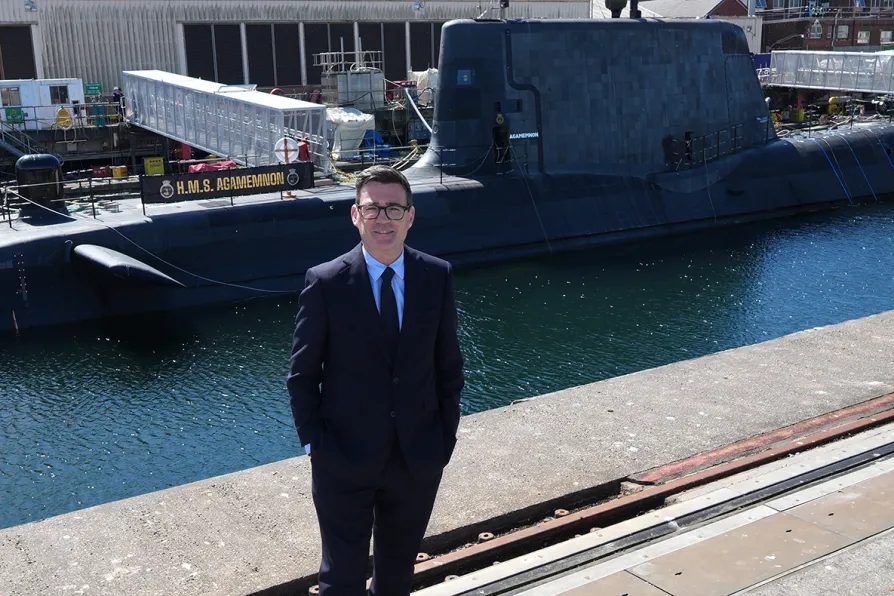
PM commits to blowing millions on nukes
![Anti-war protesters outside RAF Fairford, July 2#, 2026 [Pic: CND]](https://msd11.gn.apc.org/sites/default/files/styles/desktop/public/2026-07/PHOTO-2026-07-26-11-42-59.jpg.webp?itok=UNG-N8fw)

SOPHIE BOLT argues that spending more on military will harm rather than benefit Britain by diverting vital resources away from essential public services