TUC president and POA leader STEVE GILLAN speaks to Ben Chacko on the eve of Congress 2026


 Latest editorial
The last great elms
Millions of elms were wiped out by Dutch elm disease in the 20th century, transforming the landscape forever – yet pockets of hope are keeping this beloved tree alive. MARK SEDDON explains
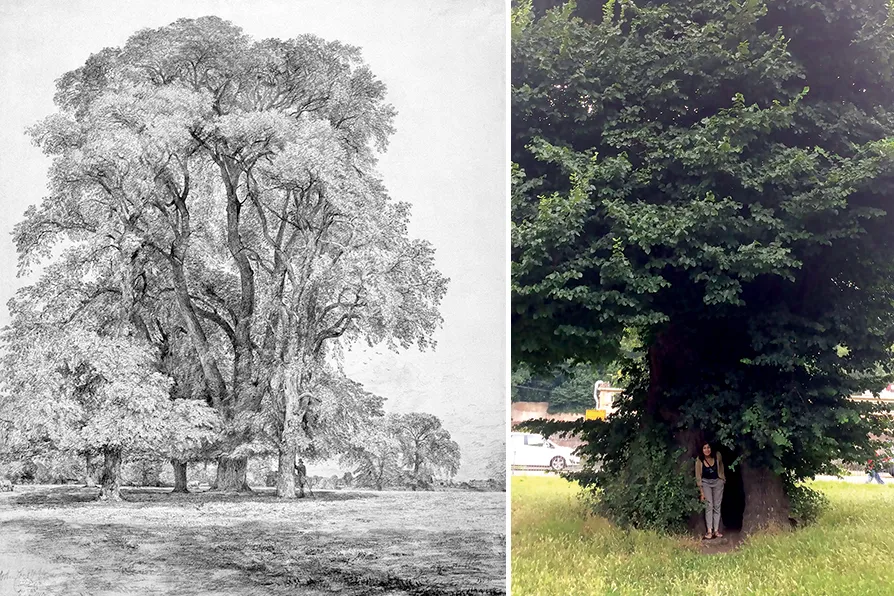 (L to R) Elm trees in Old Hall Park, East Bergholt drawn in pencil by John Constable, 1817; The English elm in Preston Park, Brighton is the oldest elm in the country / pics (L to R): Public domain, author supplied

DOUG NICHOLLS welcomes a turning point at this year’s Congress, where many motions call for a co-ordinated plan to revive British industry, a perspective outlined in his new book
HOPE VIRGO of campaign Dump the Scales warns MPs voting today they should be alert to the threat legalised assisted death poses to people with eating disorders
The Together Alliance is hosting two summits, North and South, to build power and plan action against the scourge of racism peddled by the right. DANIEL KEBEDE urges mass participation
The drift toward militarisation in Europe is not inevitable, left-wing and peace movements can preserve sovereignty and prevent war, says DÁIRE HUGHES MP
Whatever differences exist among international sympathisers of the Bolivarian revolution about its current trajectory, they should unite against the imperialist power that is the source of an enforced retreat, argues ROGER D HARRIS
Trade unions need to step up and force a turn in the policies of the labour movement to effectively confront the far-right threat, argues NICK WRIGHT





WHEN I was growing up, the elms were coming down. During the late 1960s and ’70s, a new strain of the deadly Dutch elm disease burned its way across England and then into Wales and Scotland.
It was so named because much of the early research into the diseases was undertaken in the Netherlands and it came over to these shores via timber imported from Canada.
It is estimated that between 25 to 30 million trees were lost as the deadly disease, spread by a bark beetle, ripped its way through the countryside, transforming ancient country landscapes and leaving hedgerows full of skeletal remains of dead trees.
In many areas where the elm was the predominant tree, you could mistake summer for winter. This summer, with its intense heat has proved a real strain for some of the young elms which have been struggling to replace those long-departed landscape trees.
In these parts the wych elm, which is a native tree, is still quite common. It has a slightly stronger degree of resistance to the fungal spores carried by the bark beetle and which block the water carrying vessels that the tree transports up its trunk and branches and into the leaves.
Less common around here historically was the English elm, that totemic, towering tree so beloved of artists such as John Constable.
So, it was with some surprise and pleasure that two or three years ago some of our friends introduced me to an English elm that had somehow braved both disease and hedge cutters in their field. Sadly, this summer its luck has run out. A few weeks back there were a few twigs turning brown and yellow. Last weekend the tree was in obvious deep distress and will go the way of its predecessors.
The English elm, by the way, is an Italian immigrant, from Atenia brought over by the Romans to prop up their grape-vines in Kent. This elm so loved the conditions here that it spread by sucker not seed and rapidly colonised the lowlands and for centuries were often the tallest and leafiest of all our trees.
I fell in love with the elm as a teenager in Brighton. The local council and assorted elm experts had taken the brave decision to try and help their local elms avoid the fate of the tree elsewhere in the country.
They were helped by the fact that the Channel, the South Downs and the Ashdown Forest acted as partial barriers to the flying beetle. But vigilance is of course strength, and in the 1970s, the council ran a very clever and calibrated education programme, informing local residents of what to look out for and to report any instance of the disease.
Today there are probably more elms in Brighton and Hove than there were 50 years ago, but some of the big old favourites, including one of the ancient Preston Park Twins, have gone.
There are many varieties of elm and Brighton is probably home to them all and the town is also home to the National Elm Collection. In recent years similar efforts to save the elm have been largely abandoned in the East Sussex countryside and in Eastbourne, so Brighton remains as an important beacon of hope for the tree.
In Scotland, for many years the disease spread more slowly, largely because of the colder climate. And while Edinburgh is still home to some fine trees, global warming is encouraging the ever northward spread of the disease.
Two or three years ago a friend, David Shreeve of the Conservation Foundation, and I, decided to write a book about the elm, and one that would also carry hope for the tree’s future. In this we were ably assisted by a fantastic photographer, Sam Ford, who travelled the length and breadth of the British Isles, from the Scilly Isles to Mull, from Essex to County Antrim all in search of the great survivors and elm holdouts.
We also had the idea of including chapters from a broad array of elm tree aficionados. So Great British Elms (Kew Publishing) plays host to an expert from Kew, an elm furniture-maker and King Charles’s head forester, along with any other characters.
The King was very keen that we included mention of his Slovakian elms, and so we did. We weren’t so keen on sending a couple of copies gratis to Balmoral, as we thought that Charles could probably afford a copy or two.
An unexpected upside to heatwave Britain
THE repeated intense heatwaves may be causing havoc and destruction in Europe and wildfires here, including in the Cairngorms, but they are also leaving parks and gardens parched and turning grassland into major fire hazards.
One of our local volunteer firefighters was out with fire crews the other day beating out a large fire on the Welsh border which sent such a plume of smoke into the air that it began to look as though a volcano was erupting.
Farmers have been out with their combine harvesters at least a month earlier than usual, while also hoping in vain for some useful rainfall.
Unsurprisingly, the privatised water companies have been bringing in hosepipe bans, having failed to invest in the system for well over 30 years and not building a single reservoir in that period.
In fact, between them the wretched, pocket-stuffing robber barons who preside over the water companies have even managed to sell off 30 reservoirs!
However, there are the occasional silver linings in non-existent rain clouds, one of them being the huge number of Painted Lady butterflies that have flown here from the Continent.
Warm weather and friendly winds are contributing to what conservationists are calling the “Painted Lady Summer” with the largest number of these butterflies arriving here in 17 years. Give us a Painted Lady over an Iron Lady, any day!
Great British Elms (Kew Publishing) by Mark Seddon and David Shreeve is available at tinyurl.com/GreatBritishElms.

Similar stories

In June 1402 Owain Glyndwr defeats the English in a battle of Bryn Glas, a fact not introduced to the school curriculum in Wales until 2022. MARK SEDDON revisits the battlefield
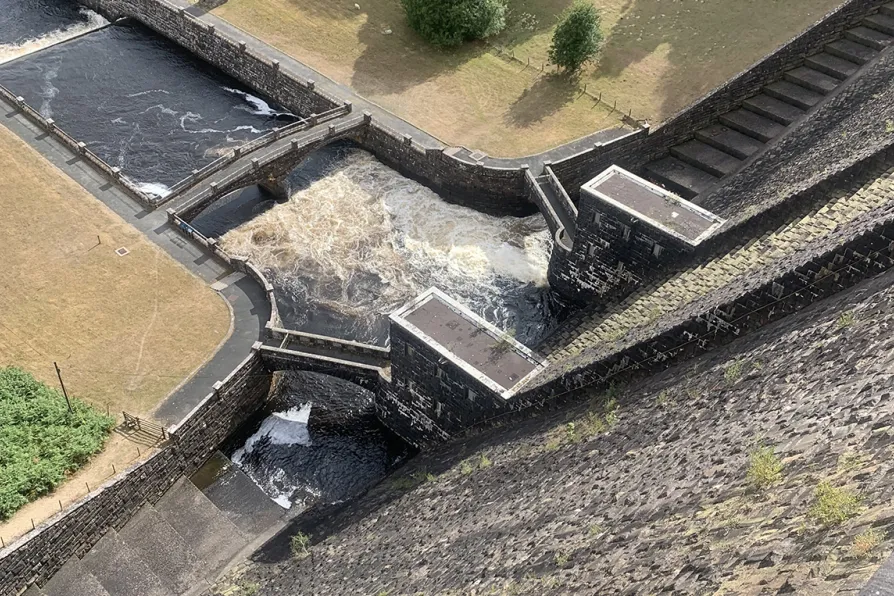
Welsh wanderings showcase fiery destruction, alternative water ways and revive memories of a local mining legend, writes MARK SEDDON

MARK SEDDON tries to cool off in the countryside to avoid the heatwaves but the greed and incompetence of the privatised water industry is now at boiling point
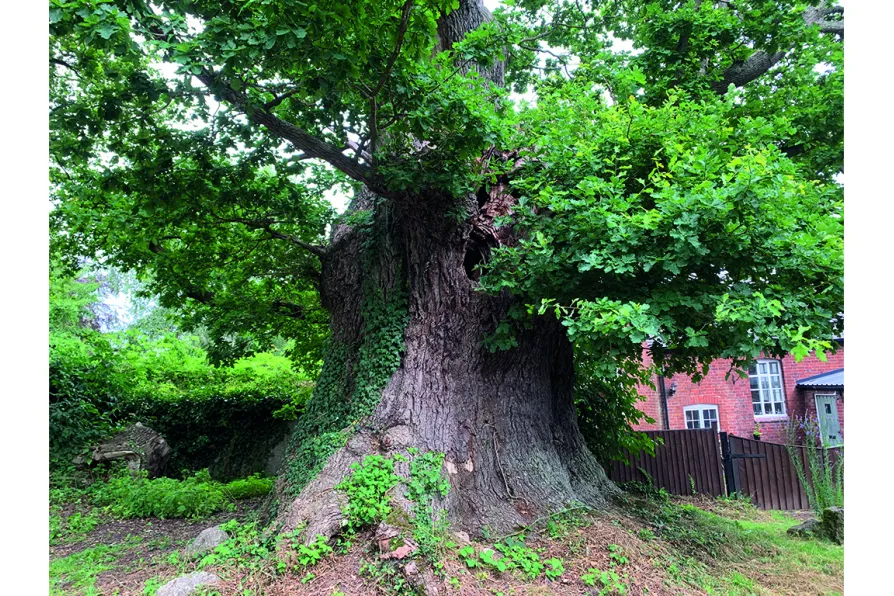
In his fortnightly column MARK SEDDON reflects on the death of Major Oak and why such ancient trees matter to us